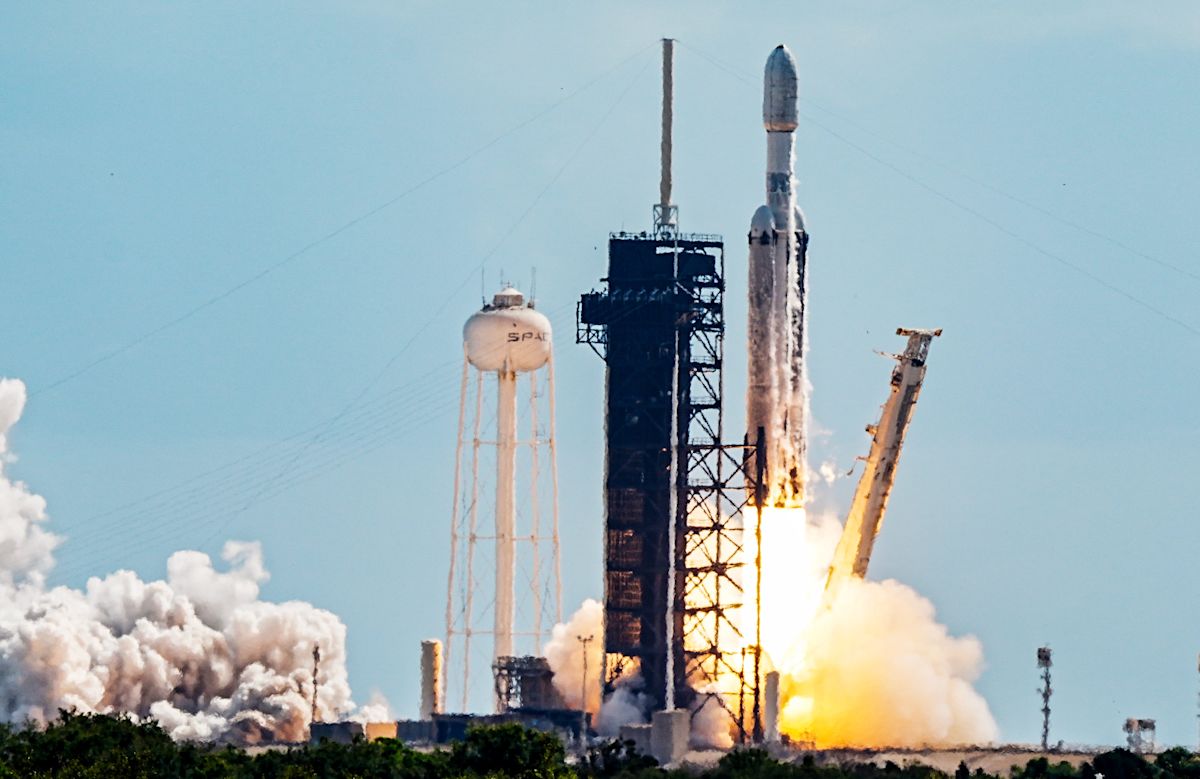
A study conducted by Whitney Coyle, chair of the physics department at Rollins College, indicates that standard decibel readings do not fully capture the loudness of rocket launches as experienced by residents of Florida's Space Coast. Coyle and a team of student researchers set up sound sensors at five locations in Cape Canaveral to analyze sound data from 34 rocket launches and sonic booms between October 2025 and May 2026. Their findings are detailed in an 85-page report that includes statistics on sound levels, structural vibrations, and air quality.
Read More
The aim of the study was to provide an independent baseline of data for officials at Cape Canaveral City Hall as larger rockets, such as SpaceX’s Starships, are set to launch in the future. According to a community handout, Cape Canaveral is one of the first cities to commission such a study independently.
Despite the objective data showing that rocket launches are relatively quiet—comparable to conversations or the sound of busy roads—Coyle noted that residents perceive the sound differently. Much of the acoustic energy from a launch consists of low-frequency bass sounds that are felt as vibrations rather than heard distinctly. Coyle emphasized this perception, saying the most frequent question she receives is about the loudness of launches.
Significant findings include that NASA’s Artemis II launch generated considerable acoustic energy due to its powerful engines, while the sound of a descending SpaceX Falcon Heavy booster recorded the highest acoustic peak in the study. The report suggests that for residents, the most startling moment of a Falcon Heavy mission may often be the landing of the booster rather than the launch.
Additional observations included that sliding glass doors vibrated more than smaller windowpanes and that air quality particulate levels remained within federal limits throughout the studied launch events. However, the study did not assess building safety or health impacts related to noise and vibration levels, noting that factors such as weather can affect sound perception on a given launch day.
Looking forward, SpaceX is preparing for the 14th test flight of the 407-foot Starship heavy-lift rocket, with a launch window scheduled for 8:15 a.m. EDT on September 28 from Boca Chica, Texas. This mission marks SpaceX's attempt to send a Starship into orbit and deploy 26 third-generation Starlink satellites.
In Cape Canaveral, infrastructure is being developed for future Starship launches at Launch Complex 37 and NASA's Kennedy Space Center. An environmental impact statement from the Air Force noted that the sonic booms from Super Heavy boosters could significantly annoy residents in Cape Canaveral and nearby areas. Predictions suggested that nighttime sonic booms could disturb about 54% of those asleep during launches.
To mitigate these effects, SpaceX plans to implement sound suppression systems and communicate with the community regarding noise events. Structural damage claims would be evaluated in accordance with federal policies.
Rollins College's project, initially started as a collaboration with the Florida Institute of Technology, transitioned to Coyle and her students after Florida Tech withdrew due to the limited scope of the study. The city’s funding for Rollins College's involvement totaled $13,000, while the overall value of the project was estimated to approach $90,000, given additional resources from the college. Coyle presented findings to the Cape Canaveral City Council, but it remains uncertain whether data collection will continue.
Rollins College's rocket-launch research can be accessed through the Cape Canaveral City Hall website. Rick Neale is a Space Reporter at Florida Today, where he has been reporting since 2004.