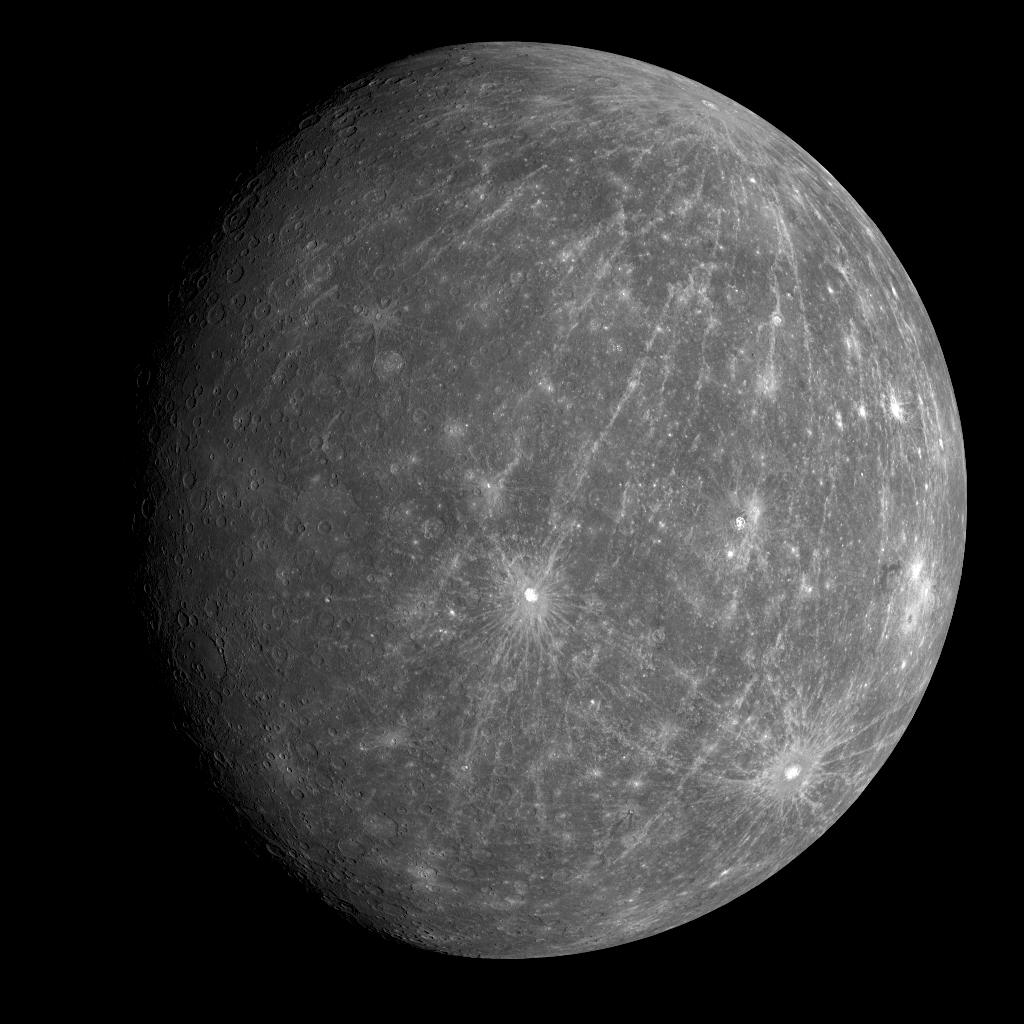
A new study indicates that Mercury may have contracted by 10% to 30% more than previously thought, amounting to a decrease of up to 14.5 miles (23 kilometers) in diameter since its formation. This update is significant, as previous estimates suggested a contraction of only 2.5 to 10 miles (4 to 16 kilometers).
Read More
The findings were published in the journal Geophysical Research Letters. Researchers attribute the underestimation to the planet’s surface conditions, which are covered by debris from impact craters, obscuring evidence of the planet's shrinking.
Mercury's surface is marked by wrinkles, a sign of its history as a larger planet. Over millions of years, the planet has cooled and contracted, much like a balloon losing air. As the interior cooled, the rocky outer layers compensated for the change by crumpling and cracking, creating tectonic features such as scarps and ridges.
The lead author of the study, Gaku Nishiyama, a planetary scientist at the German Aerospace Center (DLR), explained that this greater contraction suggests Mercury might have a larger metal core and less light elements mixed into that core, or possibly a higher initial temperature.
The research involved combining existing geological maps with new measurements of surface roughness across Mercury. The team found that the roughest areas of the planet showed fewer visible wrinkles, leading them to believe that impact debris may conceal signs of shrinkage.
Using data from less disrupted regions, the researchers estimated the overall contraction of Mercury, extrapolating from the observed features to account for the rougher areas. This led to the conclusion that the planet has likely shrunk more than earlier evaluations indicated.
Nishiyama expressed that the new estimates align better with expectations based on physics, providing deeper insights into Mercury's interior and geological history. He noted that the actual contraction may still be underestimated given that current data from NASA’s MESSENGER mission can reliably assess features larger than 3 miles (5 kilometers) across.
Looking ahead, the BepiColombo mission, scheduled to begin collecting higher-resolution data in November 2026, aims to provide further insights into Mercury’s surface features, including detailed scans of scarps and impact craters.