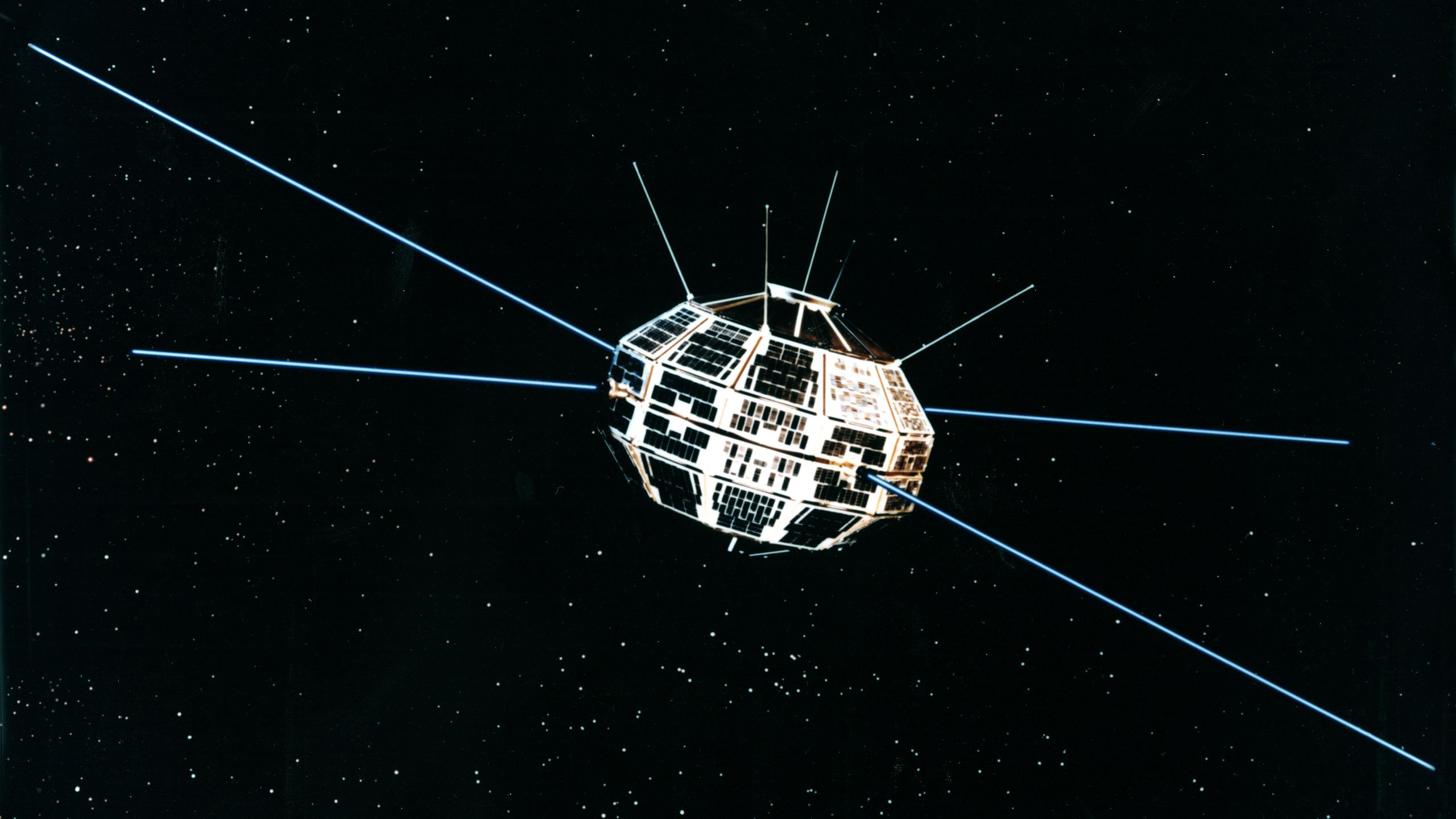
On September 28, 1962, Canada successfully launched Alouette 1, its first satellite, from the U.S. military's Pacific Missile Range in California using a Thor-Agena rocket. This achievement made Canada the third nation to independently build and launch a satellite, following the United States and the Soviet Union.
Read More
Alouette 1 was developed to study the Earth's ionosphere, a region in the upper atmosphere influenced by solar and cosmic radiation. Although it was intended to operate for only one year in a 621-mile (1,000 km) orbit, the satellite exceeded expectations, functioning for a full decade and capturing more than one million images of the ionosphere. The satellite is still orbiting Earth today, despite being decommissioned.
While the launch occurred on September 28, some sources may cite September 29 due to time zone differences. The liftoff took place at 11:06 p.m. Pacific Time, which corresponds to 2:06 a.m. Eastern Time on September 29 (or 0606 GMT).
This milestone predates the founding of the Canadian Space Agency, which was established in March 1989. The mission originated after NASA called for collaboration in 1958, leading scientists from Canada's Defence and Research Telecommunications Establishment to propose two Alouette satellites.
Following the success of Alouette 1, Canada collaborated with NASA on Alouette 2 in 1965 and conducted two additional missions through 1970, establishing a pattern of partnership. This collaboration extended to projects such as the Canadarm robotic arm for NASA's space shuttles and its successor, Canadarm2, used on the International Space Station. Plans for a new Canadarm3 for NASA's Gateway lunar space station have also been made, although the project is currently stalled.