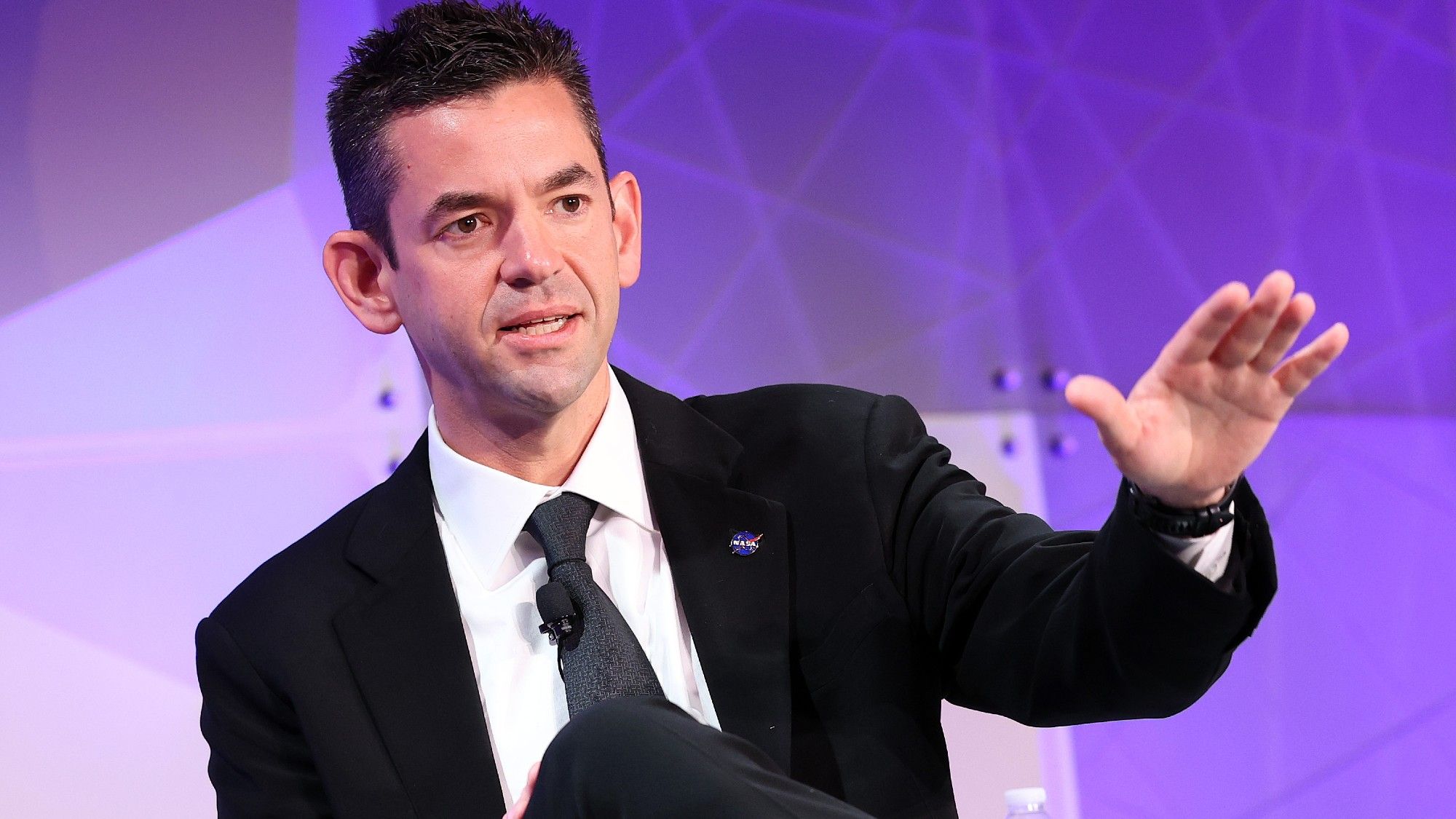
NASA Administrator Jared Isaacman spoke at the American Institute of Aeronautics and Astronautics (AIAA) ASCEND 2026 Conference on May 19, 2026, in Washington, DC. In a recent interview with Blake Burman on NewsNation's "The Hill" broadcast on September 25, Isaacman discussed the increasing reports of unidentified anomalous phenomena (UAP), suggesting they could signal a new technological era for the United States similar to the Cold War's "Sputnik Moment" triggered by the Soviet Union's launch of Sputnik 1 in 1957.
Read More
Isaacman recognized the importance of being open-minded regarding UAP, especially following former President Donald Trump's call for the release of UFO and UAP files under the Presidential Unsealing and Reporting System for UAP Encounters (PURSUE). He emphasized that if these phenomena are indeed extraterrestrial, NASA should play a significant role in the investigation. Isaacman stated, "My position going into every one of these: one, be open-minded. It is kind of our job to go out and try to answer the question 'are we alone?'
During the interview, Isaacman reflected on the characteristics of UAP observed in pilot reports and videos, indicating a possibility of advanced military technology being tested. He acknowledged the dual nature of the phenomena, considering both the potential for unexplained natural events and the emergence of sophisticated new technologies.
Isaacman also highlighted that many celestial bodies in our solar system, including moons like Enceladus and Europa, have not been thoroughly explored, suggesting that life could exist in closer proximity than anticipated. He argued that NASA’s mission is critical in exploring the vast possibilities across galaxies.
Additionally, an update from the U.S. Department of War introduced a new legal waiver that allows military personnel and contractors to disclose UAP-related information without breaching confidentiality agreements. Robert Powell, an executive board member of the Scientific Coalition for UAP Studies, commented that although the waiver offers some protections for whistleblowers, it does not eliminate risks associated with disclosing classified information.
Powell noted that the waiver specifies disclosures only to PURSUE representatives without breaching agreements, although it remains unclear how whistleblowers can identify or contact these representatives. He warned that unless Congress actively investigates these claims, the discourse surrounding UAP could remain speculative.