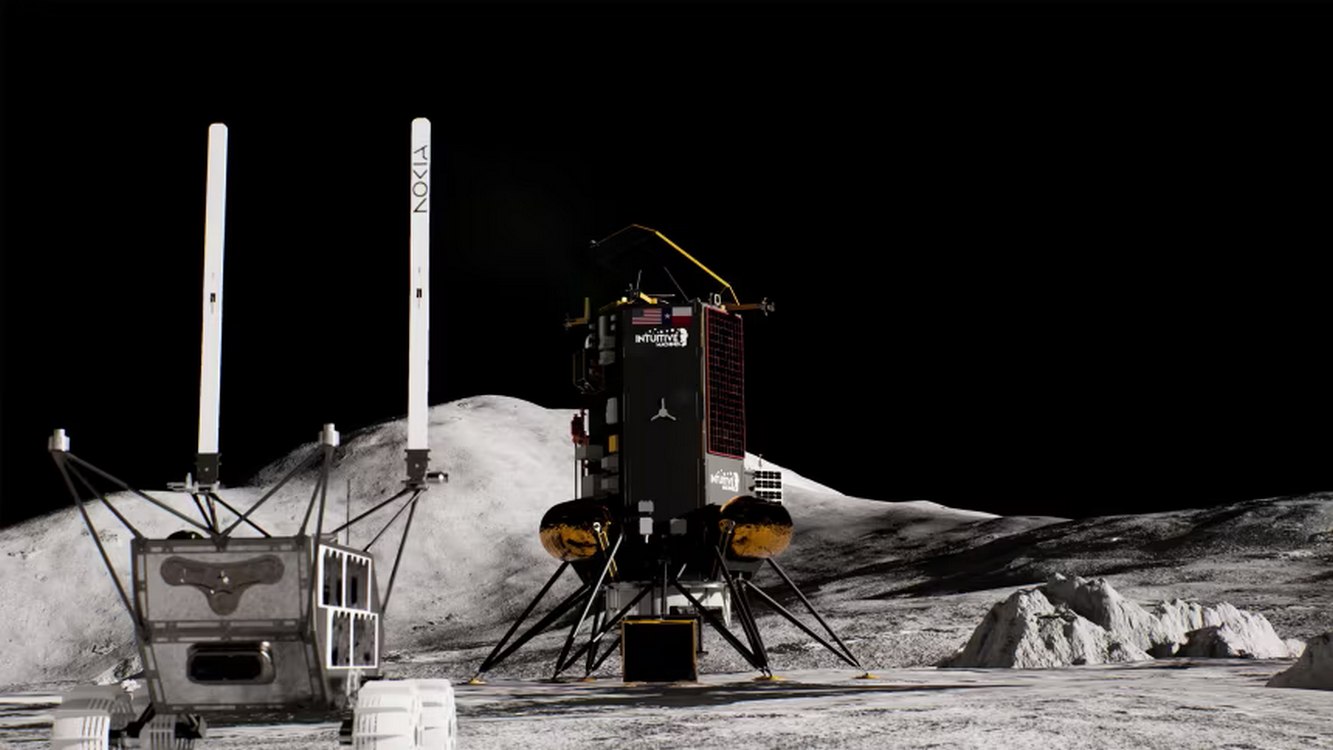
NASA is partnering with Nokia’s Bell Labs to develop a 4G network on the Moon, enabling astronauts to communicate more effectively with families and mission control. This initiative aims to support a semi-permanent human presence on the lunar surface and enhance off-world communication capabilities.
Read More
The 4G technology, constructed with off-the-shelf components, is scheduled to launch later this year aboard a SpaceX Falcon 9 rocket. It will reach the Moon via a landing craft from Intuitive Machines. Once on the lunar surface, the equipment will connect to two small rovers tasked with searching for water ice.
In 2020, Bell Labs received a $14 million grant to create this network. According to Walt Engelund, deputy associate administrator for NASA’s Space Technology Mission Directorate, a major challenge is developing space-qualified cellular equipment that meets strict size, weight, and power criteria, while also ensuring it can be deployed without a technician.
Current NASA missions, such as Artemis II, rely on conventional radio communications. However, the agency aims for future networks to support high-resolution video streaming and large data uploads. Engelund stated that the goal is to establish a lunar communications network that allows explorers to transmit scientific data and stay connected with their families, similar to using cellphones on Earth.
The Artemis Program not only focuses on returning humans to the Moon but also explores the feasibility of sustaining a human presence there. The rovers accompanying the Nokia device will investigate the potential of water as a resource for a lunar base, which could provide breathable oxygen, fuel, and drinking water at reduced costs compared to resupply missions from Earth.
Nokia’s 4G network is designed to provide astronauts and visitors with the same digital services available on Earth, including apps and messaging platforms. Additionally, Bell Labs anticipates that the technology adapted for lunar conditions could prove beneficial in Earth's harsh environments, such as deserts or polar regions.
The ideal outcome of the test landing would be for the rovers to find water ice and successfully transmit high-resolution images and video back to Earth, a significant advancement for telecommunications.