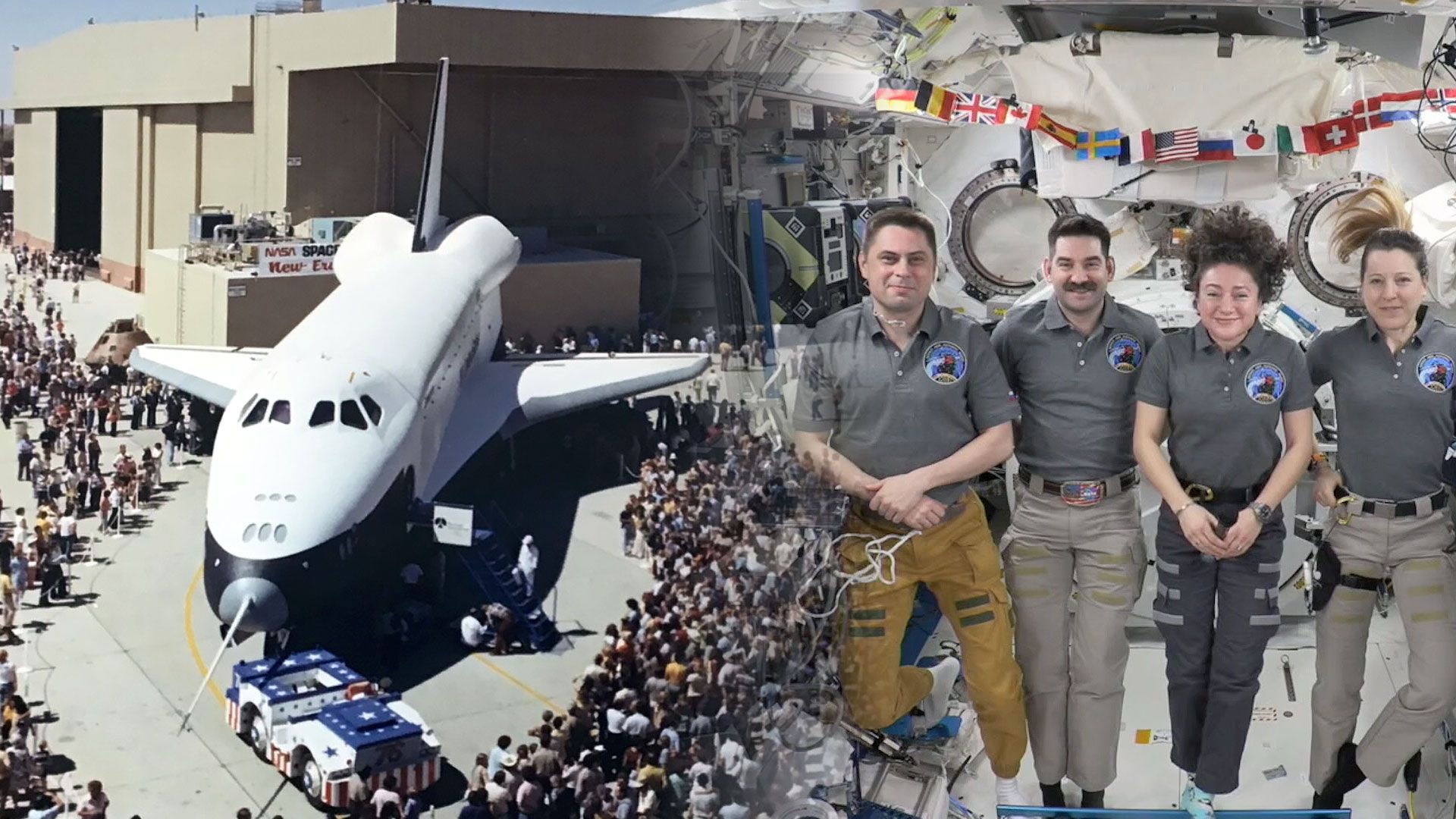
On September 17, 1976, NASA unveiled its first space shuttle orbiter, OV-101, named "Enterprise." Although it was a prototype intended for atmospheric and ground tests, Enterprise demonstrated the potential for reusable spacecraft capable of launching like a rocket and landing like a glider. The shuttle was later retired and became a museum piece in 1985, paving the way for three surviving space-worthy orbiters, which are now displayed in institutions across the U.S.
Read More
Jack Hathaway, an astronaut currently aboard the International Space Station (ISS), reflected on the significance of the shuttle's rollout during a press conference on September 16, 2026. Hathaway, who pursued his dream of flying advanced vehicles, noted his admiration for Enterprise. "It was definitely one of my goals to be able to fly something like it someday," he said. "It built this space station, which people have inhabited now for over 25 years."
The event in 1976 was marked by an enthusiastic crowd, a performance by a marching band playing the theme from "Star Trek," and the presence of cast members from the show. Jim Fletcher, then NASA administrator, emphasized the historic nature of the shuttle's rollout, stating, "We are on the verge of a new era in spaceflight."
Barry Goldwater, a U.S. Senator, highlighted the potential of the shuttle program to expand humanity's understanding of space. Leonard Nimoy, who played Spock on "Star Trek," commemorated the occasion years later, calling it a "great day for America."
NASA astronaut Jessica Meir, who was born ten months after the Enterprise's reveal, cited the shuttle program as a major inspiration for her passion for space. During her time aboard the ISS, Meir noted the influence of space shuttle launches she witnessed in school, stating, "Seeing it on the evening news — I think that was one of the things that really inspired me and got me interested in spaceflight."
The Enterprise further served to engage the public, touring Europe and participating in aerial displays, including at the Paris Air Show in 1983. The orbiter's legacy continues to inspire new generations in the pursuit of space exploration.