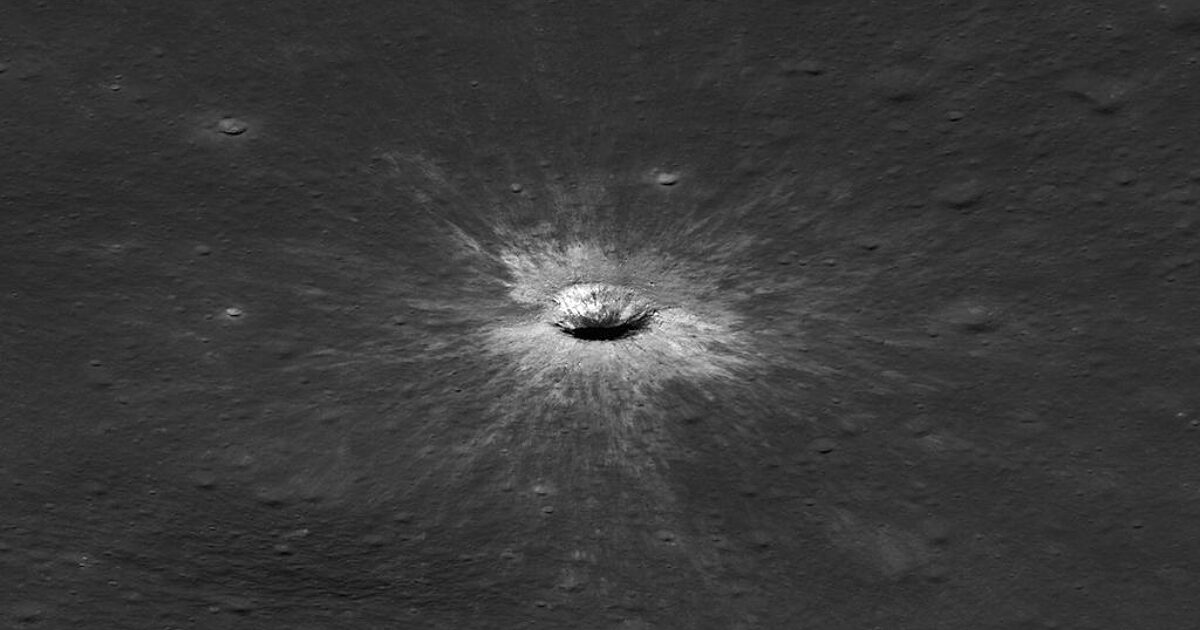
Astronomers have identified a newly-formed crater on the Moon, named McGetchin Crater, which formed in 2024 when an asteroid or comet approximately the size of a small apartment building struck the lunar surface. The crater measures about as wide as two football fields placed end-to-end and was captured from an oblique perspective by NASA’s Lunar Reconnaissance Orbiter. This event adds to the over one million craters on the Moon that are wider than 1 kilometer (0.62 miles), among many smaller ones; a recent survey noted the formation of a new lunar crater every hour and a half.
Read More
In related news, the Hubble Space Telescope has completed its 200,000th orbit around Earth. The NASA/ESA observatory, now in its 36th year, has traveled more than eight billion kilometers (five billion miles) in total. Scientists estimate that without reboosting, Hubble is expected to reenter Earth’s atmosphere around 2033. A historic image of Hubble taken by astronauts from the space shuttle Columbia in 2002 highlights its long service.
Research funded by NASA has led to the discovery of a species of amoeba in Lassen Volcanic National Park, California, that can reproduce at temperatures up to 63 degrees Celsius (145 degrees Fahrenheit). This finding sets a new record for eukaryotic life forms, indicating a wider range of extreme conditions where Earth-like life may exist.
The Planetary Society has announced three new research initiatives funded through its crowd-sourced Science and Technology Empowered by the Public (STEP) Grants program. The winning projects include a Solar System shadow-tracker, a novel telescope tool for planetary defense, and the development of an asteroid database for researchers.
Additionally, this week’s Planetary Radio episode features Paul Abell, Chief Scientist for Small Body Exploration at NASA's Johnson Space Center, discussing findings from the JAXA Hayabusa2 mission at the asteroid Torifune.
Upcoming events for The Planetary Society include book club discussions on topics like cosmic beauty and alien oceans, as well as collaborations with GalaxyBox, a service delivering space-themed memorabilia. A partnership with ChopShop has also been announced to create a set of scientifically accurate space stamps, available for backing until September 29.
In astronomy, Venus will be prominent in the western evening sky, while Saturn will rise in the east. Jupiter will dominate the pre-dawn eastern sky, accompanied by Mars. Stargazers are encouraged to consult guides for September's night skies.
Lastly, NASA has launched a tool allowing individuals to view what the Hubble Telescope was observing on their birthday. An example image features Jupiter partially occulting its largest moon, Ganymede, showcasing the iconic legacy of Mary Jackson, NASA's first black female engineer.