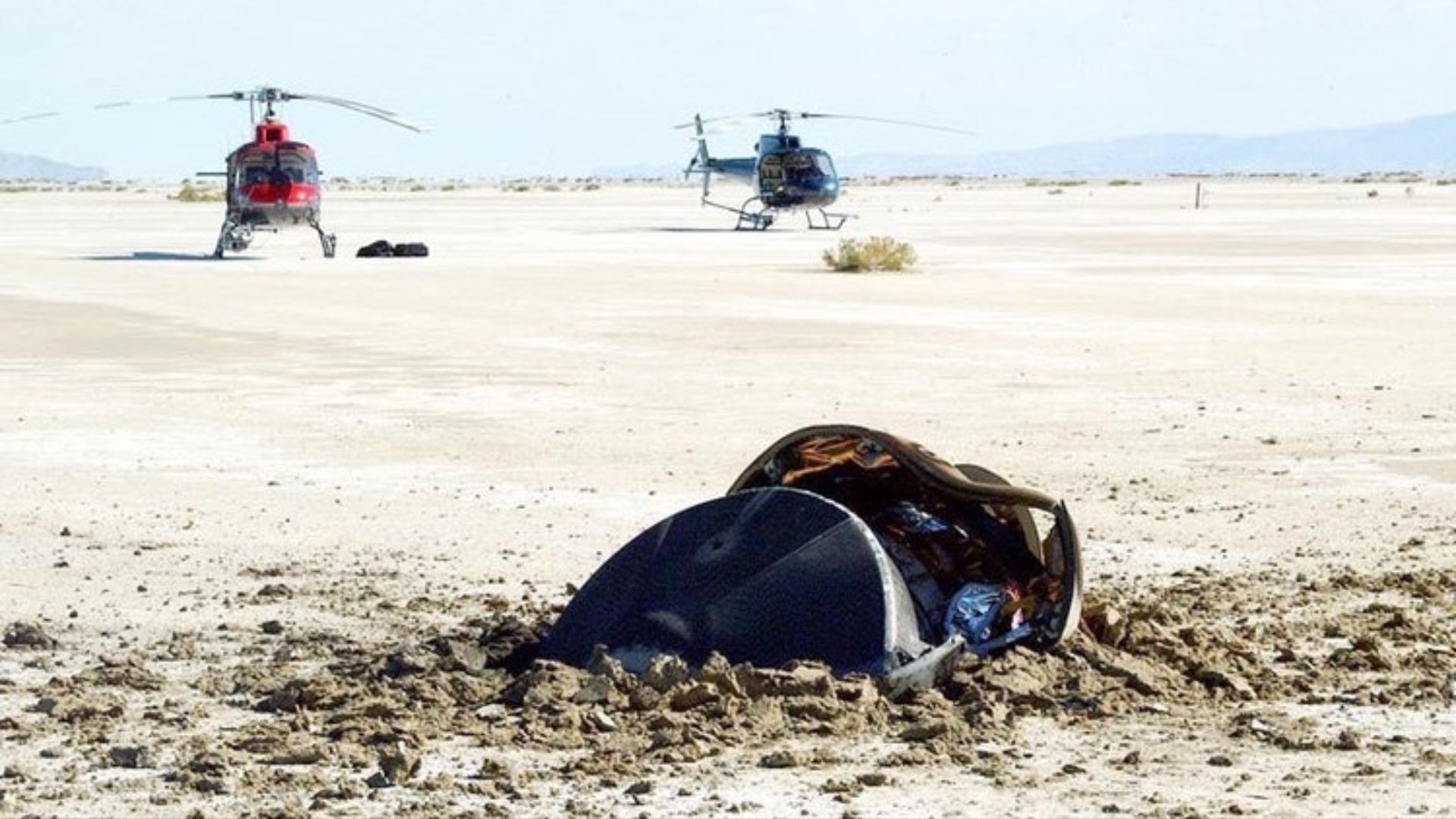
On September 8, 2004, NASA's Genesis spacecraft crash-landed in the Utah desert after its parachutes failed to deploy. This mission marked NASA's first attempt to retrieve samples from beyond the Moon since the Apollo program. Genesis had collected solar wind particles while orbiting the L1 Lagrange point, approximately 1 million miles from Earth, an area known for its balanced gravitational forces between the Earth and the sun.
Read More
The spacecraft gathered solar wind samples using ultrathin semiconductor wafers, which allowed atoms and ions in space to adhere to them. However, due to a design flaw, the parachute system failed to operate properly. Specifically, four gravity switches in the sample-return canister were mistakenly installed backwards, preventing parachute deployment during the descent.
As a result, Genesis plummeted to the ground, which led to the wafers shattering into thousands of pieces upon impact. Despite the loss, scientists managed to recover some of the solar wind samples. The mishap prompted NASA to review safety protocols for other missions, including the Stardust probe, which successfully returned samples in 2006 without such issues.
On the same day in 1966, the first episode of "Star Trek" aired on television, a cultural milestone that has significantly influenced perceptions of spaceflight and has continued to inspire scientists and engineers over the decades. The franchise celebrates its 60th anniversary in 2026.