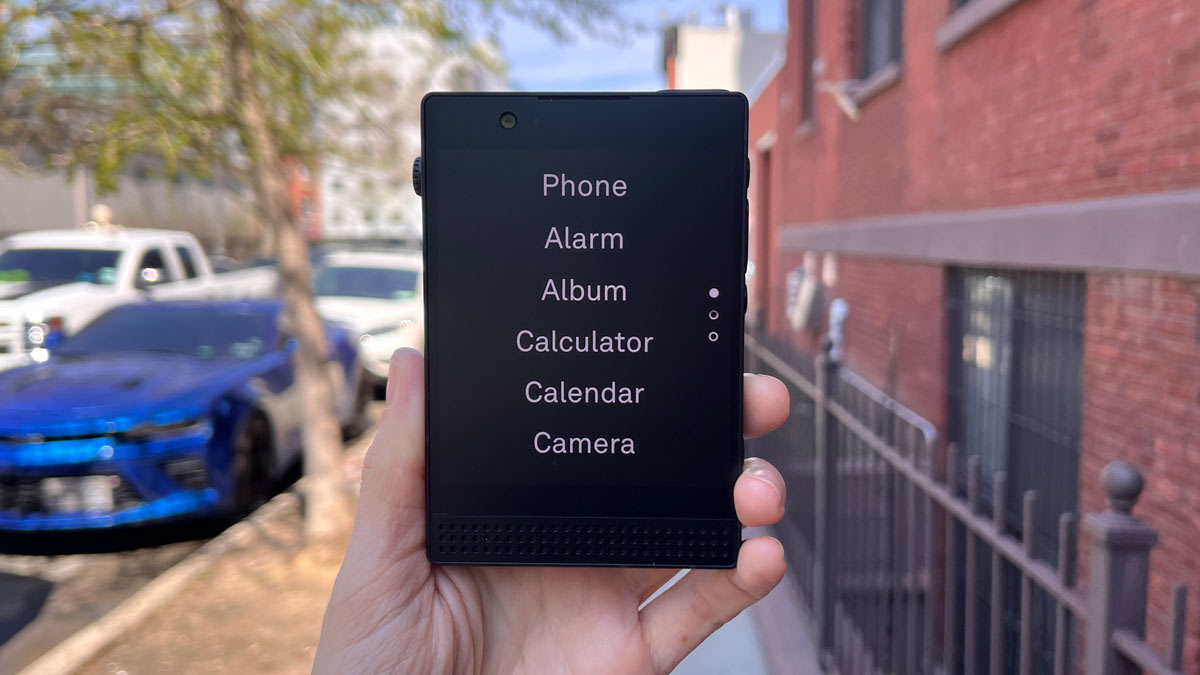
The Light Phone III provides a streamlined alternative to traditional smartphones, allowing users to call, text, listen to music or podcasts, and access directions. It includes a simple camera, a notes tool, and essential features like an alarm and timer, but lacks many functionalities commonly found in modern devices.
Read More
This third version of the Light Phone is targeted at individuals seeking to limit screen time while retaining essential communication tools. It strikes a balance between utility and simplicity, reducing the seductive distractions typical of smartphones.
The device boasts an OLED touchscreen, quicker than the previous model’s e-ink display, along with a faster processor that improves the handling of basic tasks. However, it deliberately omits features such as an internet browser, email, news alerts, and social media, focusing instead on a limited set of tools displayed on a monochromatic screen.
Consumer Reports acquired the Light Phone III for evaluation as part of its exploration of various strategies for reducing screen time. After experimenting with different methods—including notification muting and using a standard flip phone—the reviewers found the Light Phone III to be a practical and effective device for minimizing distractions. Priced at $699, it represents a significant investment compared to less expensive alternatives.
The Light Phone III's distinctive boxy design sets it apart from typically sleek smartphones. Its 3.9-inch touchscreen, built into a chunky frame, provides a tactile experience that contrasts with the more delicate designs prevalent today. The home screen is minimalist, listing essential tools without clutter, fostering a feeling of organization and simplicity.
This unlocked device can be used with a range of carriers, including AT&T, T-Mobile, and Verizon. Users have the option to retain their existing phone number by switching their SIM card or can choose to set up a new line with Light Phone's cellular service, which offers plans starting at $25 per month.
Text messaging on the Light Phone III is straightforward but slower compared to more advanced devices, partly due to a less efficient spell-check function. The messaging app supports sending photos, emojis, group texts, and short voice messages, but lacks some interactive features common in other messaging applications.
Music can be added via the Light Phone dashboard, where users can drag and drop files into a library that supports up to 20 GB. While the setup is functional and reminiscent of past music exploration, it lags behind the convenience of streaming services. The phone also allows connection to headphones via Bluetooth.
The GPS navigation feature on the Light Phone III is user-friendly, offering turn-by-turn directions and voice prompts, although it does not include real-time traffic updates. The “Directory” function helps users find local businesses and services, providing essential details such as addresses and hours but lacking richer content like reviews or photos.
Equipped with a 50-megapixel rear camera and an 8-megapixel front-facing camera, the Light Phone III captures color photos despite the device primarily using a black-and-white interface. While it offers improved capabilities over simpler phones, the quality does not match that of higher-end smartphones. Managing photos requires additional steps as there is no automatic cloud storage.
The value of the Light Phone III lies in its ability to encourage mindful phone use, making it an appealing choice for those overwhelmed by conventional smartphones. At $699, it may not be the most budget-friendly option, especially given the availability of cheaper devices, but its unique design and minimalist approach could provide significant psychological benefits, like reduced screen time and increased mental clarity.