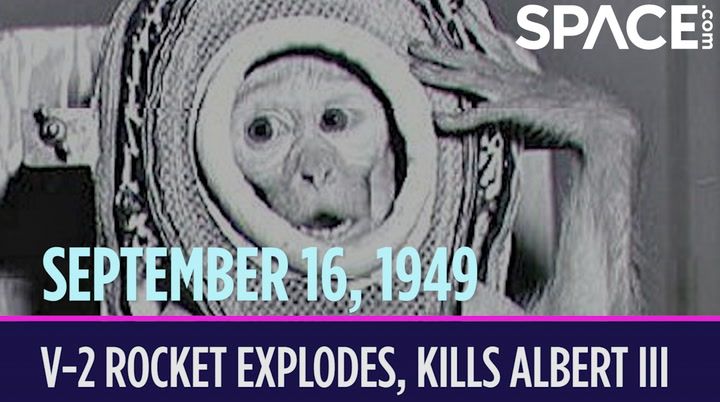
On September 16, 1949, the United States conducted a V-2 rocket launch from White Sands Missile Range in New Mexico, carrying a monkey named Albert III. This was the third attempt to launch a monkey into space, and Albert III became the third monkey to die during such missions. The U.S. began these tests in the 1940s to understand the potential effects of space travel on humans, long before any human flights occurred.
Read More
All of the monkeys were administered anesthetics and outfitted with sensors to monitor their physiological responses during flight. While prior Albert missions involved rhesus monkeys, Albert III was a long-tailed macaque. Tragically, his flight ended in failure when the rocket exploded 10 seconds after launch.
Previous Albert missions had resulted in different causes of death: one monkey suffocated, and another died due to a parachute malfunction. It wasn't until Albert VI's successful flight in 1961 that a test monkey survived a launch. The use of monkeys for such testing was ultimately discontinued by NASA in the 1980s.
The launch of Albert III failed 24.7 seconds after liftoff, with the rocket achieving an altitude of only 3 miles. Reports indicate the rocket experienced an explosion in the tail section 10.7 seconds into flight, followed by another explosion 14 seconds later due to issues with its alcohol fuel system. Despite this failure, the insights gained from the launch contributed to design improvements in subsequent tests. Overall, three out of seven launches in the Project Blossom series ended in failure.
The first successful monkey launch occurred on September 20, 1951, when Albert VI, accompanied by 11 mice, was brought back safely from suborbital space aboard a new Aerobee rocket.