Rising memory chip prices due to increased investment in artificial intelligence (AI) infrastructure are significantly affecting the global smartphone market. Budget devices are facing heightened pressure from escalating manufacturing costs, while premium models are gaining traction, creating a wider gap between different price segments.
Read More
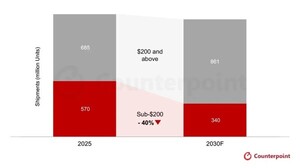
Counterpoint Research reported on October 13 that global shipments of smartphones priced under $200 are expected to drop by around 40% from 2025 to 2030, translating to a decrease of over 230 million units. Manufacturers of lower-priced smartphones have limited ability to transfer higher memory costs to consumers, prompting reductions in production volumes or specifications.
In contrast, premium smartphones are projected to experience a compound annual growth rate of 7% during the same timeframe. These manufacturers can more readily pass rising component costs onto consumers, urging a focus on premium models to maintain profitability. Even if overall global smartphone shipments return to approximately 1.2 billion units by 2030, the distribution among price segments could differ significantly from current trends.
This pressure is reflected in recent shipment data, which shows global smartphone shipments fell 20% year over year in the third quarter, marking the lowest level for the period since 2012. Contributing factors include the concentration of memory supply in AI data center infrastructure, leading to component shortages and increased costs for smartphone makers. Retail prices for smartphones have risen by about 20% this year, as consumers extend replacement cycles or opt for used and refurbished devices.
Among major manufacturers, Samsung Electronics retained its lead with a 23% market share, buoyed by initial demand for its Galaxy Z Fold8 series and steady supplies of midrange devices. Apple achieved over a 20% share in the third quarter for the first time, narrowing the gap with Samsung. Meanwhile, Xiaomi's shipments fell by more than 30% as the company decreased its focus on lower-priced devices to protect profitability, resulting in a market share decline to 10%.
The implications of higher memory prices are mixed for South Korean semiconductor companies. Samsung Electronics, which operates in both the memory chip and smartphone sectors, faces a dual challenge: while its semiconductor division benefits from higher memory prices, its mobile division must contend with increased component costs. This scenario raises the potential for Samsung to streamline its budget smartphone offerings or introduce lower memory configurations to mitigate production costs.
In contrast, SK hynix is likely to capitalize on rising memory prices without the associated manufacturing costs of a smartphone business. Counterpoint Research anticipates that manufacturers will continue to adjust production and focus on premium devices through the end of the year, likely intensifying financial pressures on consumers sensitive to pricing. The contrasting trends for budget and premium smartphones suggest that the AI-driven memory surge could fundamentally alter semiconductor profitability and the structure of the global smartphone market.