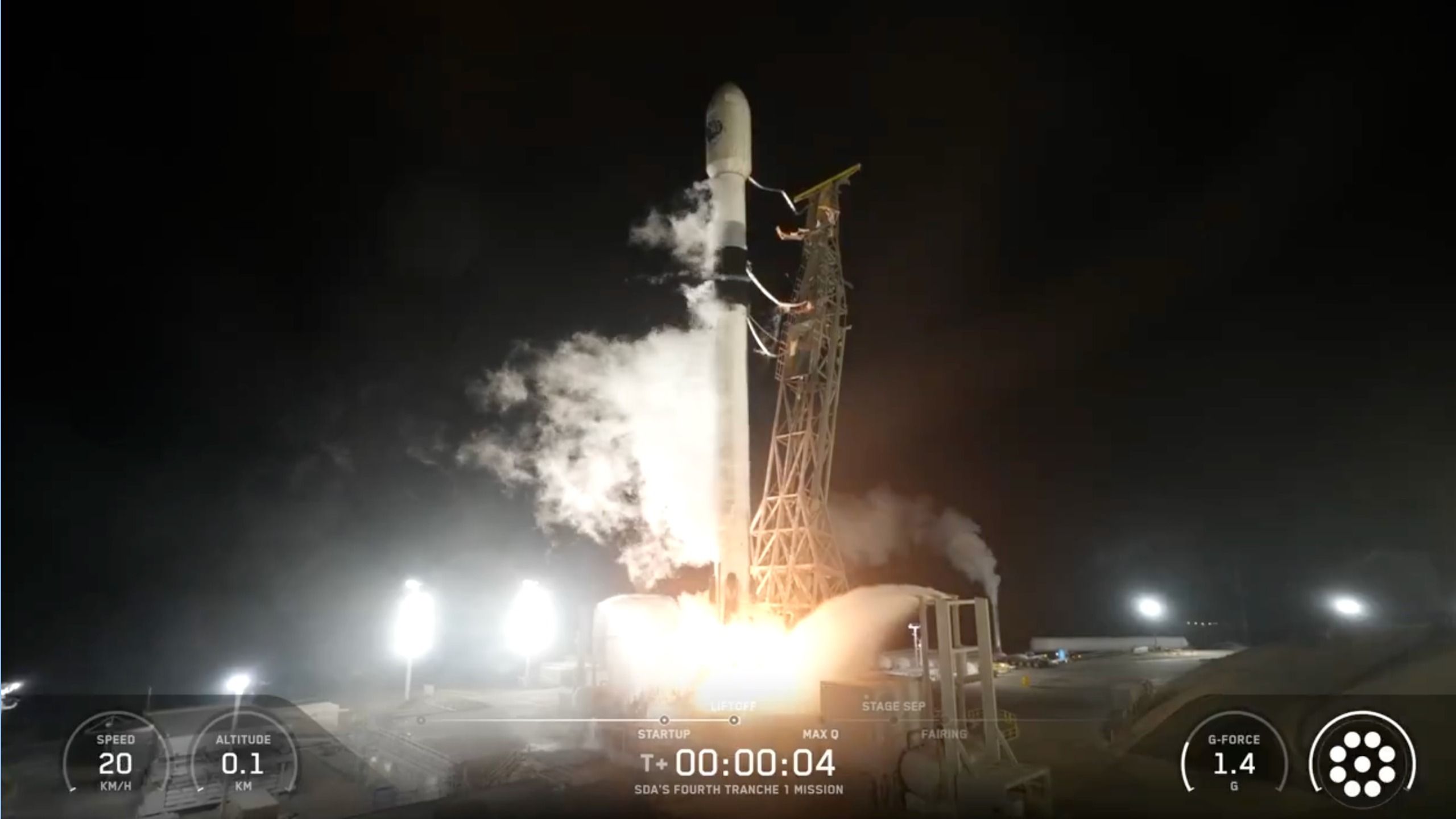
SpaceX has successfully launched another batch of satellites for the U.S. military. A Falcon 9 rocket took off from California's Vandenberg Space Force Base on October 10 at 3:39 a.m. EDT (0739 GMT; 12:39 a.m. local time), delivering 21 "data transport" satellites for the U.S. Space Force's Space Development Agency (SDA). This launch occurred five days later than initially scheduled due to an aborted attempt on October 5, where the Falcon 9's countdown was halted in the final minute for undisclosed reasons.
Read More
This mission is part of the SDA's Proliferated Warfighter Space Architecture (PWSA), described by SpaceX as a mesh network of optically connected satellites in low Earth orbit (LEO) designed to enhance global military tactical communications and missile tracking capabilities. Today's launch marks the fourth of nine planned missions aimed at establishing the architecture's Tranche 1, which is deemed the "initial warfighting capability tranche" by the SDA.
Tranche 1 is expected to consist of 154 operational satellites, comprising 126 data-transport spacecraft and 28 missile-tracking vehicles, along with four missile-defense test satellites that will feature advanced infrared sensors. To date, 84 of the 126 data-transport satellites have been launched aboard Falcon 9 rockets from Vandenberg in previous missions occurring in September 2025, October 2025, July of this year, and now in October.
The SDA's approach involves spiral development, allowing them to introduce new capabilities every two years in what they refer to as a 'tranche,' continually enhancing the capabilities available to military personnel.
The Falcon 9's first stage successfully landed back at Vandenberg approximately seven minutes after launch, marking the sixth mission for this booster, designated 1103, which previously supported the July Tranche 1 mission.
SpaceX concluded its webcast shortly after the booster touchdown at the request of the SDA, with further updates on satellite deployment pending. This launch represents the 111th Falcon 9 flight in 2023, with over 70% of these missions dedicated to expanding SpaceX's Starlink broadband constellation, which currently includes more than 11,000 satellites.