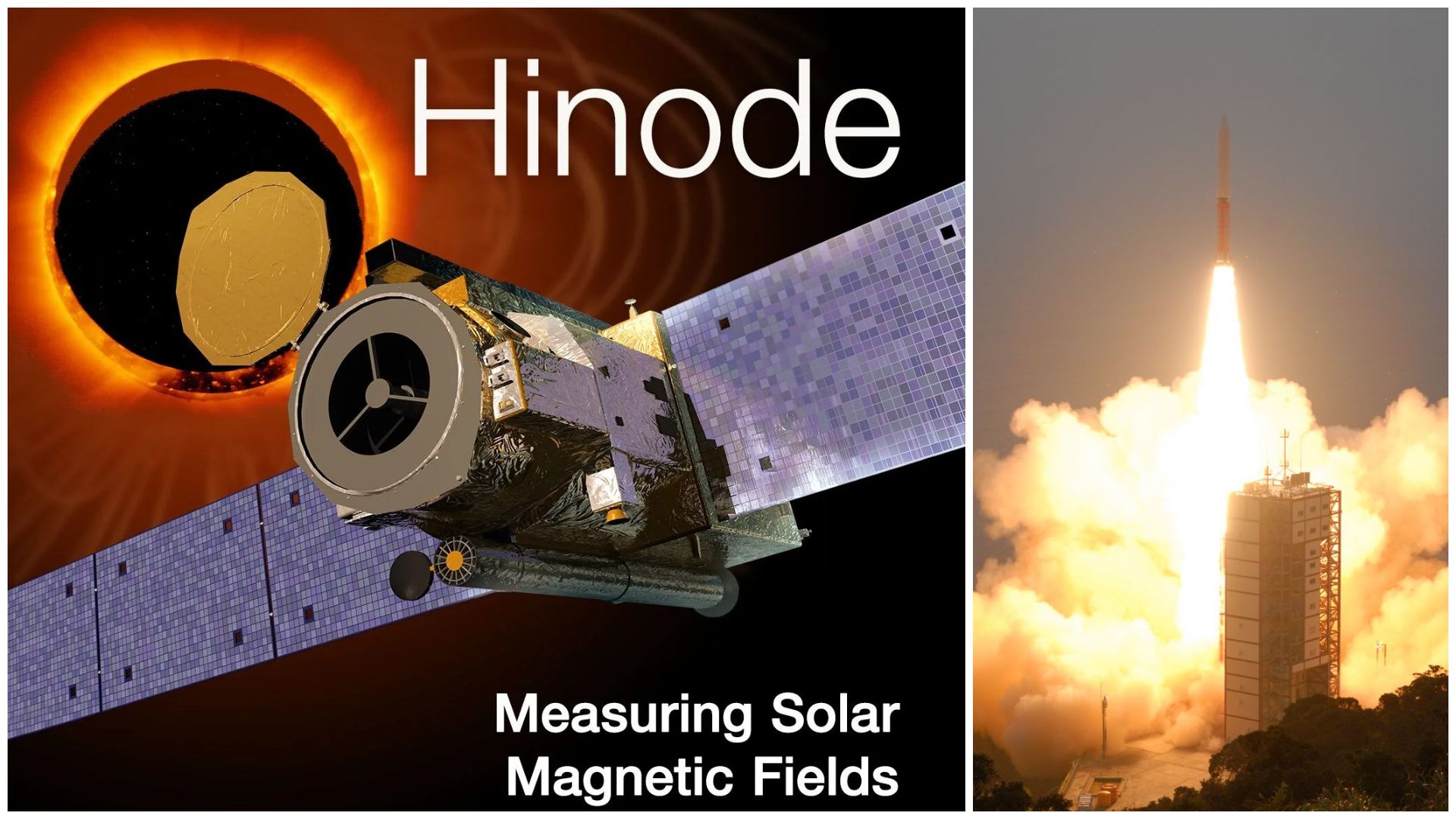
On September 22, 2006, the Japan Aerospace Exploration Agency (JAXA) launched the Hinode solar observatory, also known as Solar-B, to study the sun’s magnetic field. The satellite, named after the Japanese word for "sunrise," operates about 400 miles (640 kilometers) above Earth in a sun-synchronous orbit, ensuring it is always directed toward the sun.
Read More
Since its launch, Hinode has been instrumental in measuring the sun's magnetic fields and capturing images of solar phenomena, including flares, sunspots, and transits. The mission, a collaboration among Japan, the United States, the United Kingdom, and Europe, has been ongoing for nearly 20 years. According to NASA, Hinode’s Solar Optical Telescope is the first dedicated to measuring the strength and direction of the sun’s magnetic field at the photosphere.
In addition to the Solar Optical Telescope, Hinode is equipped with an EUV imaging spectrometer and an X-ray telescope. These instruments are designed to understand the causes of eruptions in the solar atmosphere and their relationship to the intense heating of the corona and the mechanisms driving solar material and radiation—the solar wind.
Hinode's orbit is unique; it completes a circle around Earth every 98 minutes and experiences an "eclipse season" during the summer months in the Northern Hemisphere. During this time, the satellite encounters a solar eclipse on each orbit, with Earth's shadow obscuring the sun for up to 10 minutes at a time, enabling continuous solar observations for nine months.
Launched from the Uchinoura Space Center in Kagoshima, Japan, Hinode's launch occurred at 10:36 PM EDT on September 22, 2006, which was September 23 local time due to the time zone difference.
Throughout its mission, Hinode has produced stunning visual data of the sun’s activity, and while its mission was initially set to conclude in 2020, scientists had hoped it could last until 2022 and beyond.