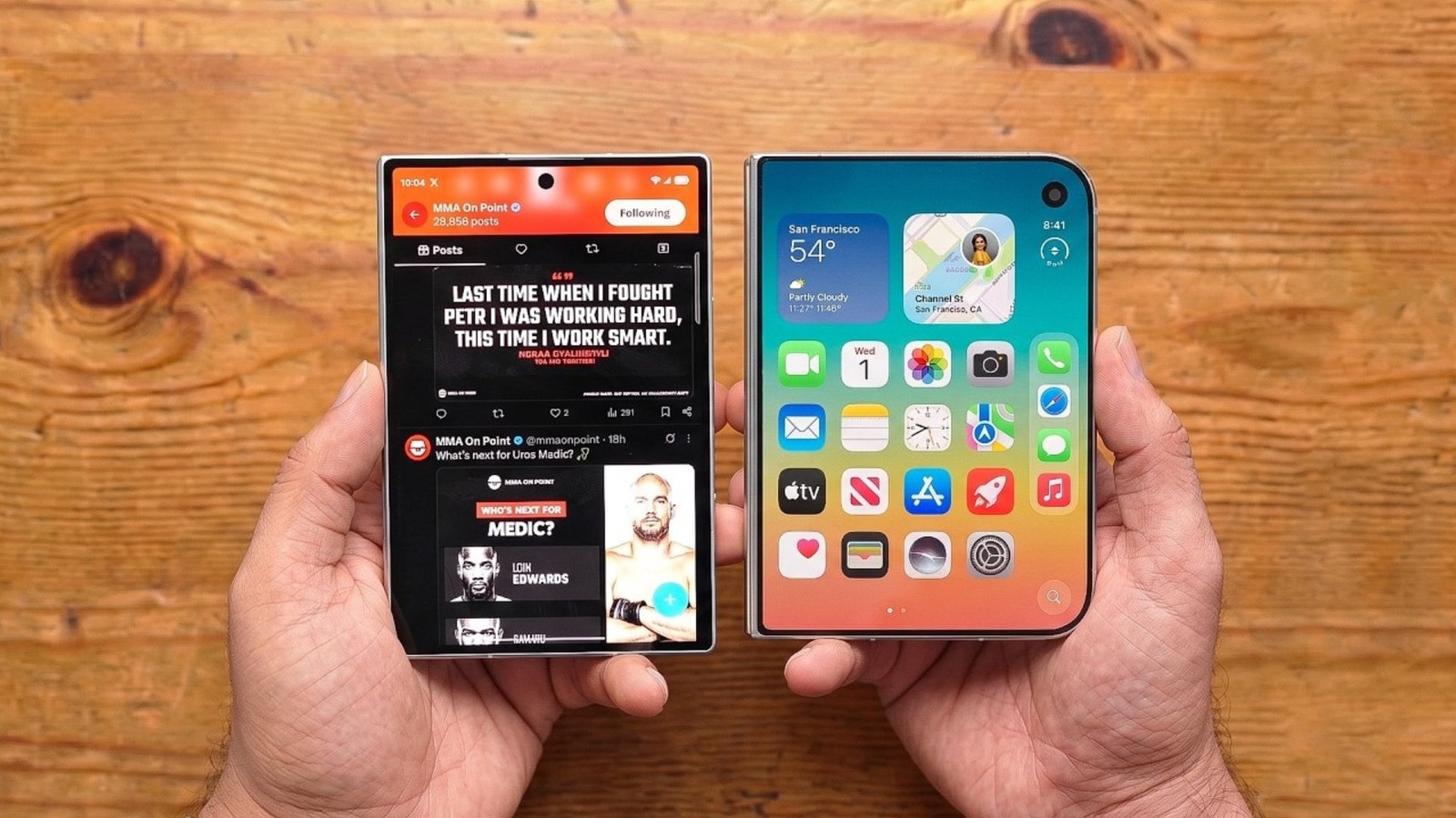
Apple has announced its first foldable device, the iPhone Duo, which will be available starting in October with a price range of $1,999 to $2,599. This release marks a significant moment for the company, yet Samsung's Galaxy Z Fold 8, which has been iteratively improved over eight generations since its debut in 2019, remains a strong competitor in the foldable market.
Read More
The Galaxy Z Fold 8 benefits from years of development and refinements in design and functionality. Samsung has addressed various issues in previous models, resulting in a foldable phone that combines durability with a user-friendly experience. Meanwhile, the iPhone Duo is Apple's first foray into foldable technology, and it likely carries some challenges typical of first-generation products.
One notable difference is the absence of Face ID on the iPhone Duo; it instead features Touch ID integrated into the side button. Additionally, the camera system is limited to just two lenses—main and ultra-wide—lacking a telephoto option for optical zoom. In contrast, the Galaxy Z Fold 8 offers a 10x telephoto camera on its Ultra model and features two 50MP cameras, making it a more versatile choice for photography enthusiasts.
Software capabilities also favor the Galaxy Z Fold 8. Samsung's One UI is designed to enhance productivity on the device's expansive screen, including multitasking features like resizable split-screen views and pop-up windows, which contribute to a smoother user experience. Apple's iOS 27 introduces split-screen functionality to the iPhone Duo but is still in its early stages, resulting in a less fluid experience compared to Samsung's longstanding software optimization.
When it comes to options, Samsung provides a variety of foldable designs, including the Galaxy Z Fold 8 and the Galaxy Z Flip 8, offering consumers choice in form factors and features. In contrast, the iPhone Duo is available only in one model, which may not appeal to all users.
The Galaxy Z Fold 8 runs on Android, allowing seamless integration with Google apps and Microsoft Office. Its Samsung DeX feature enables a desktop-like experience when connected to a monitor, which the iPhone Duo currently lacks. This positions the Galaxy Z Fold 8 as an ideal choice for users who need versatility in their workflow.
Lastly, the AI features on the Galaxy Z Fold 8 have matured significantly, offering capabilities like live call translation and advanced photo editing. Apple's AI development, while promising, has faced delays and is still catching up to Samsung’s offerings. For consumers prioritizing AI functionality, the Samsung Galaxy Z Fold 8 appears to provide a more robust experience at this time.