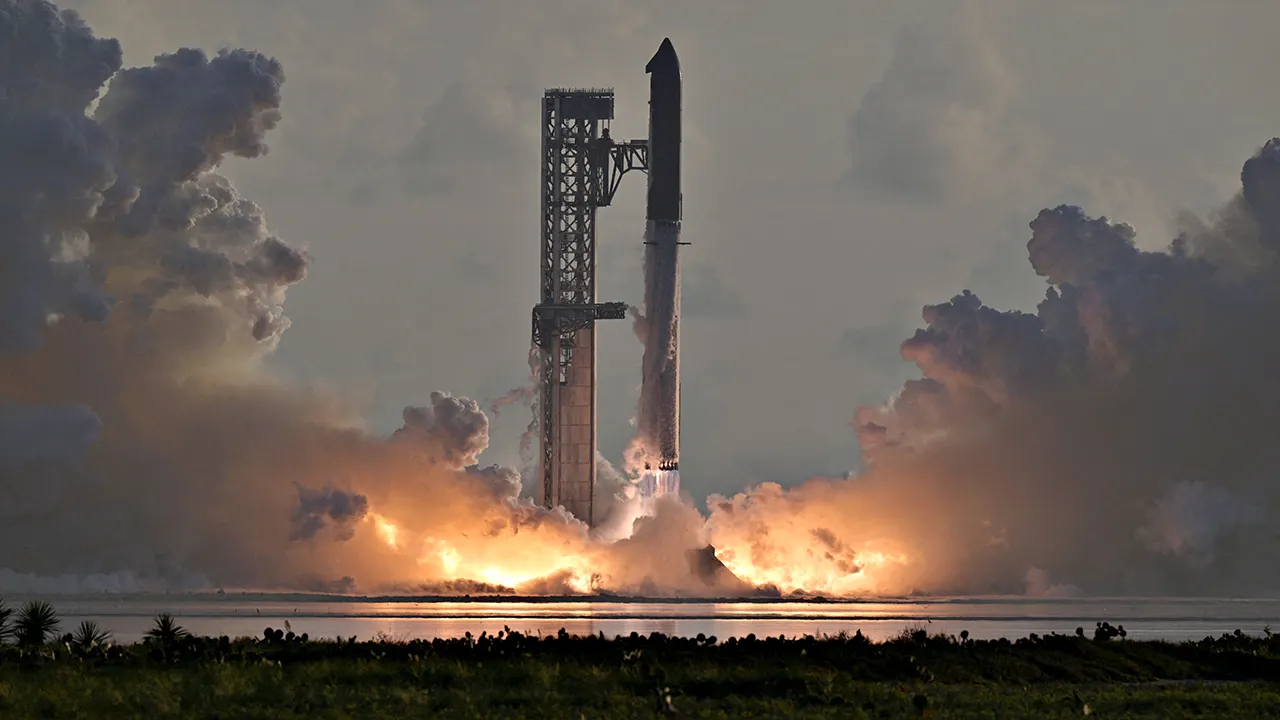
SpaceX successfully launched its Starship rocket from Texas on Monday morning, marking its most ambitious test flight to date. The mission aimed to last approximately 10 hours, with plans for the spacecraft to orbit Earth six times. However, early in the ascent, the uncrewed vehicle lost one of its engines, raising concerns about its ability to reach orbit.
Read More
Flight controllers initially debated the mission's fate but ultimately confirmed that the spacecraft was cleared for an orbital burn. Approximately 26 minutes after liftoff, Starship achieved orbit using a single Raptor engine. Mission Control celebrated the milestone, announcing, "Starship is orbital."
SpaceX later decided to conclude the mission earlier than planned, with a deorbit expected after about three hours in space. The Starship splashed down in the Pacific Ocean around noon. This launch represents Starship's 14th test flight and is significant as it was the vehicle's first attempt to reach orbit, a notable advancement from previous suborbital missions that concluded with splashdowns approximately one hour after takeoff. During the flight, Starship also deployed 26 operational Starlink V3 satellites, as noted by SpaceX CEO Elon Musk on X.
While all flights thus far have been uncrewed, NASA plans to utilize a future version of Starship as a lunar lander for astronauts. The long-term vision includes developing a fleet of Starships intended to transport humans to Mars.