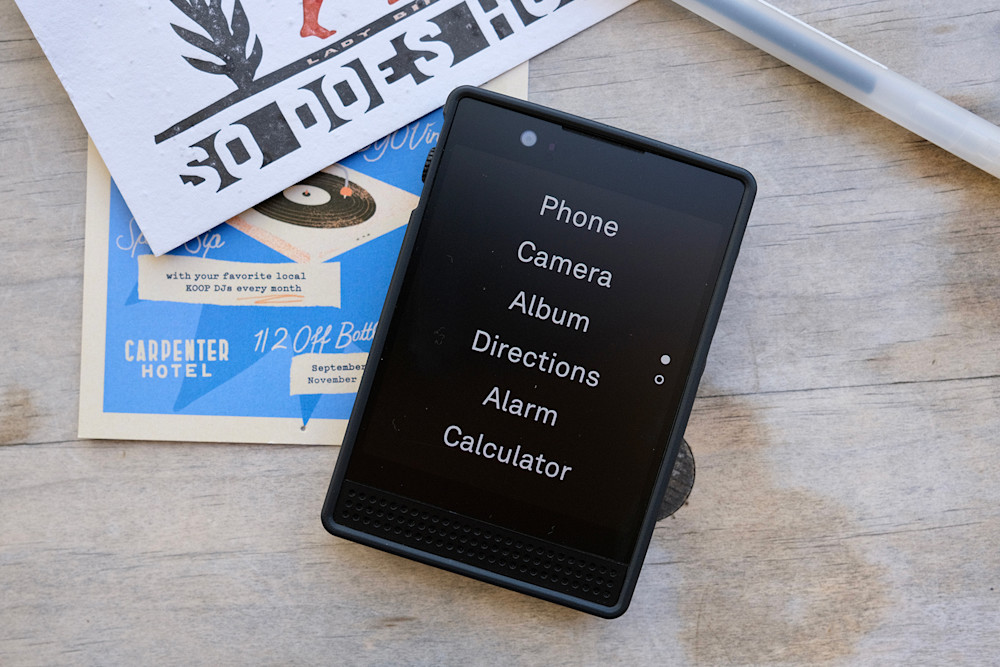
The Light Phone III is a minimalist device intended for users seeking to reduce their dependence on smartphones while engaging in outdoor activities. Released on January 7, 2026, it retains a focus on basic functionalities such as calls, texting, and maps, departing sharply from the feature-rich offerings of typical smartphones.
Read More
First introduced in 2025, the Light Phone III is the latest in a series designed to limit distractions. Co-founder Joe Hollier, influenced by his experiences in a Google-backed app development program, aims to counteract the detrimental effects of technology on attention spans. Previous iterations, including the original Light Phone in 2015 and Light Phone II in 2019, expanded functionalities while maintaining a commitment to simplicity; neither included social media, web browsers, or email features.
In a hands-on test while trail running in the Catalina Mountains, navigating without a smartphone posed challenges. The tester, relying solely on the Light Phone III, initially missed the vast functionalities of their smartphone, especially map-based applications. However, they found unexpected benefits in pausing to appreciate the surroundings rather than engaging with a device. The experience encouraged a deeper connection with nature, highlighting the Light Phone’s primary advantage: fostering mindfulness.
As the hike progressed, conventional navigation skills came into play. Rather than solely relying on a smartphone for directions, the reviewer learned to observe the environment actively and make better-informed decisions, reinforcing the idea that a slower pace could enhance the outdoor experience.
Previous users of smartphones may miss immediate access to data but the test indicated that it also promoted social interactions and engagement with the environment. During a subsequent bikepacking trip in Baja California, the Light Phone’s lack of advanced features required thorough pre-trip planning, which included obtaining paper maps and detailed notes for navigation.
While using the Light Phone in unfamiliar territory, the user found that interactions with locals changed significantly compared to using a smartphone. The device was helpful for basic functions such as taking photos and currency conversion, although more intricate tasks required assistance from people rather than online searching.
With a price tag of $699, the Light Phone III presents both advantages and challenges for outdoor enthusiasts. It encourages a more profound engagement with the environment but at the expense of the convenience that smartphones provide. After three months of usage, the reviewer has embraced the Light Phone as their primary device, appreciating its focus on simplicity and the skills necessary to navigate without digital help.
The Light Phone III operates on major U.S. carriers like Verizon, T-Mobile, and AT&T and boasts features such as a camera and battery life of one to two days with light usage. However, it lacks third-party app support, remaining true to its mission of minimalism.