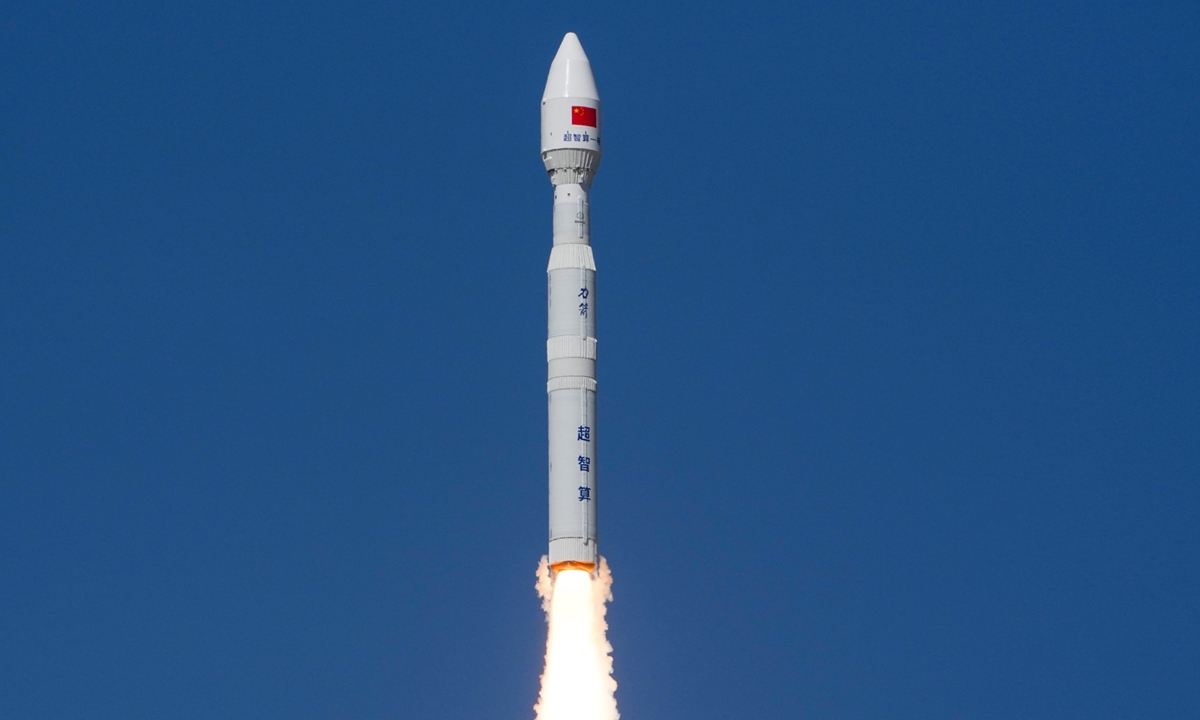
The Kinetica-1 Y18 rocket successfully launched nine satellites into orbit at 12:03 PM on September 20, 2026, from the Dongfeng commercial space innovation pilot zone in Northwest China. This accomplishment contributed to a remarkable achievement for China, marking six successful orbital launches in just six days.
Read More
With a 100 percent success rate, this launch demonstrates China's increasing launch capability and expanding space transportation options. The payloads included satellites focused on remote sensing, disaster prevention, scientific research, artificial intelligence computing, and next-generation communications, according to the rocket's developer, CAS Space.
This mission capped a launch streak that began on September 15, involving several rockets including Zhuque-2E, Gravity-1, Long March-12, Kuaizhou-11, Long March-2D, and Kinetica-1. The significance of these launches lies not only in their number but also in the diverse range of missions they comprised, reflecting the growing participation of commercial innovation in China's established space capabilities.
Notably, on September 15 and 16, two privately developed rockets deployed satellites for the Qianfan mega-constellation. A Zhuque-2E Y7 rocket launched 10 Qianfan satellites on September 15, while a Gravity-1 Y3 rocket launched an additional eight satellites less than 16 hours later. These missions brought the total number of Qianfan satellites deployed to 256.
Experts noted that the involvement of commercial launch providers in deploying large-scale satellite constellations signals a shift towards providing substantial capacity for such projects, beyond mere technological demonstrations. Song Zhongping, a space affairs commentator, emphasized that high launch frequency is a vital indicator of a country’s overall space capability and that China’s recent success reflects its mature national space system.
On September 17, a Long March-12 rocket launched the 25th batch of China's low-orbit internet satellites from Hainan, exemplifying the national sector's significant role in large-scale infrastructure deployments. This was followed by a Kuaizhou-11 rocket that launched two commercial remote-sensing satellites, indicating the growing involvement of private companies across the entire space industry lifecycle.
The Kinetica-1 mission also highlighted satellite technology advancements. Among the payloads was the Chaozhisuan-1 remote-sensing satellite, which features a four-meter visible-light camera and onboard AI for real-time image processing. Another satellite, Pengcheng-1 or Pengcheng-Nanke-1, incorporates a 5G NTN base station, AI computing capabilities, and advanced communication payloads, with the aim of enhancing communications and remote sensing integration.
According to Ren Jiadong from GalaxySpace, the Pengcheng-1 is designed to test the potential for processing remote-sensing data directly in orbit. The successful deployment of these innovative satellites showcases growing collaborations among commercial enterprises, research institutions, and universities in advancing China's capabilities in space technology.