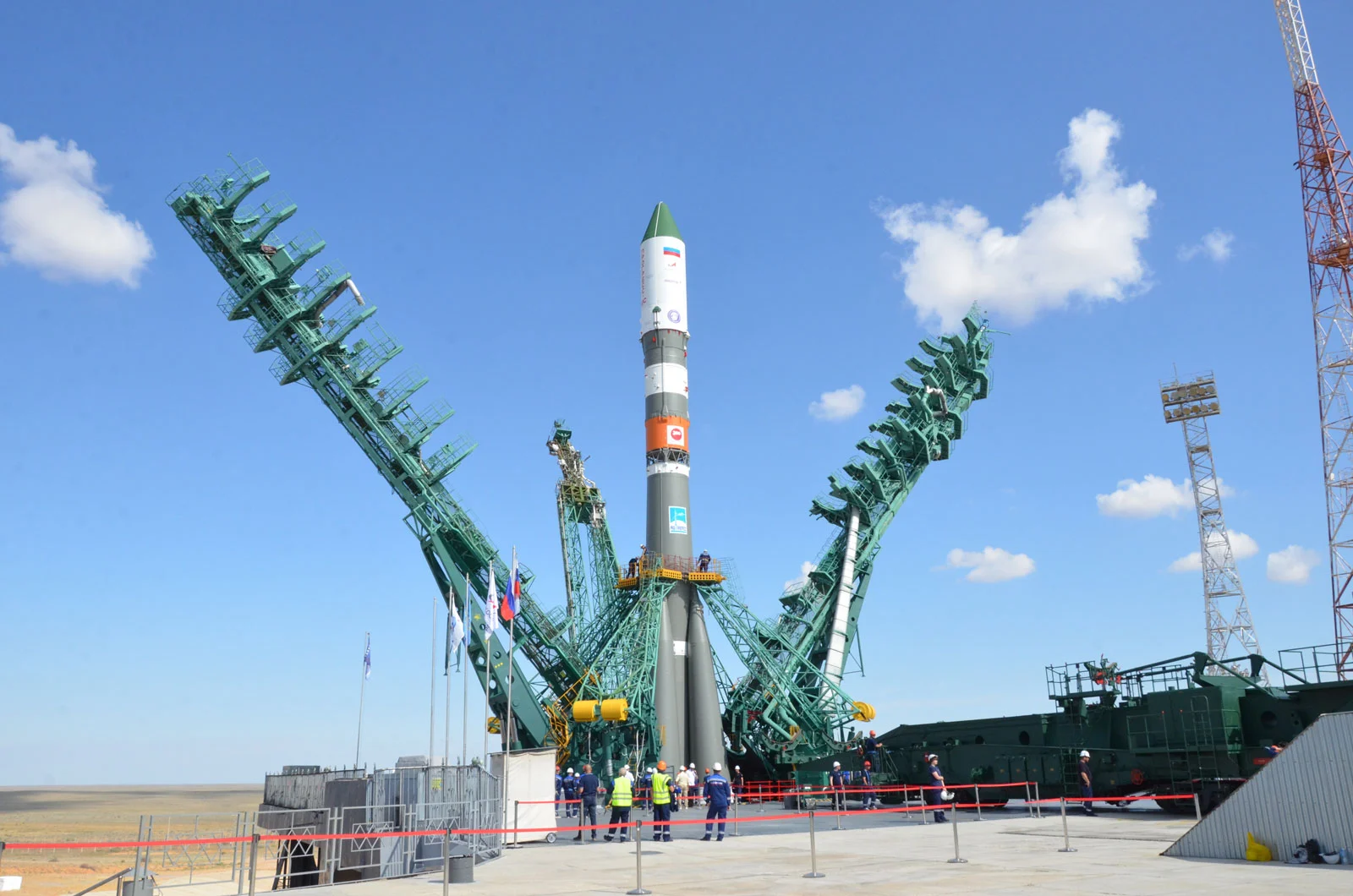
The Vega-C rocket is set to launch the European Space Agency's (ESA) FLEX and Sentinel-3C satellites on 15 September at 03:21 CEST (22:21 local time on 14 September) from Kourou, French Guiana. The first satellite to deploy will be Sentinel-3C, joining two existing Sentinel-3 satellites already in orbit as part of the Copernicus program for monitoring oceans, land, ice, and the atmosphere. FLEX will follow, utilizing a Vespa+R adapter to reach an altitude of 814 km, where its FLORIS spectrometer will measure plant fluorescence during photosynthesis to assess vegetation health and stress at a resolution of 300 meters.
Read More
This dual-manifest mission marks a significant return to operations for Vega-C, enhancing Europe's Earth observation capabilities with FLEX, the first satellite specifically designed for detecting plant fluorescence from space.
In related news, Sirius Space Services has completed its first full hot-fire test of the STAR-1 methalox engine at Airborne Engineering's facility in southern England. The test involved multiple ignitions of the prototype, successfully integrating all critical systems, including turbopumps and avionics. While originally scheduled for testing in early 2026, the announcement on 12 September indicates a slight delay. The STAR-1 engine is intended to power a new range of launch vehicles being developed by Sirius.
Meanwhile, SpaceX recently launched its Falcon 9 rocket carrying the final three O3b mPower satellites for SES, thereby completing a 13-satellite broadband constellation in medium Earth orbit. This launch, which took place on a Sunday from Cape Canaveral, also marked the 700th mission for the Falcon rocket family. The O3b mPower system is tailored for enterprise customers, bridging communications for various industries including airlines and government services.
Further developments include a collaboration between Sophia Space and SLI for a $300 million satellite leasing framework, designed to finance and lease 10 TILE edge computing spacecraft, with potential launches starting in 2028.
Additionally, the James Webb Space Telescope has observed changes in the ring system of Chariklo, the smallest known object with rings, revealing evolving structures since its discovery in 2013.
Currently, there are 15,987 active satellites and 14,950 cataloged debris objects in orbit. Two decay events are predicted for 15 September. Upcoming launches include Vega-C’s mission with the Sentinel satellites and several others scheduled in the next 48 hours.