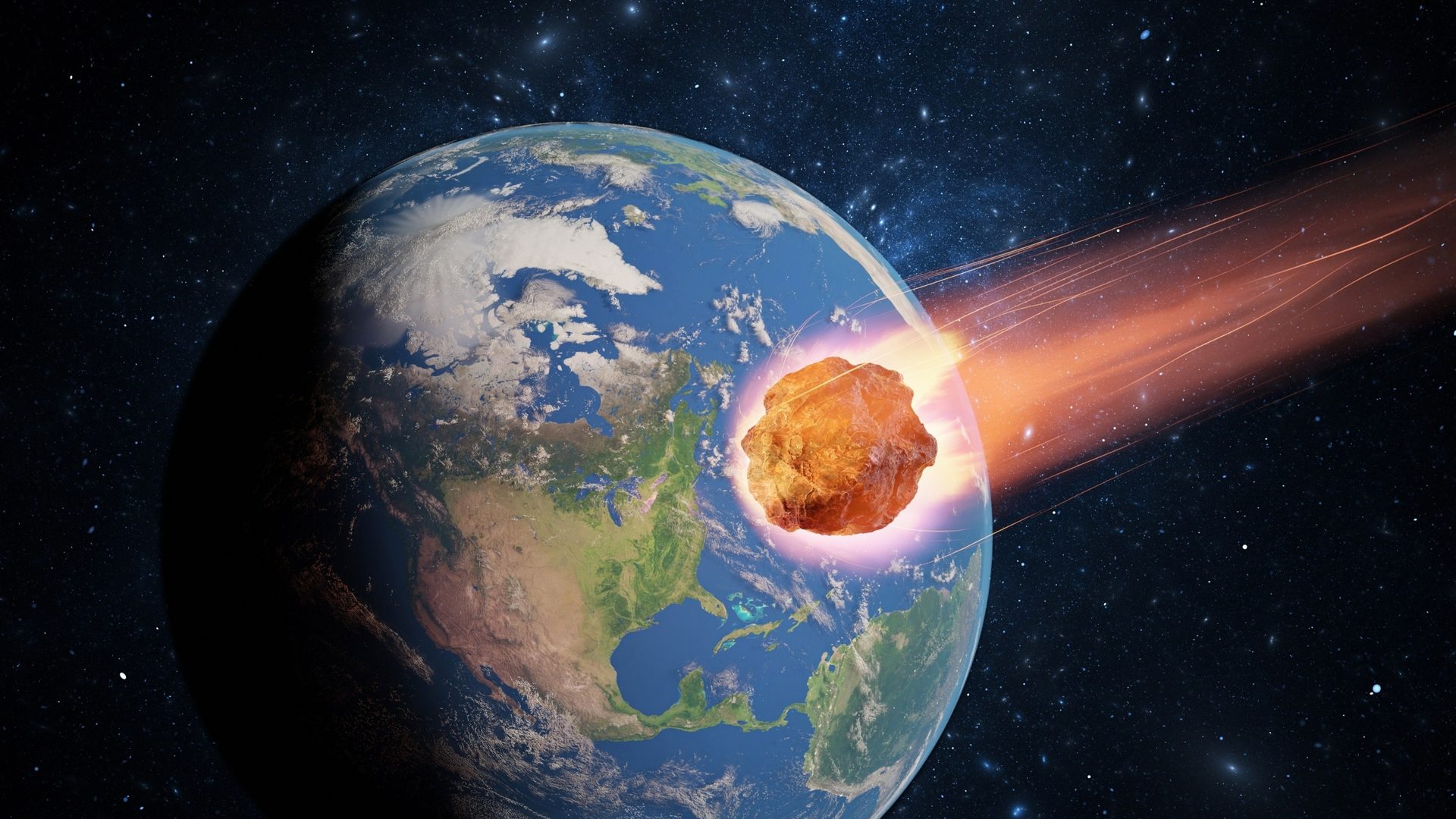
Research has revealed that a meteor impacted Oklahoma around 370 million years ago, nearly 100 million years later than previously estimated. This timing coincides with a significant mass extinction event that affected ocean life.
Read More
The Ames impact structure, situated beneath a small town in Oklahoma and buried under nearly two miles of sediment, was originally dated using fossilized teeth of conodonts, organisms from the Ordovician period. However, those fossils were likely millions of years old when the meteor struck, leading to an inaccurate date.
Elizabeth Catlos, an associate professor at The University of Texas at Austin, led a team that utilized zircon crystals from the bedrock of the crater to arrive at the more accurate age. These crystals revealed consistent dates near 369.7 million years. Catlos noted, "No matter what technique we used, it was coming back to this younger signal," thus indicating the impact occurred much later than earlier estimates that centered around 467 million years ago.
The original dating linked the crater to the Ordovician Meteor Event, a period marked by several meteor impacts. The team’s investigation was made possible by a precise dating method that analyzes the ratio of uranium to lead in zircon crystals, which act like geological clocks.
In their findings, the researchers identified that while most zircons were undamaged, a couple of them showed distinct signs of impact, including fractures and shifts in their structure.
Besides dating the zircon crystals, the study also assessed another mineral from six rock samples, revealing ages of about 310 million and 250 million years, aligning with periods of oil formation from the crater, indicating later geological activity.
The age of the Ames crater now aligns with the Frasnian-Famennian mass extinction event about 372 million years ago. Catlos emphasized the importance of establishing a clearer timeline for these events, which can inform whether extinction events were triggered by extraterrestrial impacts or terrestrial forces, such as volcanic activity.
The study concluded that while the crater may connect to the mass extinction, it does not assert that the impact caused the extinction event.
The new findings sparked interest in further research on other meteor impact sites to refine the timeline of such significant geological events across North America. The complete study appears in the journal Meteoritics & Planetary Science.