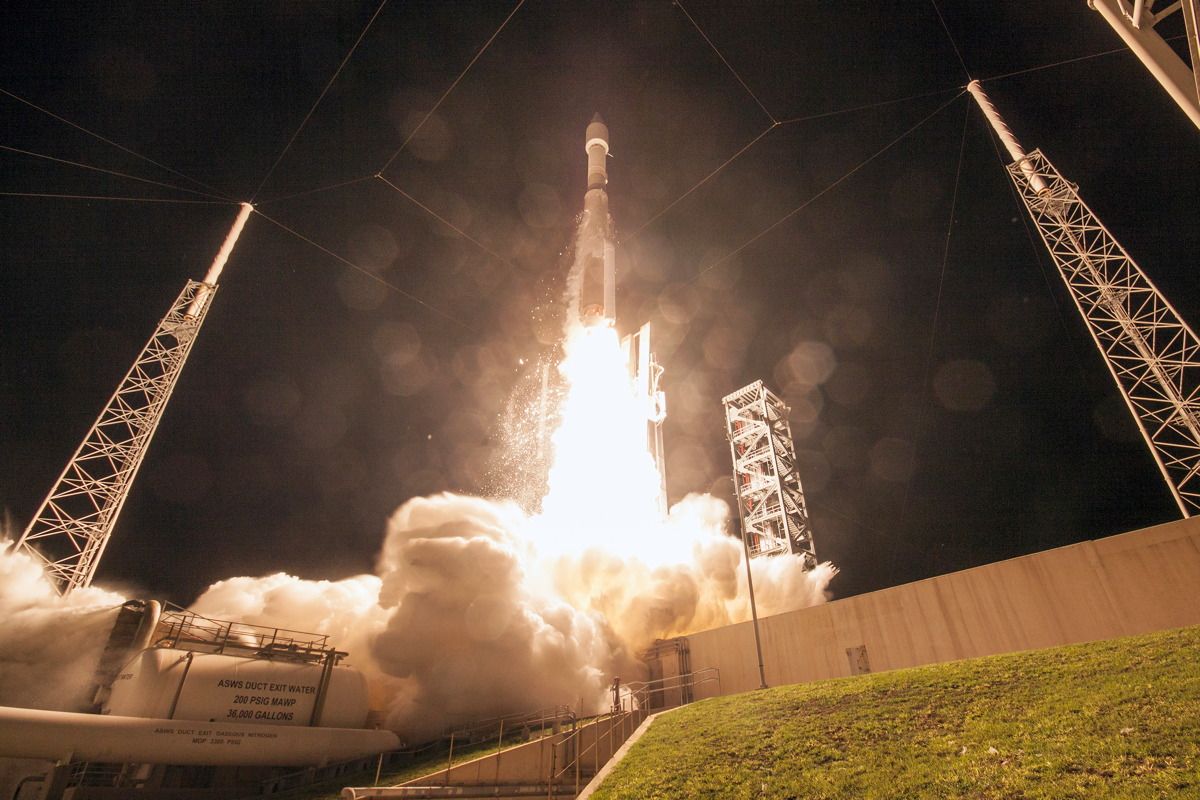
On October 2, 2015, the United Launch Alliance (ULA) successfully completed its 100th rocket launch, marking a significant milestone for the aerospace joint venture formed by Lockheed Martin and Boeing in 2006. The milestone mission involved the launch of the Mexican communications satellite Morelos-3 aboard an Atlas V rocket from Cape Canaveral Air Force Station in Florida.
Read More
This launch not only represented ULA's 100th mission but also continued its perfect record of 100% success rate across all attempts. The Atlas V 421 rocket specifically utilized for this mission was part of ULA's strategy to ensure higher reliability in its launch services by consolidating resources from the two aerospace rivals.
Despite the rapid advancements in the space industry, with companies like SpaceX launching multiple rockets within a year, ULA's achievement remains notable. As noted by analyst William Kovacic, the collaboration sought by ULA was intended to enhance launch reliability by streamlining production and operations within a single entity.
Over its first nine years, ULA completed 100 successful missions using its Delta and Atlas rocket families. The final launch of the Delta rocket, the Delta IV Heavy, occurred in 2024 as ULA transitioned to winding down its Atlas V program. The latest ULA launch as of this story was on July 2 of this year, deploying 26 Amazon Leo broadband satellites.
Looking ahead, ULA has developed a new Vulcan Centaur rocket intended to serve as its future workhorse, which began flight operations in 2024.