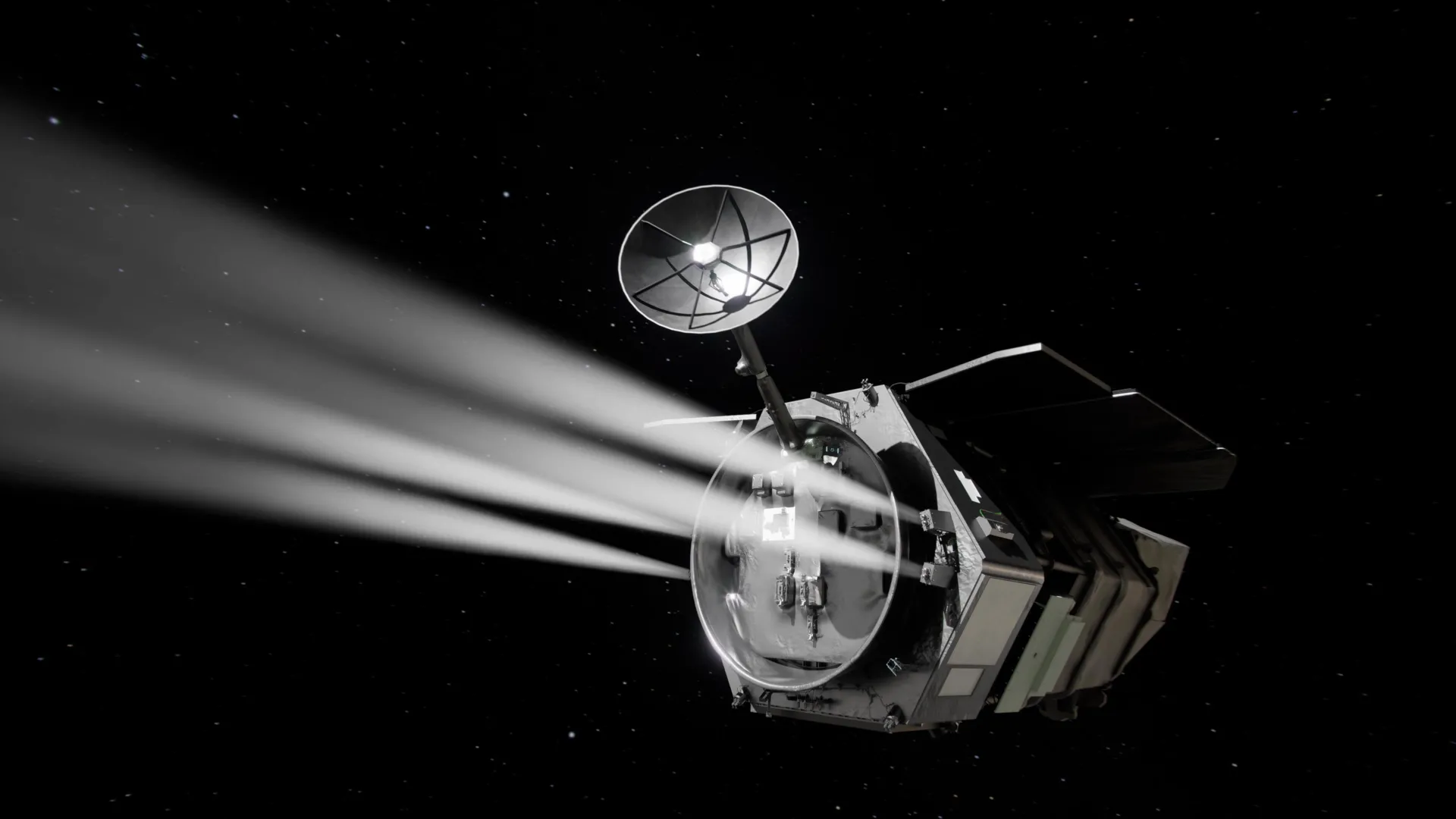
NASA's Nancy Grace Roman Space Telescope could potentially operate for over 22 years, significantly beyond the original 10-year expectation. This projection follows a highly accurate first mid-course correction and effective fuel management strategies.
Read More
Jamie Dunn, center director at NASA's Goddard Space Flight Center in Greenbelt, Maryland, stated, "As a result of exquisite planning by our orbital dynamics team, brilliant execution by the operations team, and a precise launch from SpaceX, Roman has fuel for at least 22 years of potential science operations."
Key factors contributing to this potential extension include efficient fuel use during the initial maneuvers and the carrying of excess propellant at launch. The telescope has already shown a remarkable efficiency, using significantly less fuel than anticipated.
Originally designed for a five-year primary mission and a five-year extension, Roman's fuel budget was meant to support a decade of operations. However, every kilogram of fuel saved can add years to its operational lifespan.
The first course correction, conducted on August 31, was completed with over 99% accuracy, using less than 10% of its allocated fuel. Roman consumed approximately 40 pounds (18 kilograms) instead of the planned 441 pounds (200 kilograms). These savings might extend its operational life by roughly four additional years.
Furthermore, Roman began its mission with more propellant than necessary. Engineers had estimated a maximum weight of 21,605 pounds (9,800 kilograms), but the actual launch weight was only 17,760 pounds (8,056 kilograms). This reduction allowed the teams to fully fill the propellant tanks, potentially adding another four years to the spacecraft's mission duration.
Alison Rao, the Roman propulsion lead at NASA Goddard, emphasized the importance of adjusting the propellant budget based on actual spacecraft mass throughout the design and testing phases, which resulted in efficient fuel management.
Looking ahead, the accuracy of the first mid-course correction suggests that the upcoming second correction may require even less fuel, conserving additional resources for future scientific endeavors. This upcoming maneuver, scheduled for later this month, will finalize the energy needed for Roman to achieve its target orbit around L2, which is expected to occur about 100 days after launch in early December. The combined fuel savings from both corrections could potentially add another four years to the mission.