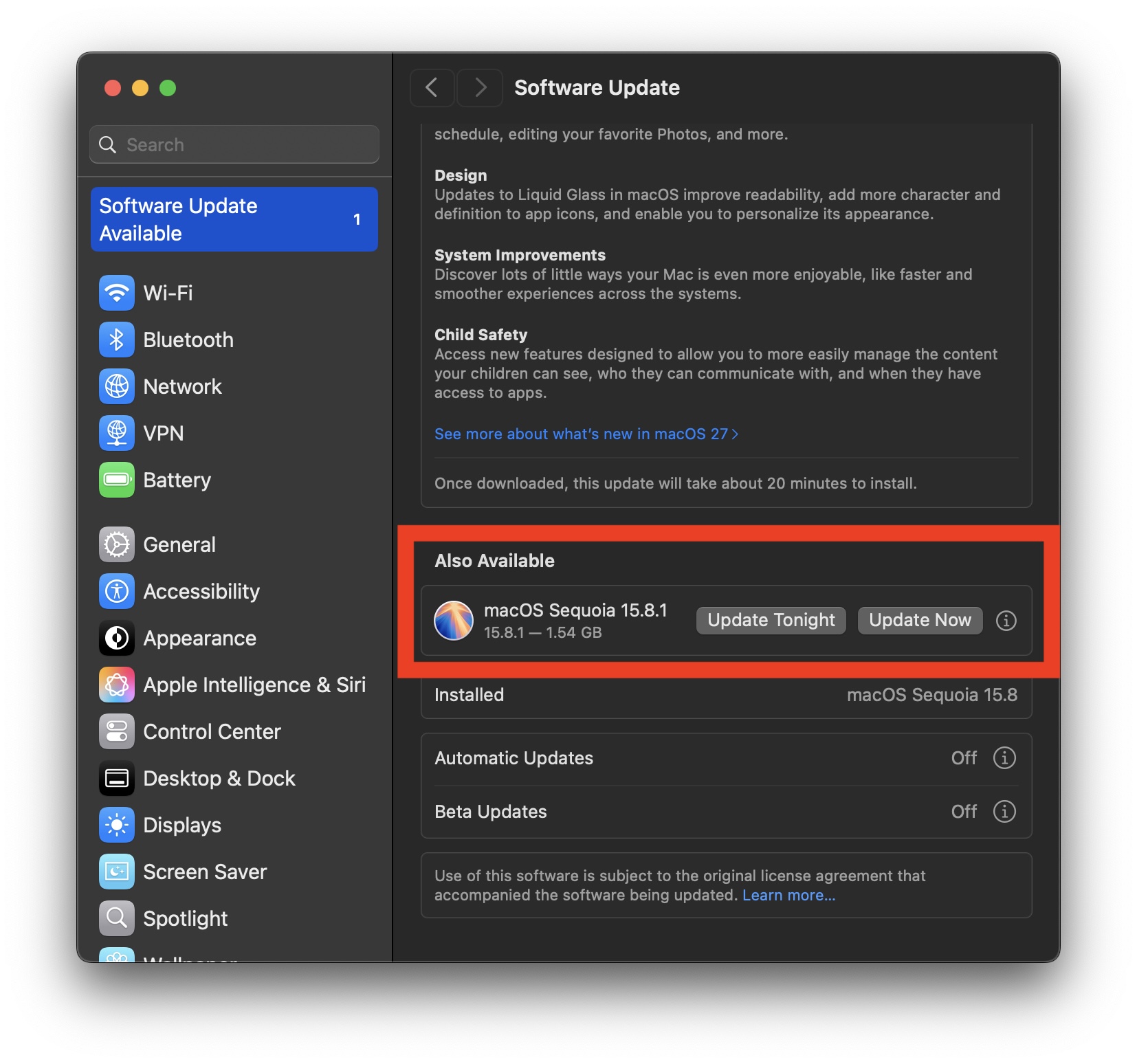
Users still operating on MacOS Sequoia may prefer this version for various reasons, such as app compatibility or personal preference. If you wish to continue using MacOS Sequoia without upgrading to MacOS 27 Golden Gate, follow these steps to update while avoiding the new version.
Read More
To update MacOS Sequoia:
1. Open the Apple menu and navigate to System Settings.
2. Select “General” and then “Software Update.”
3. Scroll down past the prominent “MacOS 27 Golden Gate” download banner to find the “Also Available” section.
4. Here, updates for MacOS Sequoia should be listed, allowing you to select and update at your convenience.
If you do not see any MacOS Sequoia 15.x.x updates, refreshing the Software Update page by pressing Command+R may help.
**Caution Regarding Update Information:**
When you click on the (i) button next to a version of MacOS Sequoia to view update details, it may inadvertently highlight MacOS 27 for installation instead of the Sequoia version. Be careful not to click “Update Now” in this context without specifically selecting the available MacOS Sequoia update, as it may lead to an unintentional upgrade.
To properly update, ensure you click the “Update Now” button next to the specific Sequoia update in the Software Update screen.
Alternatively, you can update using full installers available from a maintained list of MacOS Sequoia installers.
Many users may choose to remain on MacOS Sequoia rather than upgrade to newer versions for various reasons, including performance or aesthetic preferences. Some, like the author, find MacOS Sequoia to be efficient and satisfactory for their needs, while still receiving security updates from Apple. It is important to stay updated with the latest releases of MacOS Sequoia, ensuring a secure operating environment without unintentionally upgrading to MacOS 27.