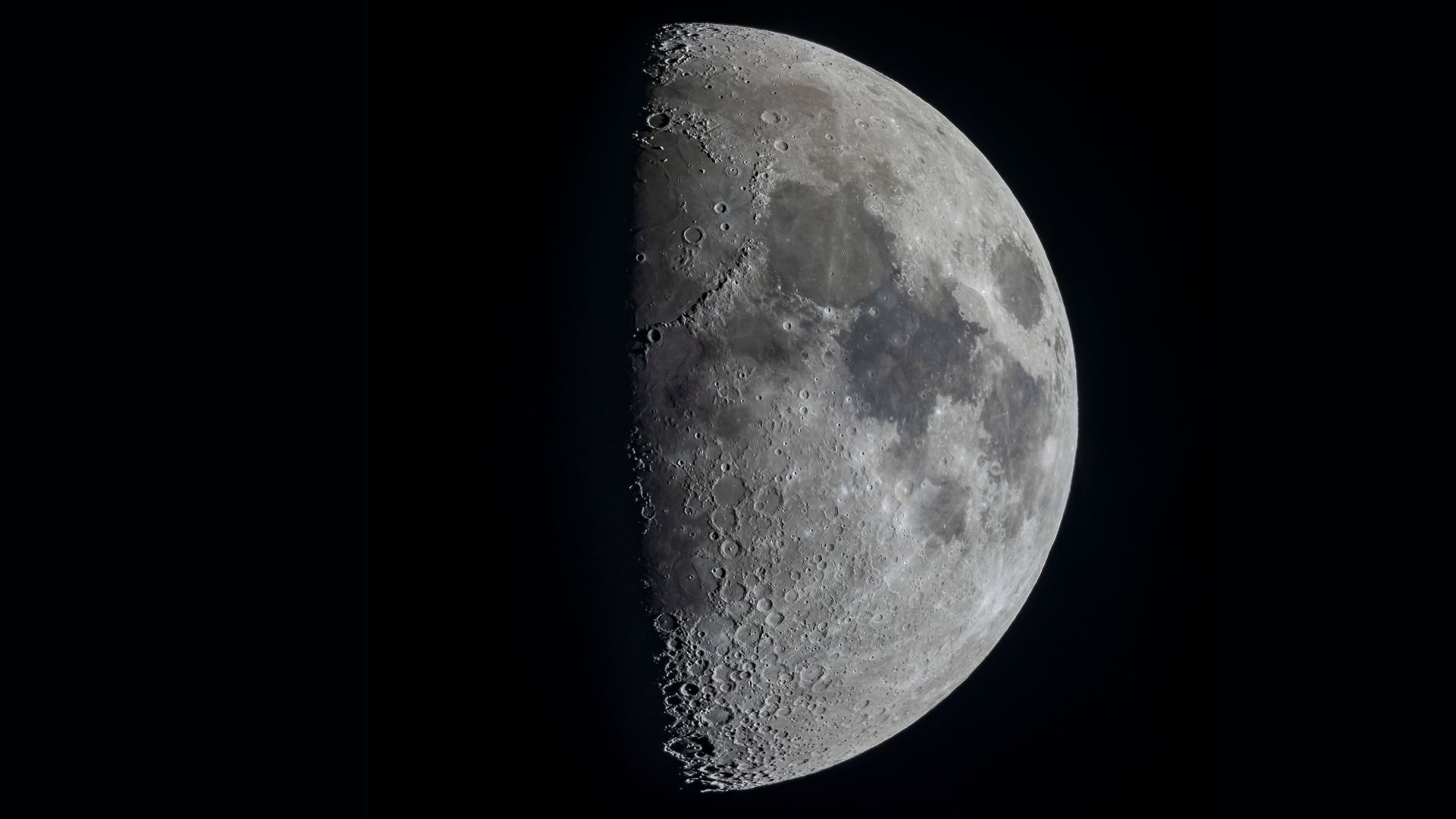
International Observe the Moon Night is taking place on September 19. To celebrate, here are five significant lunar sights that can be explored with a telescope.
Read More
Starting with the first quarter phase of the moon, observers can look for the Montes Apenninus mountain range. This prominent range, spanning 373 miles (600 kilometers), will cast deep shadows as sunlight strikes its eastern slopes. It is located about 20 degrees north of the lunar equator, near the terminator line separating night from day.
Next, stargazers can find shadowed craters named after notable historical figures. The 68-mile-wide (109 km) Plato crater is located on the northern edge of Mare Imbrium, and the smaller Archimedes crater lies just north of the Montes Apenninus. Further south along the range, Eratosthenes Crater, named after the ancient Greek astronomer, will also be visible, though its interior will be lost in shadow.
Another essential site to observe is the Sea of Tranquility, where NASA's Apollo 11 mission landed on July 20, 1969. Situated near the lunar equator, the landing site is close to the basaltic plain, identifiable by the nearby Ritter and Sabine craters.
In addition, observers should look for Mare Crisium, which appears as a circular shape on the moon’s eastern edge. This significant lunar sea is the result of an ancient asteroid impact that created a basin filled with lava, forming a vast basaltic plain sitting about 1.1 miles (1.8 km) below the moon’s "sea level."
Finally, the Rupes Recta, or "Straight Wall," is another intriguing feature on the moon's surface. This 62-mile-long (100 km) cliff was formed from structural faults in the lunar crust. It will be visible in the southeastern area of Mare Nubium near the terminator on the day side of the moon.
For those interested in deeper exploration, further resources are available for celebrating International Observe the Moon Night, including telescope recommendations. Astrophotography enthusiasts are also encouraged to share their images with Space.com.