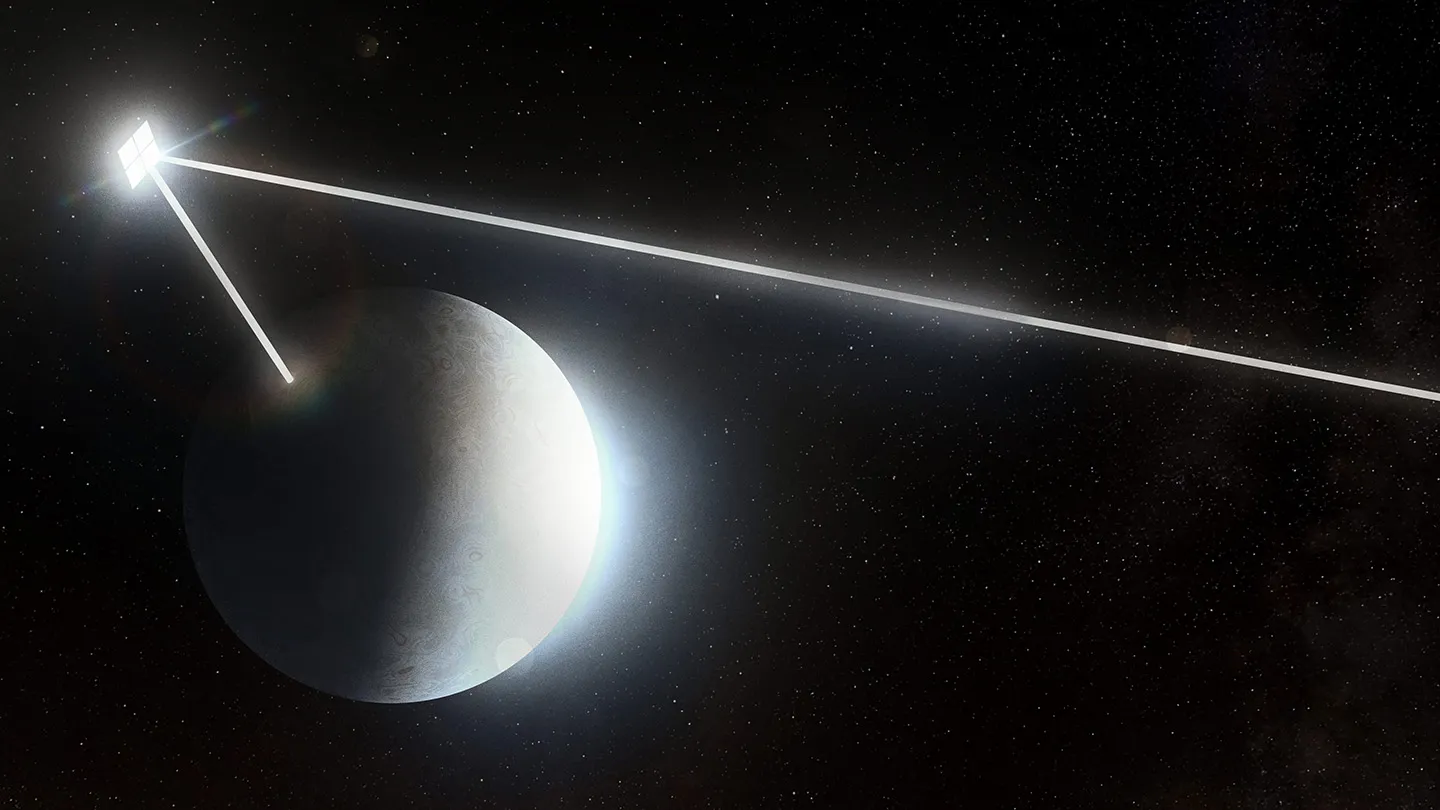
Astrophysicist Jonathan McDowell, who has tracked every human-made object in space since 1989, is alarmed at the rapid increase in satellite launches. Recently, he became particularly concerned when Reflect Orbital, a company based near Los Angeles, announced plans to launch a satellite designed to reflect sunlight onto the night side of Earth. "It’s an insane project," stated McDowell, now an honorary professor at Durham University after retiring from Harvard. "There’s a failure to understand that darkness is a good thing."
Read More
Reflect Orbital aims to provide "sunlight on demand" to assist with disaster recovery, nighttime festivities, and enable solar farms to operate continuously. Spokesperson Christopher Buscombe emphasized the potential to help the world reduce reliance on fossil fuels and pledged ongoing collaboration with scientific partners.
However, this initiative has sparked outrage among astronomers and advocates for dark skies. Many believe the consequences could be detrimental, impacting not only astronomy but also human health and wildlife. In March, the American Astronomical Society urged the Federal Communications Commission (FCC) to deny Reflect Orbital's request for satellite operation, but approval was granted in July. Following this, organizations like DarkSky International requested that the FCC reverse its decision.
McDowell noted the burgeoning issue surrounding satellite congestion, which has seen the number of active satellites orbiting Earth surge from 2,000 in 2018 to over 16,000 today, with more expected in the near future. This overcrowding raises concerns about potential collisions and the accumulation of space debris, complicating tracking and navigation systems.
Legal expert Dana Zartner pointed out that satellite deployments fall under a fragmented regulatory framework, which hasn't adapted to modern realities. The Reflect Orbital launch could serve as a pivotal moment in how nighttime space regulations are approached. Astronomer Stephen Hummel commented that the project amplifies critical issues that are impossible to ignore.
As for regulatory history, international space law has roots dating back to the Cold War. The 1967 Outer Space Treaty, signed by over 100 nations, states that space is the province of all mankind and must be utilized for peaceful purposes. Enforcement of these treaties remains problematic, however, as compliance is voluntary and states cannot be compelled legally.
The regulatory landscape is further complicated by domestic rules. In the U.S., the Federal Aviation Administration oversees rocket launches, while the FCC is responsible for commercial satellite licensing. Typically, the FCC has focused on whether applications serve the public interest without addressing light pollution.
Astronomers have raised concerns about the light pollution caused by new satellites, which disrupt astrophysical observations. Companies like SpaceX have taken steps to lessen their satellites' brightness, but issues persist, particularly with satellites that can streak across telescope images, obstructing observations.
Reflect Orbital's satellite, Eärendil-1, measures 18 by 18 meters and is intended to bounce light towards specific areas on Earth from an altitude of 600 to 650 kilometers. The satellite's beam could illuminate a five-kilometer-wide area, potentially brighter than full moonlight for four minutes before moving out of view.
Despite assurances from Reflect Orbital about controllable light emission, scientists remain skeptical. Simulations suggest Eärendil-1’s beam could scatter in the atmosphere, altering its visibility and brightness well beyond the intended target. Critics warn that even a single reflective satellite could significantly increase light pollution, undermining dark sky sites and impacting nocturnal ecosystems.
In terms of environmental impact, while traditional environmental assessments might not apply to space activities, critics emphasize that the increase in artificial light effects raises real concerns. Reflect Orbital asserts it will maintain strict no-light zones to protect sensitive environments and engage with the scientific community post-launch.
Historically, satellite deployment discussions have often centered on orbital debris and other environmental impacts. Critics continue to advocate for stricter reviews of satellite operations, with some arguing that scattered light could lead to nuisance claims, affecting states across international borders.
Ultimately, the way public and policymakers respond to Reflect Orbital’s plans could significantly shape the future of the night sky and our relationship with it. How society navigates these challenges could determine whether future generations can still experience the awe of a star-filled sky or will only view a man-made celestial spectacle.