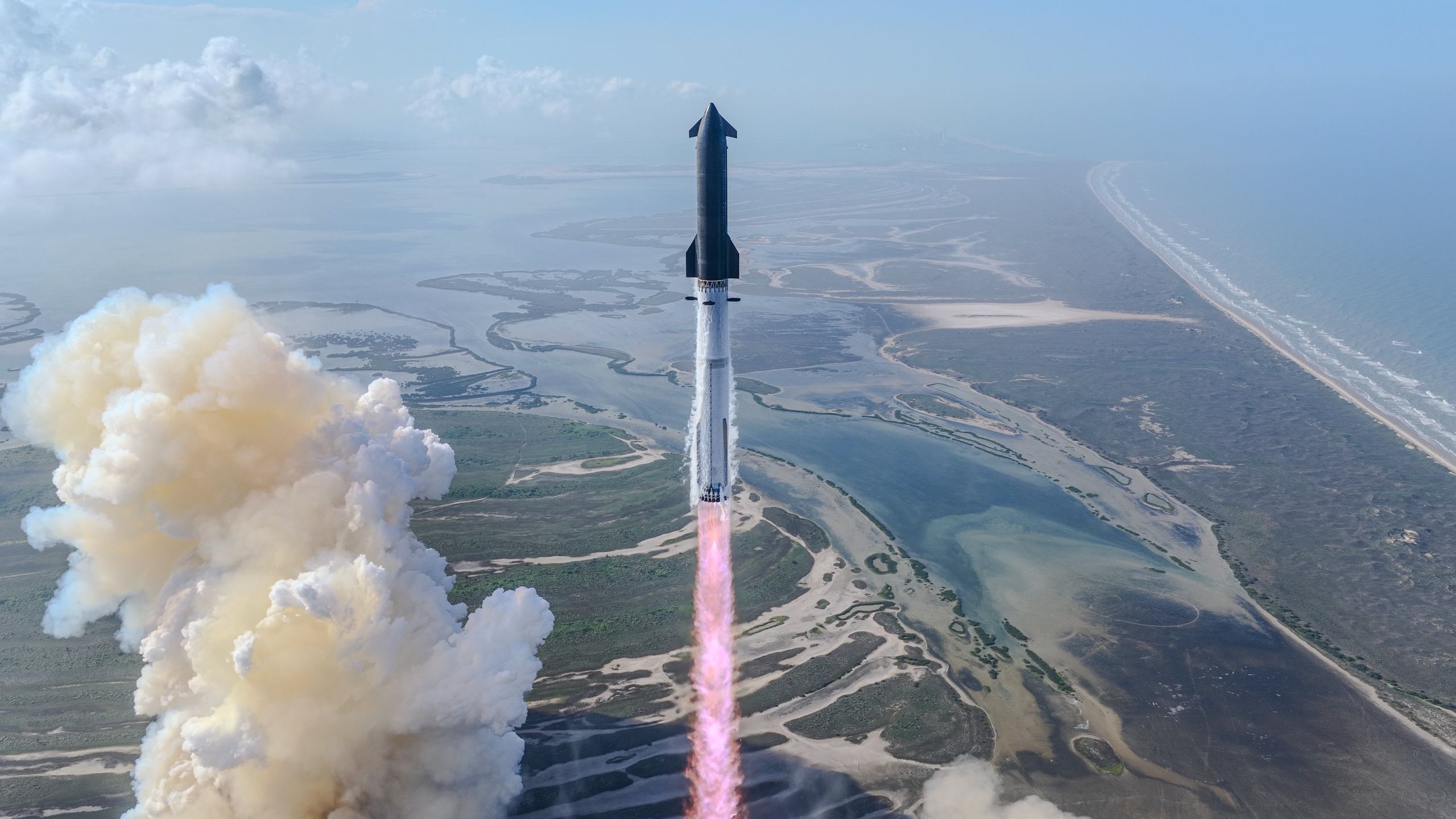
SpaceX has announced that the first orbital flight of its Starship megarocket is scheduled for September 22. The launch will take place from SpaceX's Starbase facility in South Texas during a 75-minute window that opens at 8:15 a.m. EDT (12:15 GMT and 7:15 a.m. local Texas time). A live stream of the event will be available on Space.com.
Read More
This upcoming mission will be the 14th attempt for Starship, which first flew in April 2023, completing two suborbital flights to date. The September 22 launch will be significant as it represents the first time the spacecraft will reach orbit. According to SpaceX, this mission aims to deploy 26 Starlink V3 satellites and is expected to last about 10 hours.
The company emphasized that achieving orbital flight is pivotal for developing Starship into a fully and rapidly reusable vehicle. This mission will also be the first to deploy the larger V3 versions of the Starlink satellites, which are designed for enhanced connectivity and are a part of a long-term goal to build a megaconstellation of 100,000 such satellites.
Among the payload, three of the Starlink satellites will be equipped with cameras intended to capture images of the heat shield on the upper stage of Starship, providing data for potential improvements.
If successful, Starship will complete six orbits at an altitude of about 171 miles (275 kilometers) before a planned splashdown in the Pacific Ocean west of Chile. This mission differs significantly from earlier flights, which lasted approximately 65 minutes and made suborbital landings in the Indian Ocean.
The first-stage booster, known as Super Heavy, is expected to splash down in the Gulf of Mexico about seven minutes after launch, continuing the approach used in previous tests. However, this flight will not utilize the recovery method known as "chopsticks" for either Starship or Super Heavy, as previous flights have done. Future flights are expected to employ this method for faster and more efficient vehicle reusability.
Michael Wall is the Spaceflight and Tech Editor for Space.com, focusing on human and robotic spaceflight, military space, and exoplanets.