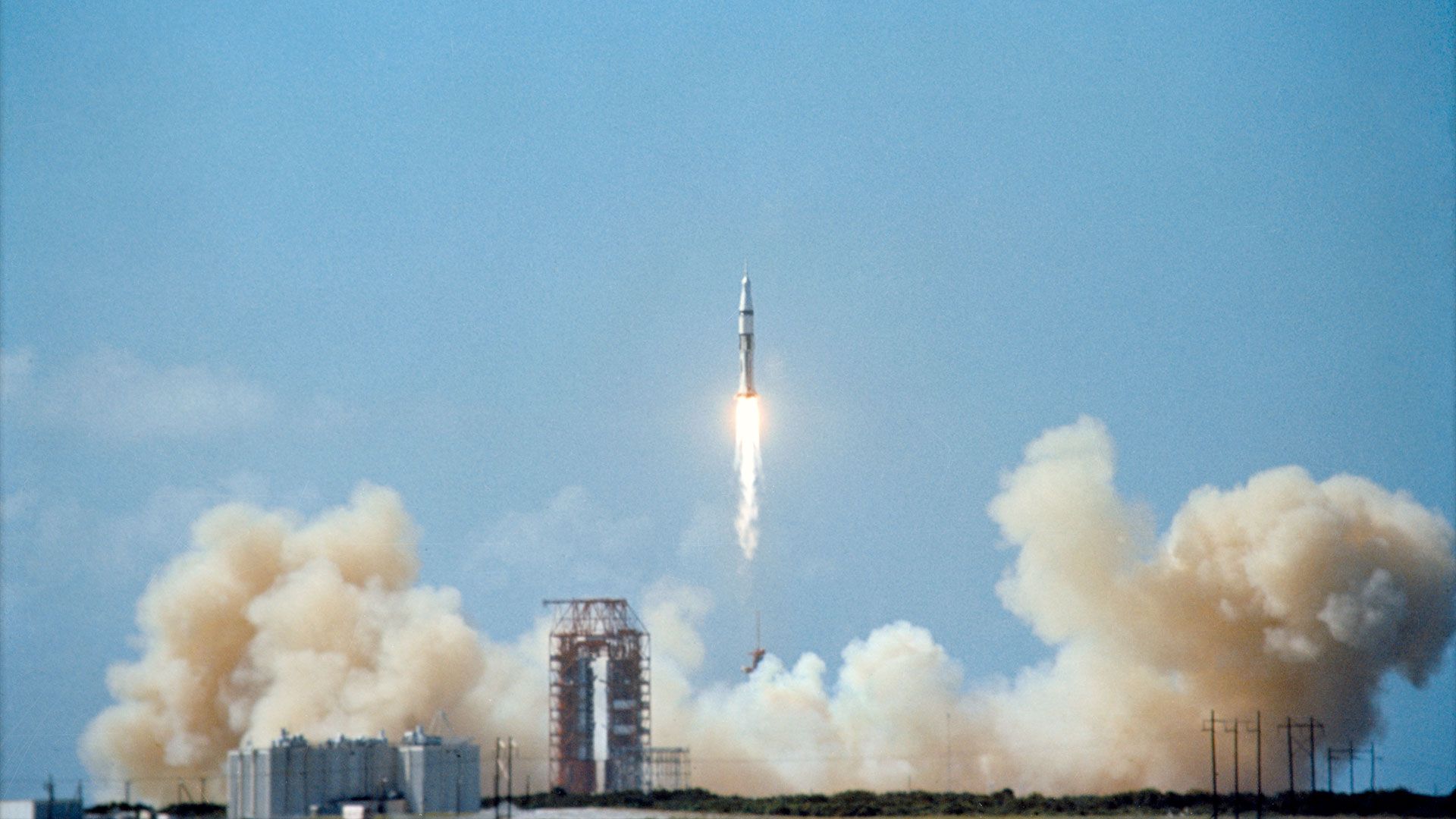
On October 11, 1968, NASA's Apollo 7 launched into space, carrying astronauts Wally Schirra, Donn Eisele, and Walter Cunningham. This marked the first crewed mission of the Apollo program and served as a critical reset after the tragic Apollo 1 fire that claimed the lives of three astronauts 20 months earlier.
Read More
The mission was primarily a test flight aimed at demonstrating the Apollo spacecraft's functionality. Although the spacecraft operated adequately, the crew experienced several challenges during their 11 days in orbit. They suffered from motion sickness after launch, Schirra caught a cold, and tensions flared between the astronauts and mission control.
The success of Apollo 7 was crucial in addressing political pressures against the costly moon program and proved essential for continuing NASA's goal, set by President John F. Kennedy, to land a man on the moon by the end of the decade. Following significant improvements to the spacecraft, Apollo 7 functioned as a "shakedown cruise" to validate these modifications and ensure the command module was safe for future missions.
Reflecting on the mission's importance, Apollo 7 pilot Walt Cunningham stated on the 40th anniversary in 2008 that it was the most ambitious engineering test flight of its time. Apollo 7 was declared a 101% success, setting the foundation for the first lunar landing in July 1969. Neil Armstrong, commander of Apollo 11, acknowledged the indispensable role played by the Apollo 7 crew, thanking them for their pioneering efforts.