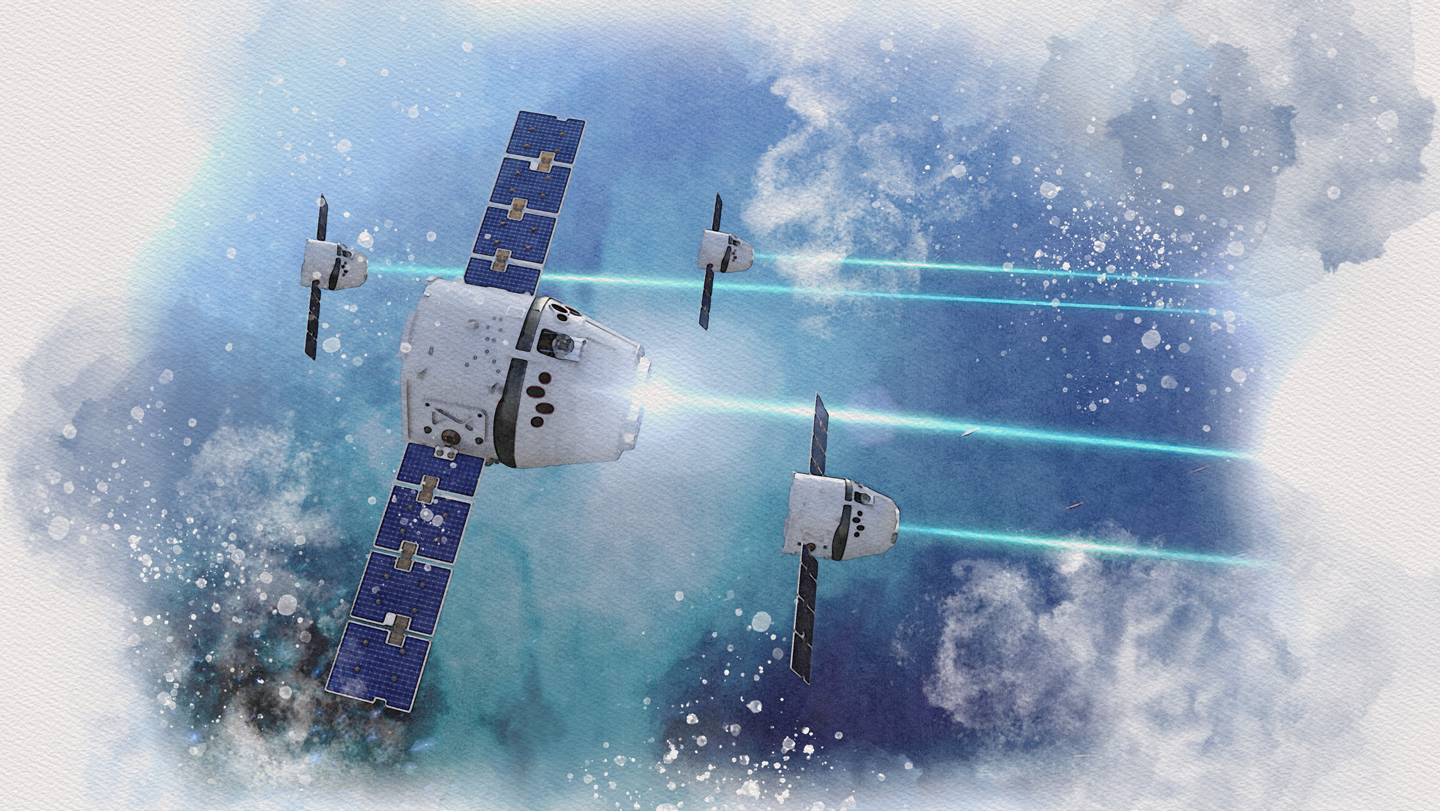
The U.S. has confirmed the presence of weapons in space during remarks made by Air Force Secretary Troy Meink on September 14 at the 2026 Air and Space Cyber Conference in National Harbor, Maryland. Meink stated, "The United States has on-orbit space control weapons capable of defending ... against hostile adversary action."
Read More
While the details of these weapons remain limited, astrodynamicist Thomas González Roberts from Georgia Tech emphasizes the importance of understanding the implications of such developments, noting that the announcement warrants careful attention due to its potential consequences.
The term "space weapons" is not clearly defined and can refer to a variety of technologies, including satellites with the capability to attack other satellites using projectiles, explosives, or lasers. Additionally, cyberattacks can disable satellites or take control away from their operators, while other space weapons could interfere with critical services on Earth, such as GPS.
The U.S. has a historical precedent for testing space weapons, notably in 1962 when a high-altitude nuclear test disabled many satellites. The Outer Space Treaty of 1967 subsequently prohibited nuclear weapons in space, although allegations have arisen that Russia is developing technologies to launch such weapons into orbit.
Various nations, including the United States, have tested antisatellite weapons, raising concerns about the potential creation of hazardous space debris that could endanger other satellites.
In an interview with Science News, Roberts conveyed his concerns about the lack of specificity regarding the nature of the U.S. space weapons. He discussed significant factors to consider, such as the ability to attribute attacks, the reversibility of damage, and whether the public could discern the success of an action.
Roberts also raised questions about the implications of this announcement for U.S. missile defense plans, specifically regarding the Golden Dome missile defense system that could position interceptors in orbit. He expressed a desire for clarity regarding what "space control" entails and whether it relates to the U.S. gaining control over adversarial satellites.
When asked about the risks of space debris, Roberts noted that some space weapons can cause collateral damage through the generation of indiscriminate debris. However, he remained hopeful that U.S. technologies could focus on targeted attacks to minimize risk to the space environment.
Roberts suggested that jamming signals could be one method to disable a satellite without generating debris, focusing on specific subsystems, such as optical sensors.
In discussing the broader implications of the U.S. announcement, Roberts indicated that it could provoke criticism from adversaries and undermine ongoing international efforts to prevent an arms race in space. He pointed out that while countries like Russia and China have been suspected of developing space weapons, they often deny such activities, contrasting with the U.S. approach of openly acknowledging its capabilities.