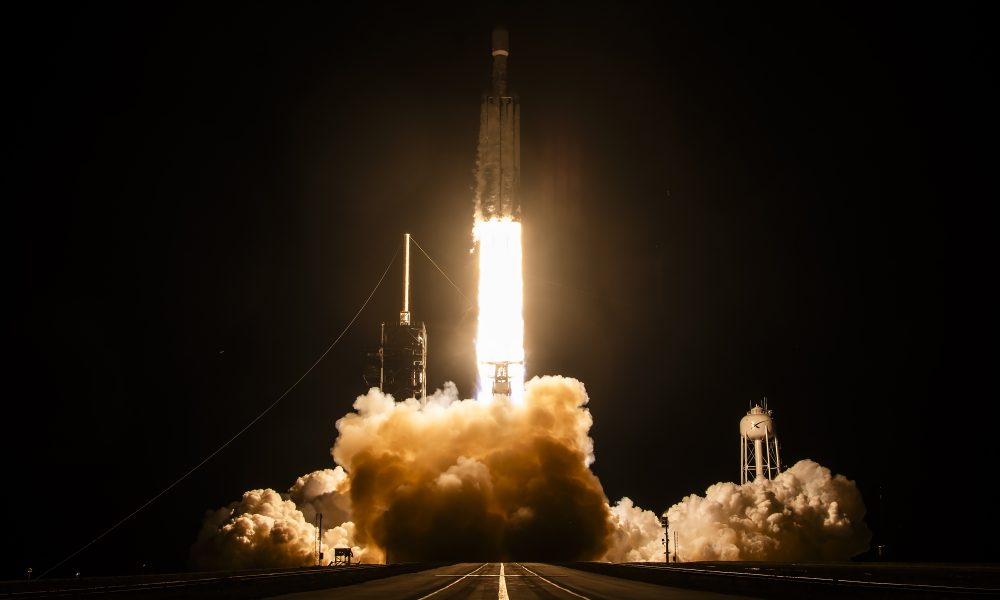
SpaceX successfully launched its Falcon Heavy rocket at 11:54 p.m. ET on October 1, 2026, from Launch Complex 39A at NASA's Kennedy Space Center. The mission, designated NROL-97, carried a classified payload for the National Reconnaissance Office (NRO). This launch marked the first time the NRO used Falcon Heavy, having previously conducted 22 missions with Falcon 9.
Read More
Approximately eight minutes post-launch, the Falcon Heavy's side boosters, B1104 and B1072, touched down at Cape Canaveral Space Force Station, creating sonic booms heard across Brevard County. Booster B1104 was on its second flight, while B1072 had flown four times previously. Both boosters had recently returned from the August 30 mission for NASA’s Nancy Grace Roman Space Telescope, making NROL-97 the fastest turnaround for Falcon Heavy.
The center core, B1106, was expended to allow the payload to reach a high-energy orbit, while the fairing used had previously flown on the NROL-95 mission in July.
This launch day was particularly notable for SpaceX, as it also landed four boosters in a single day for the first time. Earlier on the same day, Falcon 9 booster B1101 returned to its landing site after delivering the Crew-13 astronauts to the International Space Station. Another Falcon 9 launched the Transporter-18 rideshare mission from California.
The mission also marked a potential farewell for Landing Zone 1, which had been used for booster landings since 2015. SpaceX's lease on the site ended in 2025, as the company has shifted East Coast operations to new pads at its launch complexes. The NROL-97 landing may have been the final use of this site for booster recoveries.
NROL-97 contributes to SpaceX’s growing presence in national security work, with four Space Force missions conducted since mid-August, pushing the company’s Pentagon contract total for 2026 beyond $8 billion. Elon Musk was recently appointed to assist in the Pentagon’s Project Meridian, aimed at studying future warfare.
This launch follows a slow September for the Space Coast, which only saw one launch, as SpaceX transitions more resources toward its Starship program.