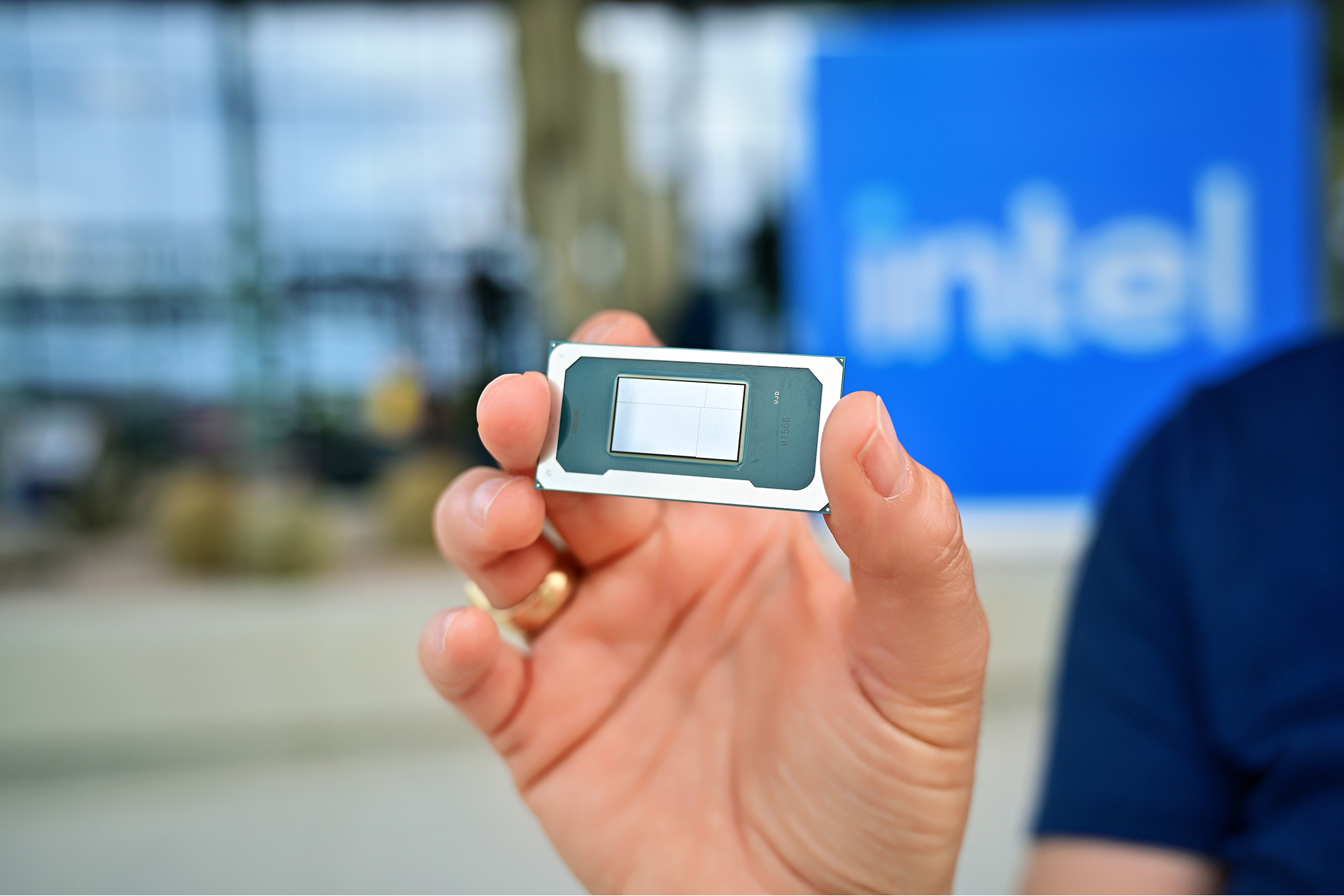
Intel launched its Core Ultra 3 series of mobile processors, named "Panther Lake," at CES 2026, building on its previous Lunar Lake and Arrow Lake-H architectures. These new processors are designed to combine CPU, GPU, and NPU cores, promising performance enhancements particularly for gaming and AI applications.
Read More
The Panther Lake series includes several tiers: Core Ultra 5, Core Ultra 7, Core Ultra 9, as well as high-performance options Core Ultra X7 and Core Ultra X9, which feature Intel Arc Xe3 graphics. A notable innovation in these chips is a tiled architecture that facilitates the integration of various cores and modules, linked by Intel’s Scalable Fabric.
Manufactured using the 18A process, the processors support up to 8 Cougar Cove Performance Cores (P-Cores), 4 Darkmont Efficiency Cores (E-Cores), and 4 Low Power Efficiency Cores (LP E-Cores). The smaller 4-Xe GPU utilizes Intel's 3 process node, while the more advanced 12-Xe GPU is produced using TSMC's N3E process. Additionally, the Platform Control Tile integrates multiple connectivity options, including PCI-E 5.0, Thunderbolt 4, USB 3.2, Wi-Fi 7, and Bluetooth 6.0.
Intel reports that these chips offer 60% more multithreaded performance at the same power level compared to their predecessors and also promise significant improvements in battery life, achieving up to 27 hours during Netflix streaming and 9 hours in Microsoft Teams video calls with studio effects enabled.
Furthermore, the latest Intel Arc B390 Xe3 graphics included in these processors provide enhanced capabilities with up to 12 Xe cores, 12 ray tracing engines, and 96 XMX units dedicated to AI acceleration, boasting a total of 180 TOPs for AI tasks. Compared to the Core Ultra 9 288V, Intel claims 77% faster graphics and 53% enhanced AI performance, alongside a substantial gaming performance advantage over AMD’s HX 370 processor.
Intel anticipates multiple design partnerships and plans to release laptops powered by these new processors starting January 27th, with AI edge computing systems expected in Q1. This launch highlights Intel's commitment to maintaining competitiveness in the mobile market, especially with advancements in its Arc graphics technology.