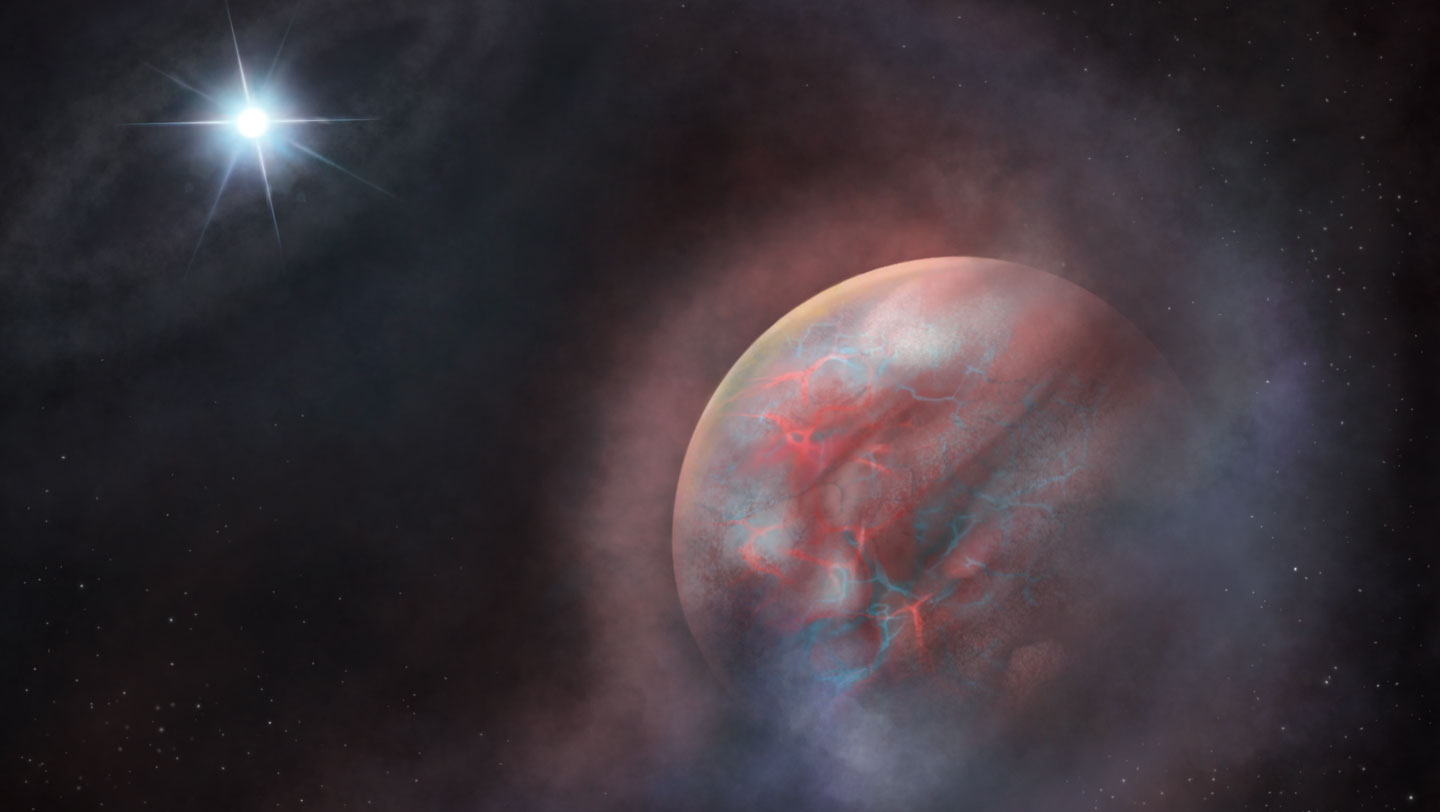
Astronomers report that the remnants of a dead star may give rise to a new planet, referred to as a “phoenix” planet. This potential discovery, detailed in a study published on October 5 in Nature Astronomy, marks the first observational evidence supporting the existence of second-generation planets, which had been theoretically predicted over 15 years ago.
Read More
Jamie Williams, an astronomer at the University of Warwick in England, explains that a phoenix is reborn from the ashes of its predecessor, drawing an analogy to this planet forming from the remnants of its star. This finding implies that planetary systems can continue to evolve even after their stars have died.
Planetary scientist Zifan Lin from Washington University in St. Louis, who did not participate in the research, remarked that prior to this discovery, the process of planet formation in such contexts had remained largely hypothetical.
The evidence of the planet was found in the atmosphere of a white dwarf named HS 0209+0832. White dwarfs are the dense cores left after low-mass stars, like our Sun, undergo transformations into red giants and shed their outer layers. Many of these stellar remnants, which have atmospheres rich in hydrogen and helium, also show signs of elemental pollution, with 25% to 50% containing heavier elements such as silicon and iron, likely from disintegrated planets that the star consumed.
HS 0209+0832 has long been an object of interest. Observations from the Hubble Space Telescope in 1999 revealed an unusual mix of chemicals but could not specify their identities. Recent analyses indicated the white dwarf had very little silicon and iron but showed an unexpectedly high level of niobium, a rare metal used in various high-tech applications and previously unseen in a white dwarf.
William and colleagues suggest that niobium originates from the slow neutron-capture process occurring during the life cycles of red giant stars. The hypothesis posits that material expelled from a dying star may have coalesced into a planet rich in s-process elements, leading to the accumulation of niobium on the white dwarf.
To bolster their hypothesis, the research team examined observations from the TESS space telescope, discovering that HS 0209+0832’s brightness fluctuates every 4.4 days, a pattern too slow to be tied to the star's rotation. This could imply the presence of a gas giant planet orbiting close to the white dwarf, approximately 6 million kilometers away, which Williams imagines resembles a silvery Jupiter.
Looking ahead, although it is uncertain whether our own solar system may develop a second-generation planet after the sun completes its life cycle, Williams believes it remains a distinct possibility.