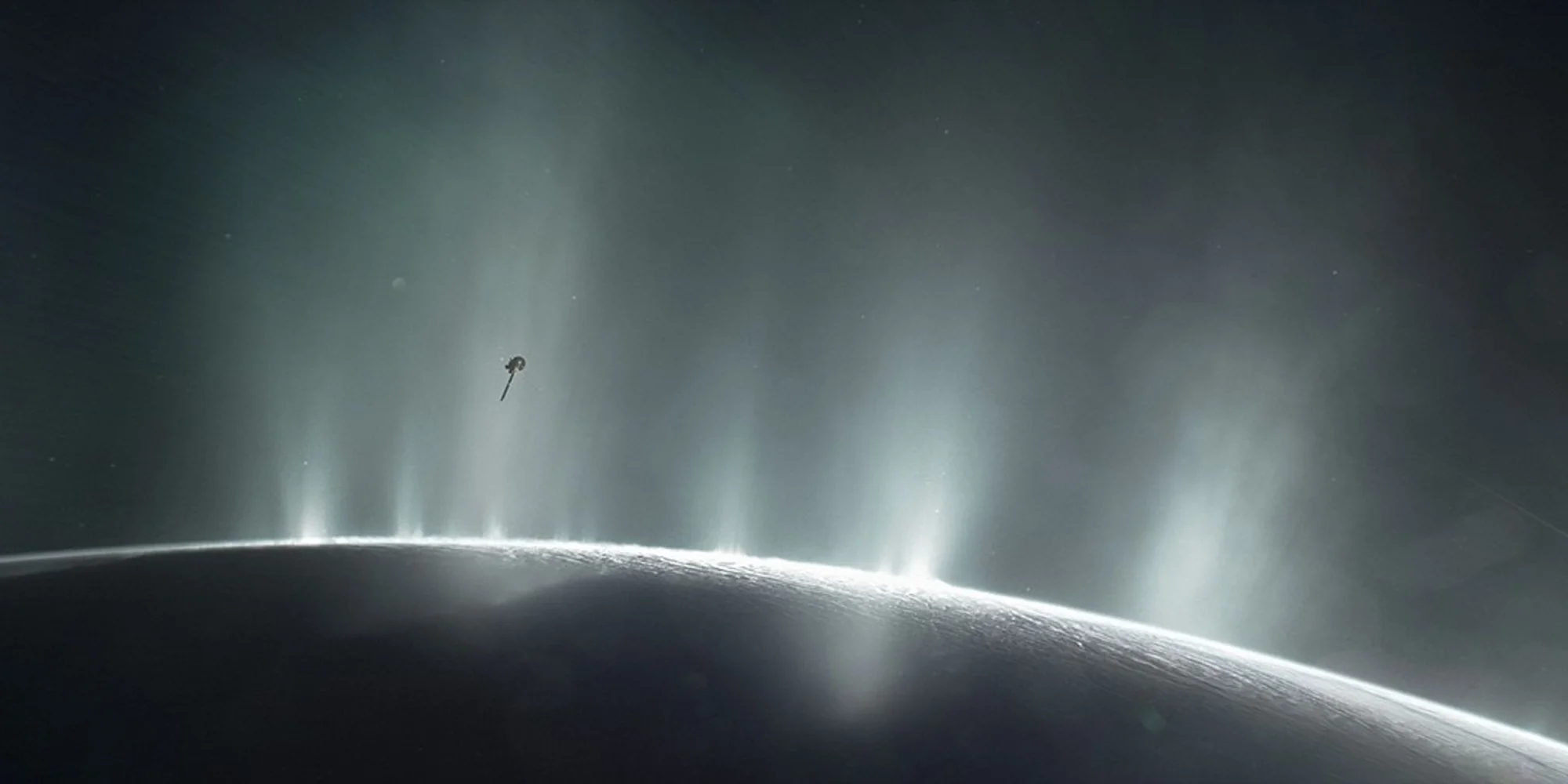
Laboratory experiments have revealed that a methane-producing archaeon from Earth can survive in conditions that mimic the seafloor of Saturn’s moon Enceladus, even at high pH levels up to 11. This research, led by scientists from Ludwig-Maximilians-Universität München, aimed to recreate Enceladus's hydrothermal environment, where microbial life may thrive despite the extreme chemical conditions.
Read More
In the experiments, the microbe, Methanothermococcus okinawensis, produced methane while utilizing hydrogen generated from water-rock reactions, along with dissolved inorganic carbon akin to what is hypothesized to exist on Enceladus. Interestingly, the study does not confirm the presence of life on the moon but indicates that its unique chemical environment could support life forms, broadening the range of conditions deemed potentially habitable.
The findings, published in Science Advances, highlight that even though the moon's ocean is thought to be highly alkaline and isolated by thick ice, it may harbor chemical compositions that could assist microbial survival. Enceladus features a subsurface ocean beneath its icy crust, identified by observations from NASA's Cassini mission, which found jets of water vapor and organic compounds erupting from its surface.
Researchers reproduced the seafloor chemistry of Enceladus by mixing high concentrations of dissolved inorganic carbon with powdered minerals meant to resemble the moon’s rocky core. They exposed M. okinawensis to various pH levels in a controlled, anaerobic environment. In standard growth media, the archaeon struggled at higher alkalinities, while in the Enceladus simulant, it thrived, demonstrating its capacity for methane production even at pH 11.
The experiments also revealed substantial amounts of hydrogen were produced through water-rock interactions, which the microorganism consumed. Genetic analyses showed elevated activities of genes linked to methanogenesis, indicating that M. okinawensis adapted its metabolic pathways to utilize available carbon sources in the simulated environment. The organisms showed a remarkable increase in population, suggesting that the chemistry found in Enceladus's ocean might facilitate microbial growth despite the challenging conditions.
While the research does not provide direct evidence of life on Enceladus, it strengthens the rationale for future missions that aim to analyze the moon’s plumes and search for signs of biological activity. Understanding how life might adapt to such extreme environments informs the broader search for extraterrestrial life across the cosmos.