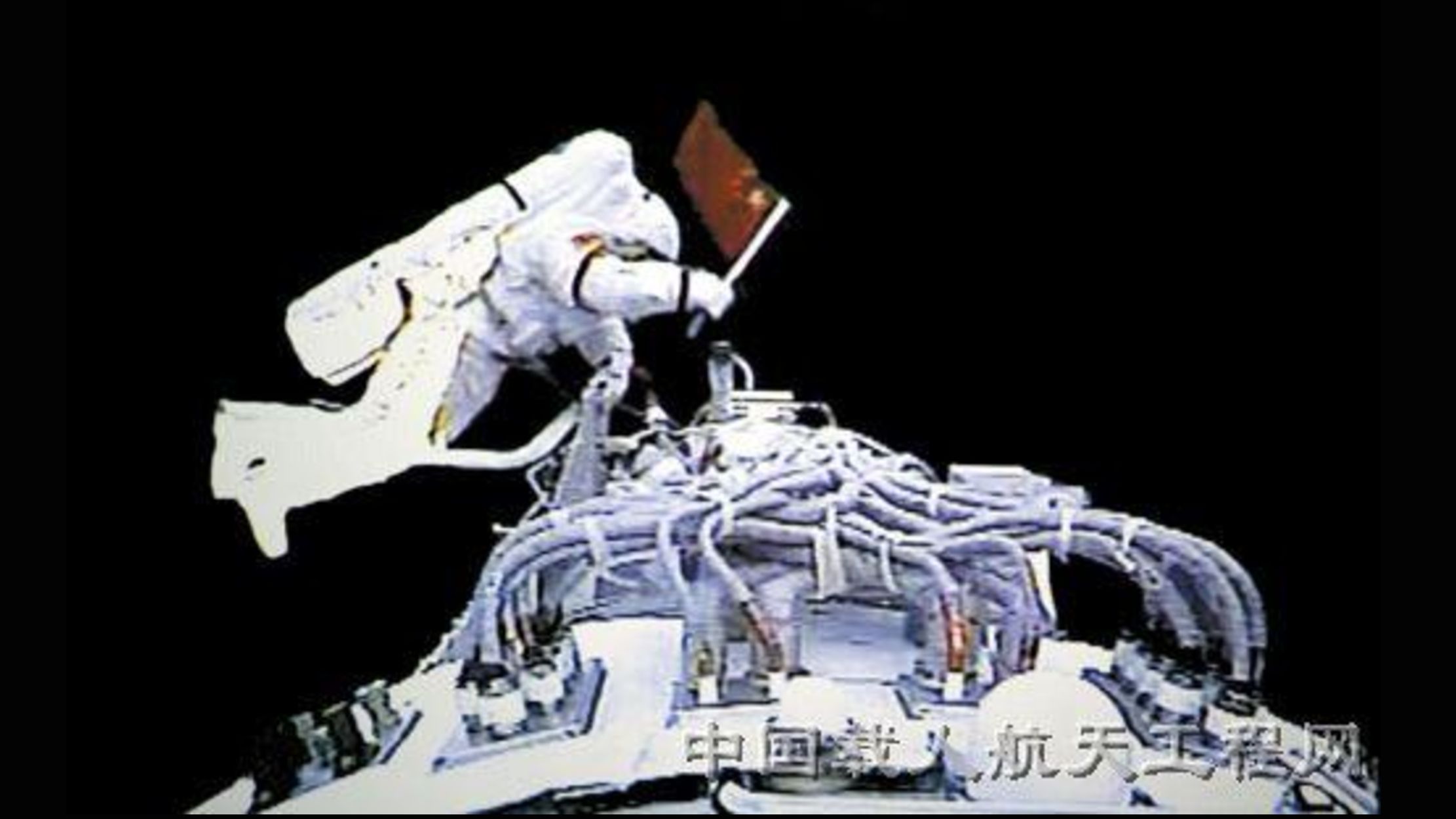
On September 25, 2008, China launched its third human spaceflight mission, Shenzhou 7, from the Jiuquan Satellite Launch Center using a Long March 2F rocket. The mission carried three astronauts: commander Zhai Zhigang, Liu Boming, and Jing Haipeng. They spent three days in orbit and executed the first-ever spacewalk by a Chinese astronaut.
Read More
During this groundbreaking mission, which took place from September 25 to September 28, 2008, the crew completed a spacewalk lasting about 20 minutes. Zhai, who was a fighter pilot before becoming an astronaut, utilized a $15 million Feitian spacesuit and waved a Chinese flag during the event. This spacewalk was aimed at demonstrating new technologies including an airlock system from the Shenzhou 7's orbital module.
The Shenzhou 7 mission saw the astronauts spending a total of 68 hours and 27 minutes in space. It also involved the deployment of a mini satellite known as Banxing, which took photos and videos of the spacecraft.
This mission represented a significant advancement for China’s human spaceflight capabilities, improving key technologies related to space travel. The China Manned Spaceflight Engineering Office noted breakthroughs in areas such as airlock and living module design, extravehicular activity procedures, and in-orbit testing technologies.
Chinese Premier Wen Jiabao praised Shenzhou 7 as "a victory of the Chinese space and technological field and a monumental achievement in socialist causes," according to the state-run Xinhua news agency. The mission concluded successfully with the crew landing in Inner Mongolia on September 28, setting the groundwork for future ambitions, including docking missions and the construction of China’s Tiangong space station.