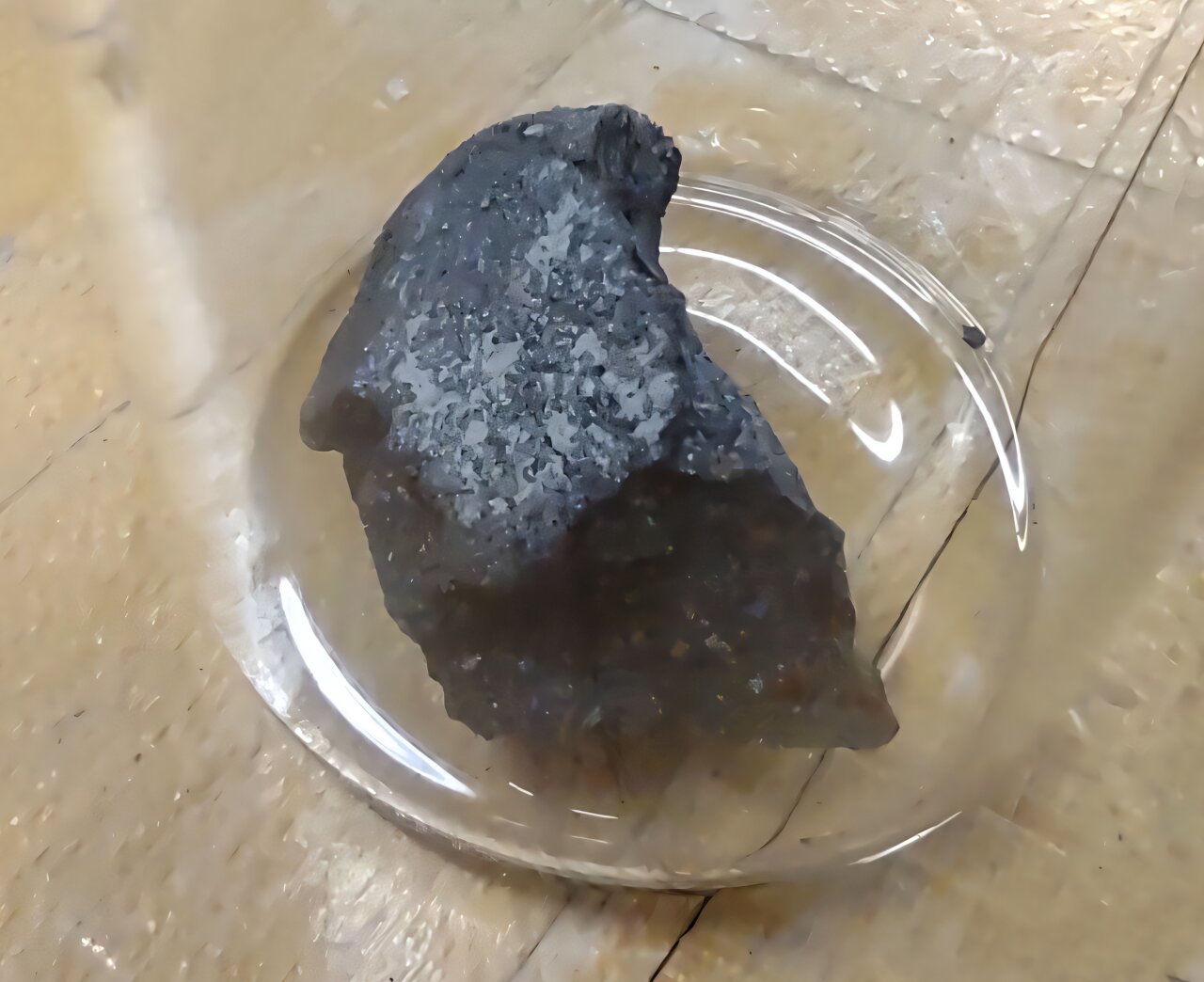
Researchers from the National High Magnetic Field Laboratory and Brookhaven National Laboratory have investigated the complex composition of meteorites, providing insights into the early solar system. Their study, published in The Planetary Science Journal, utilized advanced spectrometry techniques to identify a wide range of organic compounds in the Murchison and Aguas Zarcas meteorites.
Read More
Joseph Frye-Jones, a graduate research assistant at Florida State University, led the mass spectrometry research. He analyzed fragments of the Murchison meteorite, which fell in Victoria, Australia, in 1969, and was sourced from Chicago's Field Museum. Additionally, he examined a piece of the Aguas Zarcas meteorite, which fell in Costa Rica in 2019, obtained from Arizona State University's Buseck Center for Meteorite Studies.
The analysis revealed an impressive diversity of carbon-based molecules in these meteorites, with tens of thousands detected in each sample. Frye-Jones noted that the Murchison meteorite, which is at least 5.5 billion years old—predating Earth by approximately 1 billion years—exhibits a complexity comparable to that of petroleum deposits.
Despite their similar appearance, the Murchison and Aguas Zarcas meteorites have distinct chemical profiles, sharing only a small fraction of complex molecules. This disparity indicates that different asteroids experienced unique environments, contributing to a diverse organic chemistry in the primordial solar system.
Significant advancements in analytical techniques over the past five decades have enabled a detailed exploration of the meteorites. Frye-Jones utilized the 21-tesla FT-ICR spectrometer at the MagLab, recognized as the top-performing system for ion cyclotron resonance, to uncover the chemical makeup of these complex mixtures.
The study also incorporated imaging techniques to visualize individual extraterrestrial molecules. Senior Staff Scientist Percy Zahl applied high-resolution noncontact atomic force microscopy to map molecular structures, offering deeper insights beyond mass spectrometry's capability to identify chemical formulas.
This collaboration, referred to as the "Stardust Collaboration" by Zahl, highlights the significance of these molecules as building blocks for life. He emphasized the connection to questions about the origins of life in the universe.
The paper detailing these findings is titled "Direct Molecular-scale Insight into Soluble Organic Matter from the Murchison and Aguas Zarcas Meteorites Enabled by 21T FT-ICR MS and Single-molecule HR-AFM Imaging" and is scheduled for publication in 2026.