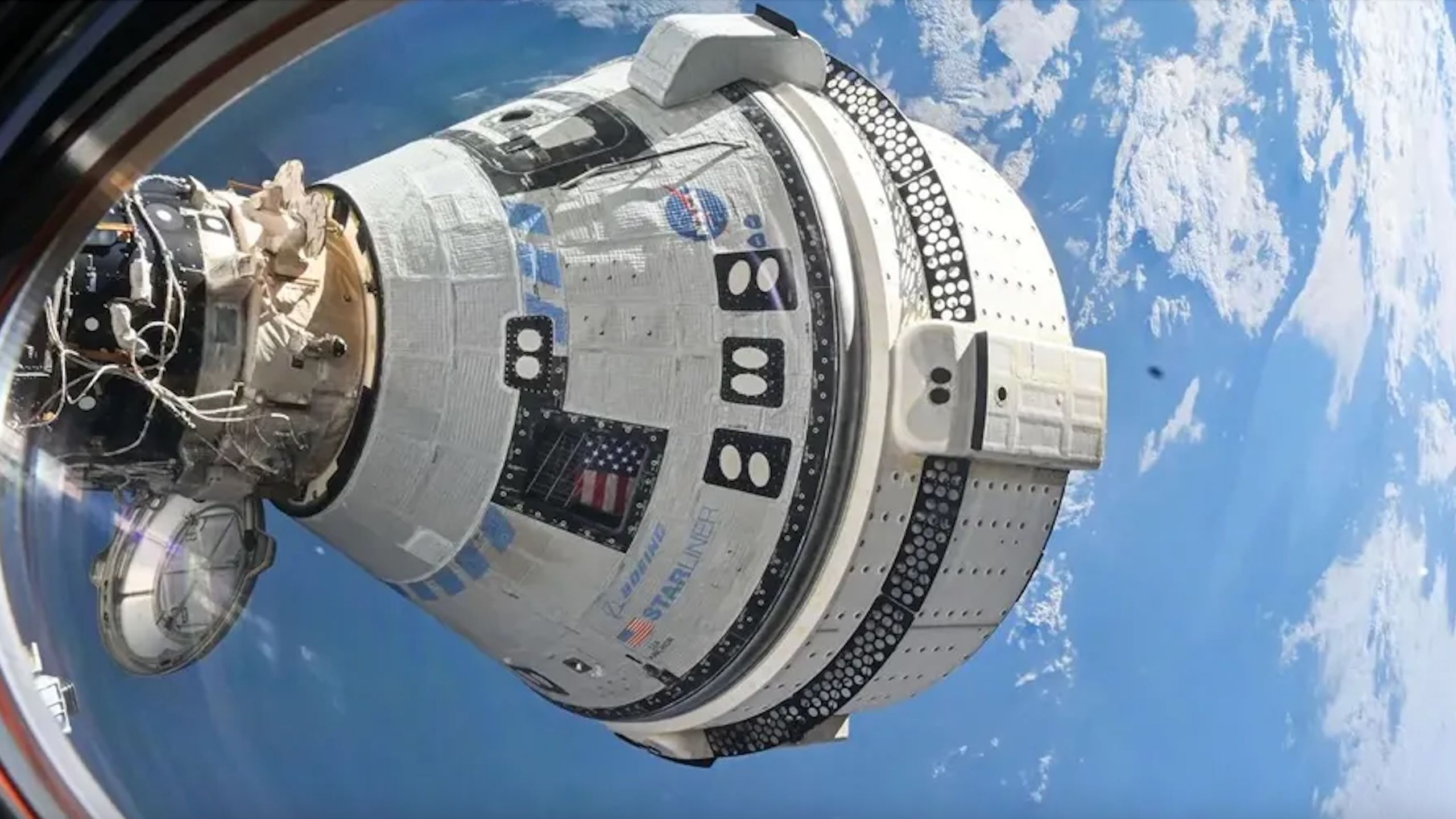
Boeing's Starliner spacecraft is scheduled to resume carrying astronauts in 2028, as announced by NASA on September 28. Before that, Starliner is expected to conduct an uncrewed test flight to the International Space Station (ISS) in December or January.
Read More
The Starliner program has faced significant setbacks over its testing history. Its inaugural mission in December 2019, known as the Orbital Flight Test (OFT), did not succeed in docking with the ISS due to an issue with its timing system that left it stranded in the wrong orbit. Starliner successfully reached the ISS during its second uncrewed flight, OFT-2, in May 2022, but not without complications, including the failure of two thrusters.
In June 2024, Starliner had its first crewed test flight, the Crew Flight Test (CFT), carrying NASA astronauts Suni Williams and Butch Wilmore. However, they encountered multiple problems, including helium leaks and a failure of five thrusters. Though Starliner reached the ISS successfully, NASA opted not to return the astronauts via the spacecraft, and they returned to Earth in a SpaceX Crew Dragon capsule in March 2025.
Since then, Starliner has been grounded while SpaceX has continued to conduct astronaut missions for NASA. NASA awarded commercial crew contracts to both Boeing and SpaceX in 2014. SpaceX's version of CFT successfully flew in 2020, and the company plans to complete its 12th operational astronaut flight soon.
Despite concerns, NASA remains committed to supporting Starliner's development. Boeing and NASA teams have worked to address the issues that arose during CFT. Modifications include changing the material used for seals, which were found to be prone to degradation when exposed to nitrogen tetroxide. These improvements will be implemented on Starliner-1, the upcoming uncrewed flight.
For future flights, engineers have also implemented measures to prevent thruster failures related to corrosion from residual propellants. After Starliner-1, further design modifications will be made, including upgrades to the spacecraft's thrusters and parachute system.
Veteran astronaut Woody Hoburg has been announced as the commander of the Starliner-2 mission, although additional crew members have yet to be named. He expressed confidence in the spacecraft's capabilities during a press briefing.
Boeing's commercial crew contract includes provisions for missions up to Starliner-6. Starliners 1 through 4 will launch on United Launch Alliance Atlas V rockets, which are currently being phased out. Future Starliner missions, including Starliner-5 and Starliner-6, will utilize ULA's new Vulcan Centaur rocket, which has not yet been certified for crewed flights. NASA will contribute financially to the spacecraft upgrades and Vulcan certification, totaling $359 million.
Additionally, on September 19, NASA announced a $946 million contract with SpaceX for three more astronaut missions by 2030. SpaceX plans to retire its Crew Dragon and Falcon 9 rockets around that time, transitioning to their fully reusable Starship for future missions.