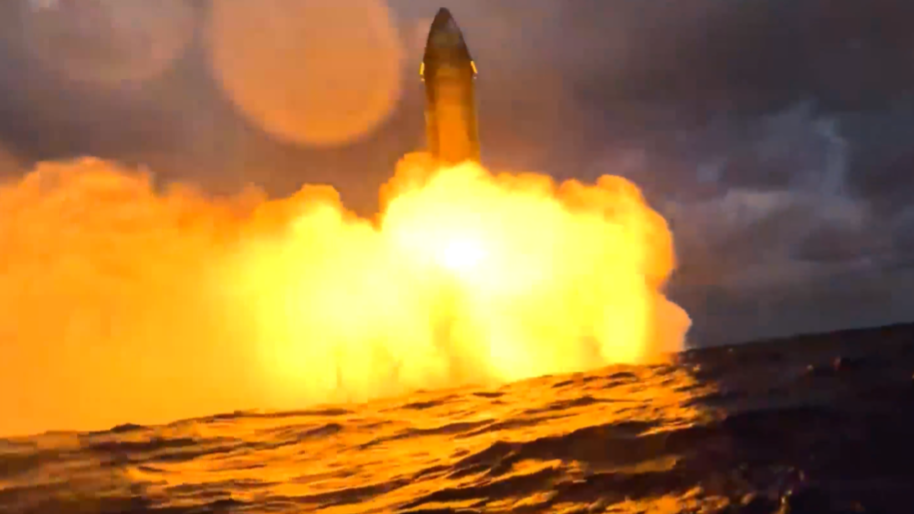
SpaceX's Starship and its Super Heavy booster achieved a significant milestone today, September 28, 2026, by reaching orbit for the first time. The launch occurred from SpaceX's Starbase facility in South Texas, marking a crucial step towards operational flights. The launch was not without complications as one of the six engines on the Starship upper stage failed during liftoff, leading to initial uncertainty about whether the mission would proceed. A SpaceX spokesperson, Dan Huot, even declared the mission canceled before the decision was made to continue.
Read More
"We are not giving up yet," Huot stated as the team resolved to push forward. Shortly after, the Starship was confirmed as "go" for orbit. Approximately 25 minutes post-liftoff, the Ship upper stage executed a brief engine firing to establish itself in orbit, meeting its primary goal of the mission and successfully deploying 26 Starlink satellites into operational trajectory. The success prompted cheers from SpaceX personnel at the launch site, and CEO Elon Musk confirmed on the X platform, "First orbital flight of Starship successful!"
Starship, which stands 407 feet tall and can transport over 110 tons to Earth orbit, is designed for rapid reuse. SpaceX envisions that this technology could enhance human exploration of Mars and beyond. NASA has also vested interest in Starship, selecting it as the first crewed lunar lander for its Artemis program, which aims to establish a base near the moon within the next several years.
Today's flight began at 8:48 a.m. EDT, initiating the 14th test mission for Starship. The Super Heavy booster successfully returned to Earth, landing in the Gulf of Mexico, while the upper stage continued its ascent into low Earth orbit. The Starship's deployment of the Starlink V3 broadband satellites occurred 34 minutes into the flight, despite previously launching on a suborbital trajectory.
Three of the satellites were equipped with cameras to gather data on the Ship, aiming to enhance its heat shield for better reentry performance. Although SpaceX originally planned for the Ship to complete multiple orbits before splashing down off the Chilean coast, mission control decided to shorten the flight significantly. The Ship reentered the atmosphere and splashed down in the northern Pacific Ocean around three hours after liftoff but subsequently toppled and exploded upon impact, wrapping up a highly eventful day for SpaceX.
Despite this success, SpaceX acknowledges that further testing and enhancements are necessary for the Starship program. Future goals include increasing the efficiency of vehicle recovery and demonstrating off-Earth refueling capabilities for deep space missions. Additionally, life-support systems need to be developed ahead of crewed missions, with more test flights to follow before carrying astronauts.