Data from NASA’s Perseverance rover have revealed that a unique geological formation in Jezero crater experienced multiple water-related alterations, enhancing its potential as a site for finding ancient life on Mars.
Read More
The Perseverance rover landed in Jezero crater in February 2021 to explore the geological history and search for signs of life. Jezero crater, measuring 45 km (28 miles) in diameter, is located on the northwestern edge of the 1,200 km (746-mile) Isidis impact basin, northeast of the Syrtis Major volcanic region and near Nilli Fossae.
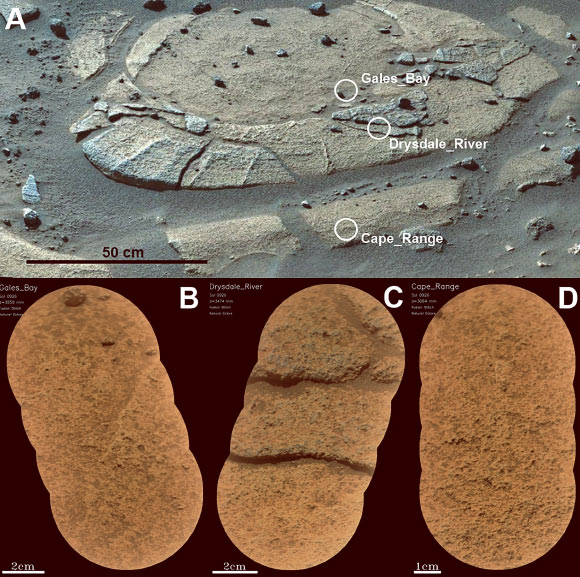
In new research led by Purdue University planetary scientist Candice Bedford, attention was drawn to the Margin unit, a geological layer rich in olivine and carbonate that lies along the crater’s inner rim, near where an ancient lake once existed. The team utilized chemical and imaging data collected by Perseverance’s SuperCam from over 185 rock targets, revealing that the Margin unit originated as a crystalline, olivine-rich igneous rock formed by slow cooling within a magma body.
“Igneous rocks are excellent record-keepers,” the researchers noted, highlighting that mineral crystals in these rocks provide detailed records of their formation. “In this case, they preserved an astonishingly complex record of water activity on early Mars.”
Below what is believed to be the second terrace level of the ancient Jezero lake, scientists identified indicators of three distinct fluid-driven alteration events. Initially, carbon dioxide-rich fluids circulated through cracks in the bedrock, resulting in the formation of carbonate deposits that eroded into recognizable ridges. Subsequently, exposure to lake water or variations in groundwater chemistry led to the remobilization of this carbonate and the precipitation of silica in the rock's pore spaces. Finally, hydrothermal fluids infiltrated younger fractures, depositing minerals such as fluorite and calcium-sulfate, which are typically associated with hydrothermal systems on Earth.
The team also observed that certain areas of the Margin unit had been physically altered by natural processes related to the lake’s shoreline or debris flows. Dr. Bedford remarked that prior to their findings, the prevailing hypothesis based on orbital observations suggested that the carbonate formation was solely from interactions with the ancient lake.
“Now we know that this location became a sort of crossroads for aqueous systems,” said Bedford.
The findings from the Margin unit are particularly significant because Jezero crater contains one of the largest carbonate deposits on Mars, suggesting that insights gained here will have implications beyond this location.
Dr. Eleni Ravanis, a planetary scientist at the University of Hawai’i at Manoa, noted that some rocks in the Margin unit also contain silica: “Turning olivine into carbonate can leave silica behind, and we see more of that silica in rocks that sat below the water line.”
Overall, the research suggests that the geological changes in the Margin unit were driven by both groundwater circulation and prolonged interactions with the ancient Jezero lake. This complex aqueous history positions the Margin unit and the samples collected by Perseverance as key targets for future astrobiological studies.
The research is published in the journal Communications Earth & Environment.