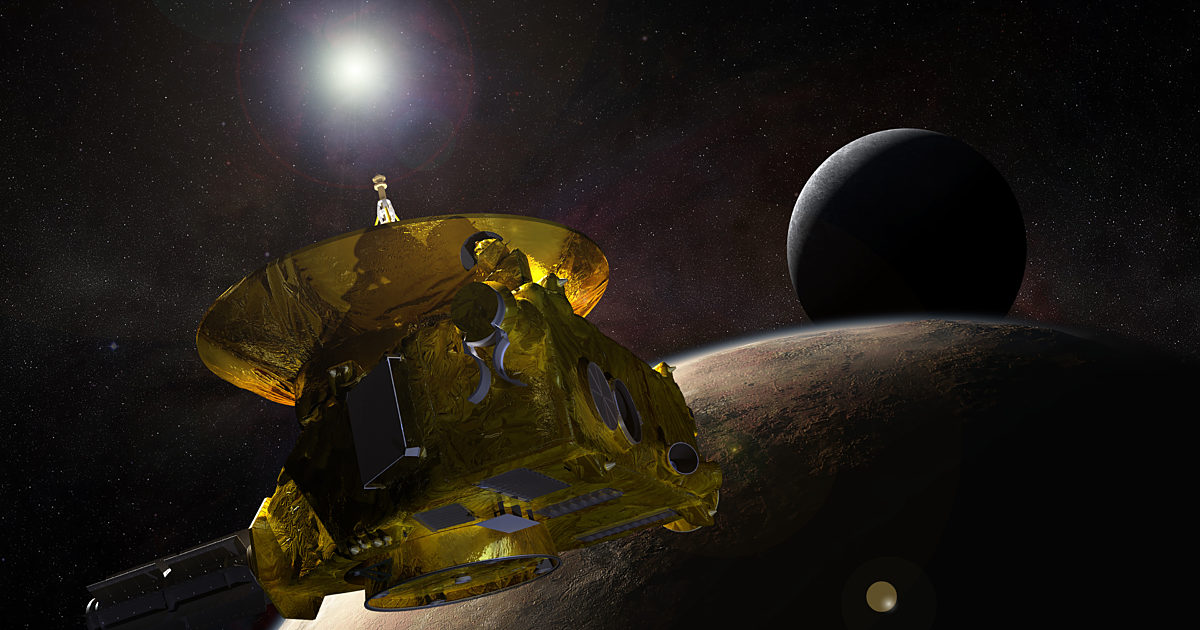
NASA's New Horizons spacecraft, which conducted a historic flyby of Pluto in 2015, will turn off two key instruments, SWAP (Solar Wind Around Pluto) and PEPSSI (Pluto Energetic Particle Spectrometer Science Investigation), starting October 1, 2023. This move is aimed at conserving resources for the spacecraft, which remains operational and capable of functioning until around 2050. The decision has prompted questions from planetary scientists about why the agency is halting this unique scientific capability.
Read More
Since New Horizons made its Pluto flyby, it has been traveling deeper into the outer Solar System, gathering data on the atmosphere and environment beyond Pluto. However, the potential data that could be collected from SWAP and PEPSSI about the interactions between the solar wind and interstellar space may now be lost if the instruments are turned off indefinitely.
The heliosphere, the vast magnetic bubble created by the Sun, extends beyond the Kuiper Belt and influences conditions in interstellar space. SWAP and PEPSSI are designed to map the structure and energy levels of particles in this region, providing insights crucial for understanding cosmic events that can impact Earth's climate and biology. Historical correlations suggest that conditions in the heliosphere may have influenced Earth's climate and the evolution of life during past interstellar exposures.
Turning off SWAP and PEPSSI reduces the chances of advancing knowledge in fields such as radiolysis, which involves creating new chemical species through radiation. These processes are fundamental to understanding how chemical interactions might lead to life, especially in ocean worlds like Europa, Enceladus, and possibly even Pluto, which may have had liquid water beneath its surface.
In light of these considerations, space scientists and members of the public are advocating for NASA to keep these instruments operational, highlighting that New Horizons is the only spacecraft in its region capable of such unique measurements. This data could not only illuminate the relationship between interstellar space and planetary climates but also prepare for future missions like the proposed Interstellar Probe, which could delve further into these unexplored frontiers.
An initiative to petition NASA to retain SWAP and PEPSSI is currently being organized within the scientific community, with support from organizations like The Planetary Society. Advocates hope that by preserving these instruments, they can ensure a continued understanding of our solar system and beyond.