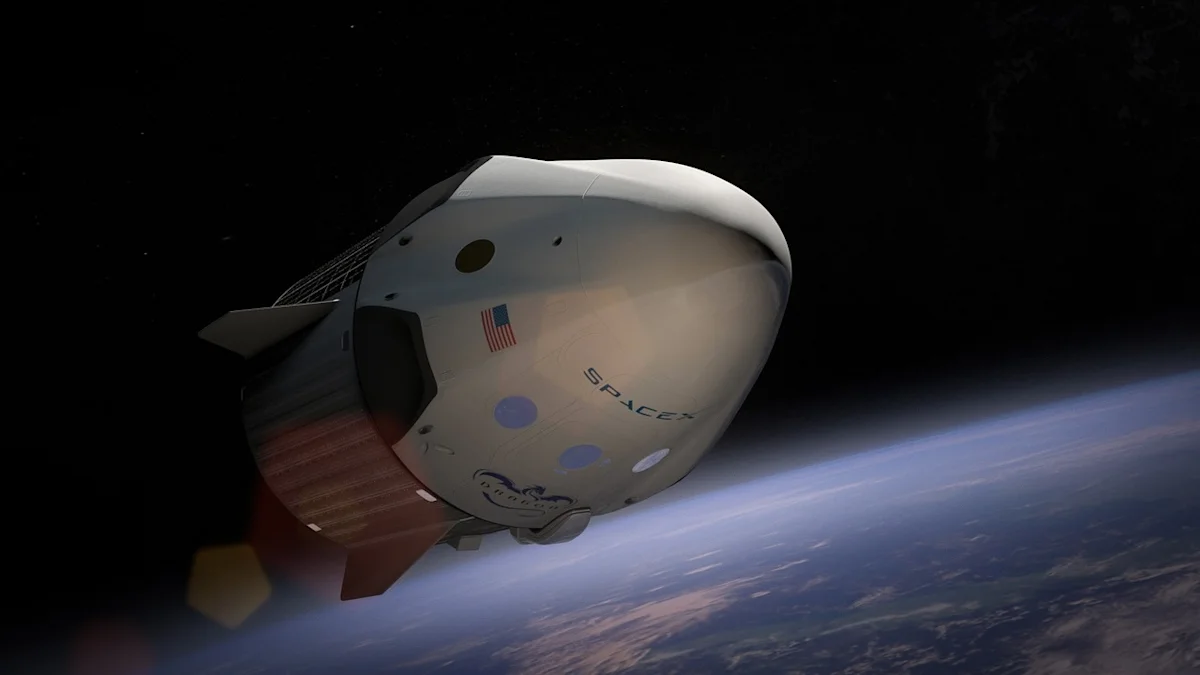
Space Exploration Technologies Corp. (NASDAQ: SPCX) is advancing its challenge to traditional telecommunications companies by acquiring a nationwide low-band spectrum portfolio from Grain Management. The deal, announced on October 8, reportedly involves around $8 billion in cash, although specific financial terms were not disclosed. This acquisition is expected to enhance Starlink Mobile's capacity to offer satellite connectivity directly to standard smartphones, thus broadening SpaceX's ambitions from satellite broadband to the larger mobile communications sector.
Read More
The news has affected the stock prices of major U.S. wireless carriers, highlighting investor concerns that SpaceX may soon compete with established cellular networks. However, it also raises questions about SpaceX's own valuation, which is approximately $2.2 trillion. As the company invests heavily in satellite communications and AI infrastructure, investors are left to consider whether these ventures will yield sufficient earnings to justify its high market valuation.
SpaceX's expansion has sparked speculation regarding its long-term prospects. Additionally, online communities like Reddit have ranked it among the 10 stocks that could potentially increase dramatically in value, reflecting investor enthusiasm amid pressure on the company to validate its $2.2 trillion valuation.
The recent acquisition would bolster SpaceX's existing 2 GHz mid-band spectrum, which supports higher-capacity satellite communications. The proposed 800 MHz frequencies are expected to improve signal penetration through physical obstacles, addressing a key challenge in direct-to-device satellite connectivity. This acquisition coincides with regulatory advancements for SpaceX’s second-generation Starlink constellation, which has received authorization for satellites aimed at enhancing mobile coverage and network capacity.
Despite these developments, creating a competitive wireless network remains a challenge for SpaceX. Established carriers possess extensive terrestrial infrastructure that allows them to deliver high-capacity services in densely populated areas, while satellite connectivity continues to face both technical and commercial hurdles. Following the announcement, JPMorgan maintained an Overweight rating on SpaceX but warned that the company may require terrestrial infrastructure or partnerships to match the services provided by traditional wireless companies.