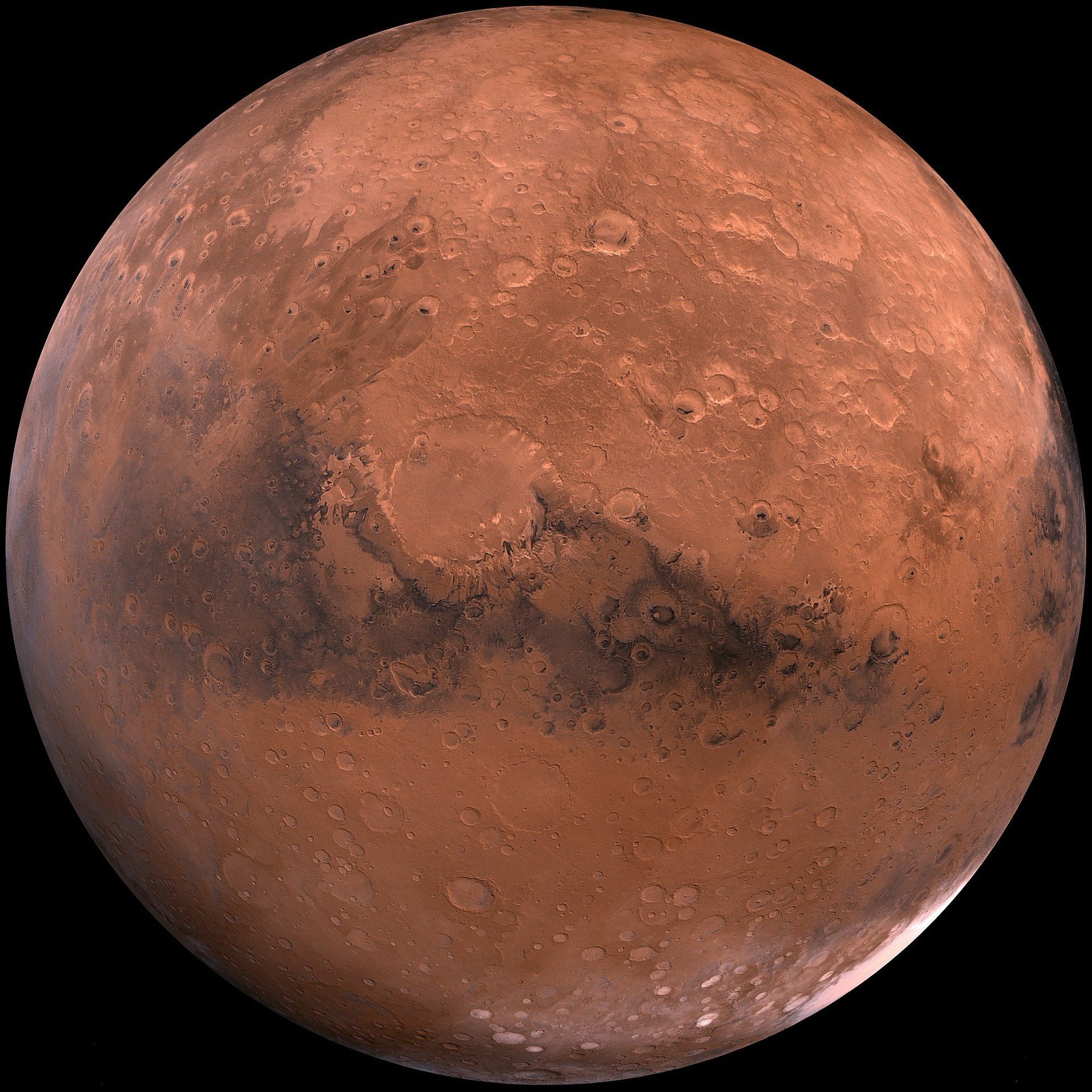
Researchers at the University of Copenhagen have found evidence suggesting that Earth and Mars formed through different processes, despite their proximity in the same solar system. Their study, published in Nature Astronomy, focuses on the planets' chemical compositions to understand their formation nearly 4.5 billion years ago.
Read More
Professor Anders Johansen noted that their findings challenge the expectation that neighboring planets would have similar formation histories. He co-led the research with Assistant Professor Haiyang Wang, who explained that at least 75% of Earth’s mass likely came from two young protoplanets that grew through pebble accretion, with the remaining 25% from planetesimals. In contrast, Mars appears to have formed predominantly from planetesimals, contributing approximately three-quarters of its mass, with the rest from pebble accretion.
To gather insights about the planets’ early formation, researchers examined volatile elements like sodium, zinc, and potassium in the outer layers of Earth and Mars. These elements serve as chemical fingerprints indicating the processes each planet underwent during their formation. Johansen described this work as a "major detective job" to piece together historical evidence that has since vanished, noting that, despite the passage of time, the compositions of the planets' mantles retain clues about their origins.
The researchers acknowledge that their computer models involve uncertainties about the exact chemical composition of the original materials in the solar system. However, even under varying assumptions, their analysis consistently points to the conclusion that Earth and Mars formed differently.
The study’s implications extend beyond our solar system, as understanding the formation processes of planets can aid future missions aimed at identifying habitable planets in other galaxies. Knowing how planets lose volatile elements during formation can help predict their capacity for maintaining water and other life-supporting substances, according to Johansen.