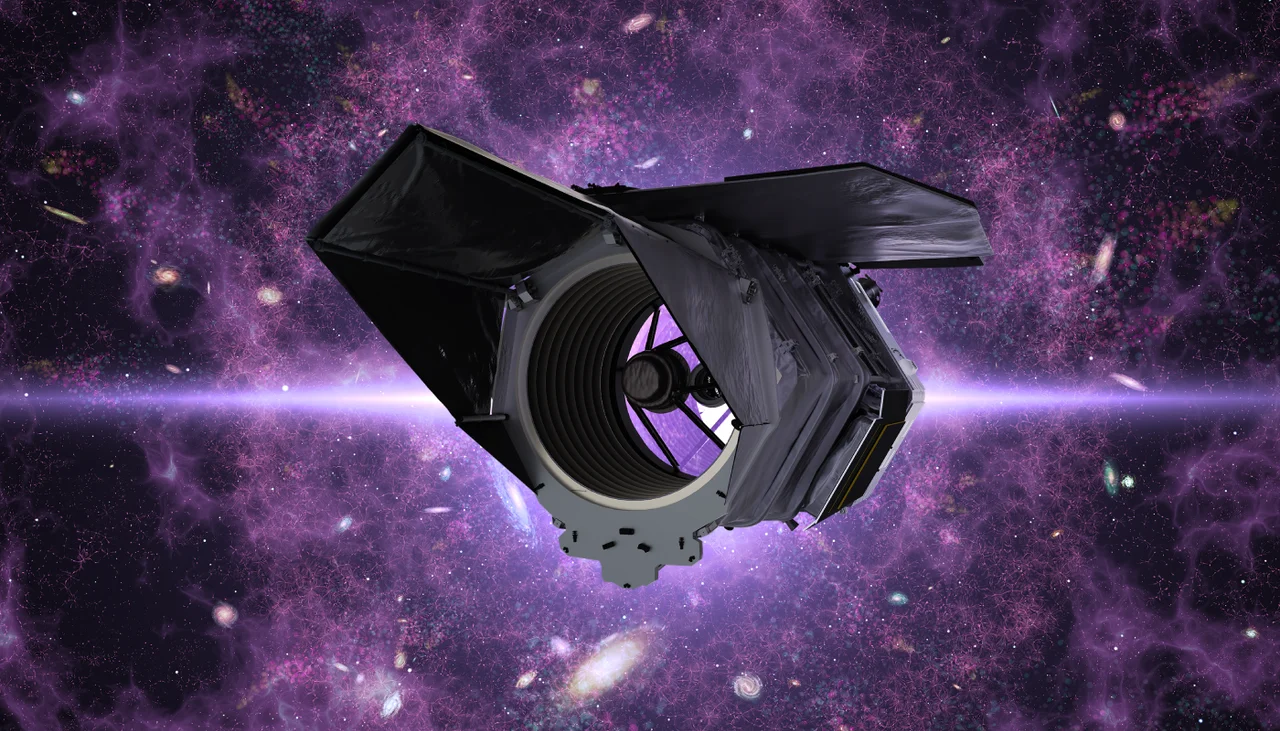
NASA's Nancy Grace Roman Space Telescope, an observatory designed to explore dark energy and enhance the search for exoplanets, is scheduled to launch on August 30, 2026. This follows recent advancements in astronomy, marked by the launch of the James Webb Space Telescope and the initiation of scientific operations at the Vera Rubin Observatory, each tailored to investigate different scientific inquiries.
Read More
The Roman Space Telescope will feature a 2.4-meter primary mirror and a field of view approximately 100 times larger than that of the Hubble Space Telescope. This expanded capability will enable it to map extensive areas of the sky and gather substantial volumes of data.
The telescope's scientific instruments include a Wide Field Instrument (WFI), a 300.8-megapixel camera that can observe in visible and near-infrared light while achieving resolution similar to Hubble’s. The second instrument, the Coronagraph Instrument (CGI), is designed for high-contrast observations to detect objects near bright stars using starlight-suppression techniques.
Key objectives for Roman include investigating dark energy through baryon acoustic oscillations, observing distant supernovae, and utilizing weak gravitational lensing. The telescope will also focus on exoplanets in the outer regions of planetary systems, employing gravitational microlensing to identify planets with masses a few times greater than the Moon, along with conducting a census of rogue planets.
Named after Nancy Grace Roman, the first chief of astronomy at NASA, the telescope honors her significant contributions to the agency's space astronomy program. Roman, born in 1925 and a doctorate holder from the University of Chicago, was instrumental in advocating for the development of space-based observatories, facilitating astronomical research beyond Earth's atmosphere.