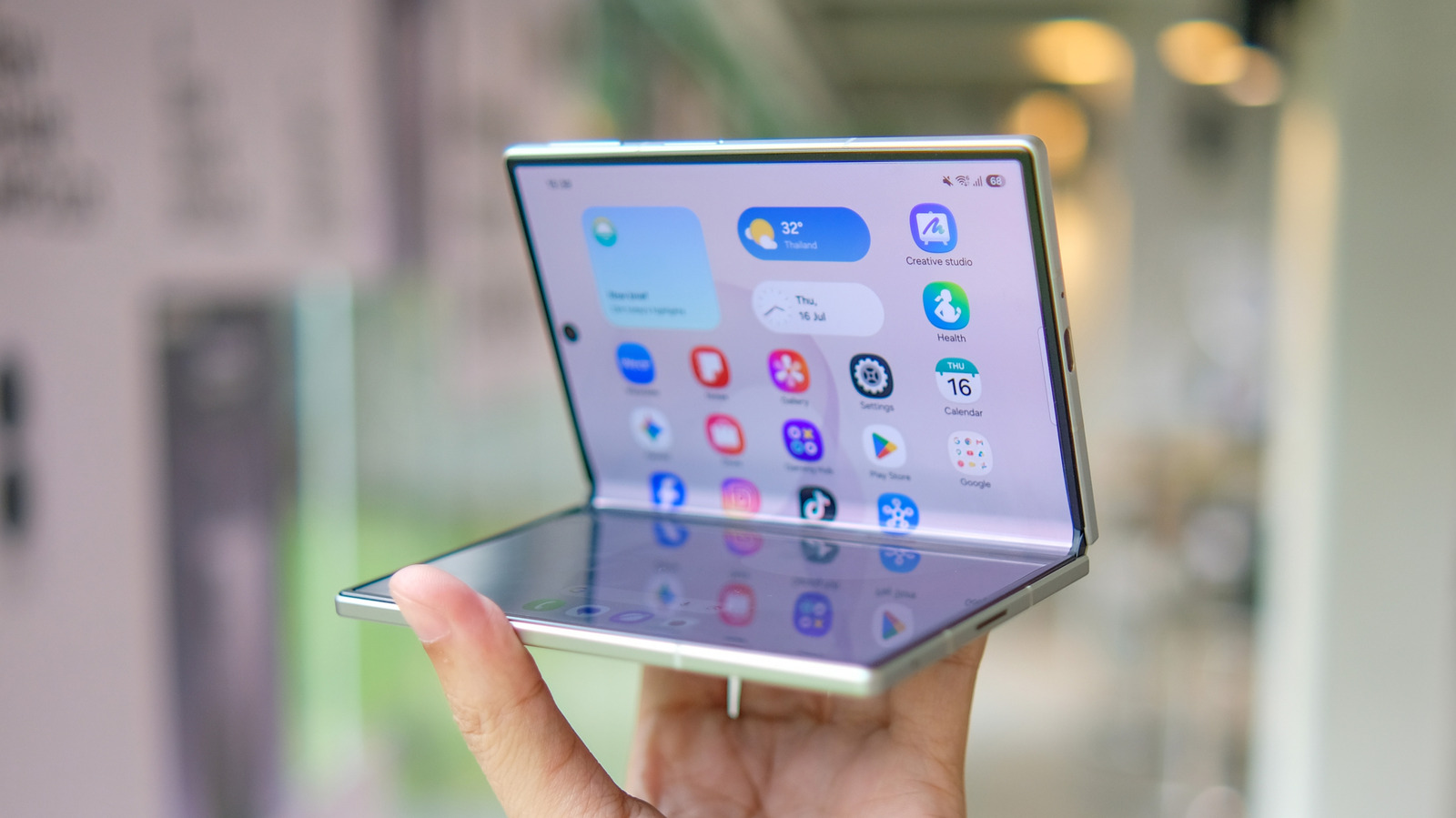
Foldable phones have been around for seven years, starting with the Samsung Galaxy Fold, which faced numerous challenges at launch. Over this time, foldable devices have improved significantly, featuring more advanced screens and slimmer designs. However, they remain less common than traditional smartphones, primarily due to ongoing issues that manufacturers need to address before wider adoption occurs.
Read More
While concerns about fragility and the visible crease in the display persist, a notable problem is the wobbliness of foldable phones when placed flat on a surface. This issue primarily stems from the design of the camera, which often has a pronounced bump on the back. The design choices made to accommodate large camera sensors lead to an uneven surface, exacerbating the wobble.
For instance, the new Galaxy Z Fold 8 has a vertical camera module that significantly protrudes, resulting in a noticeable wobble when laid on a table. Many users have expressed their frustration on platforms like Reddit, with some even attempting to remove their rear cameras entirely, indicating dissatisfaction with this design feature.
The challenge remains: as manufacturers strive to produce thinner devices while enhancing camera performance, the problem is likely to continue. A potential solution would involve making phones thicker to achieve a flat back, reminiscent of earlier models, but this approach seems unlikely in the current market trend. Users may find getting a thicker case for their foldable phone to be a viable workaround.
Despite these challenges, using a foldable phone can be enjoyable, offering the functionality of a small tablet that folds for portability. Samsung's latest models have garnered attention, especially with speculation about Apple's impending foldable iPhone. Nevertheless, foldable devices come with trade-offs beyond the camera bump, such as the persistent crease on the screen and suboptimal software support for tablet-sized displays.
Foldable phones also carry a premium price tag compared to standard smartphones, yet may lack some hardware features. For example, the $2,100 Galaxy Z Fold 8 does not include 5x optical zoom or fast charging capabilities found in Samsung's other flagship models. Similarly, the anticipated foldable iPhone may omit features like a telephoto lens and Face ID, which are standard on higher-end iPhone versions. As technology develops, the hope remains that future foldable devices will integrate the features expected by consumers.