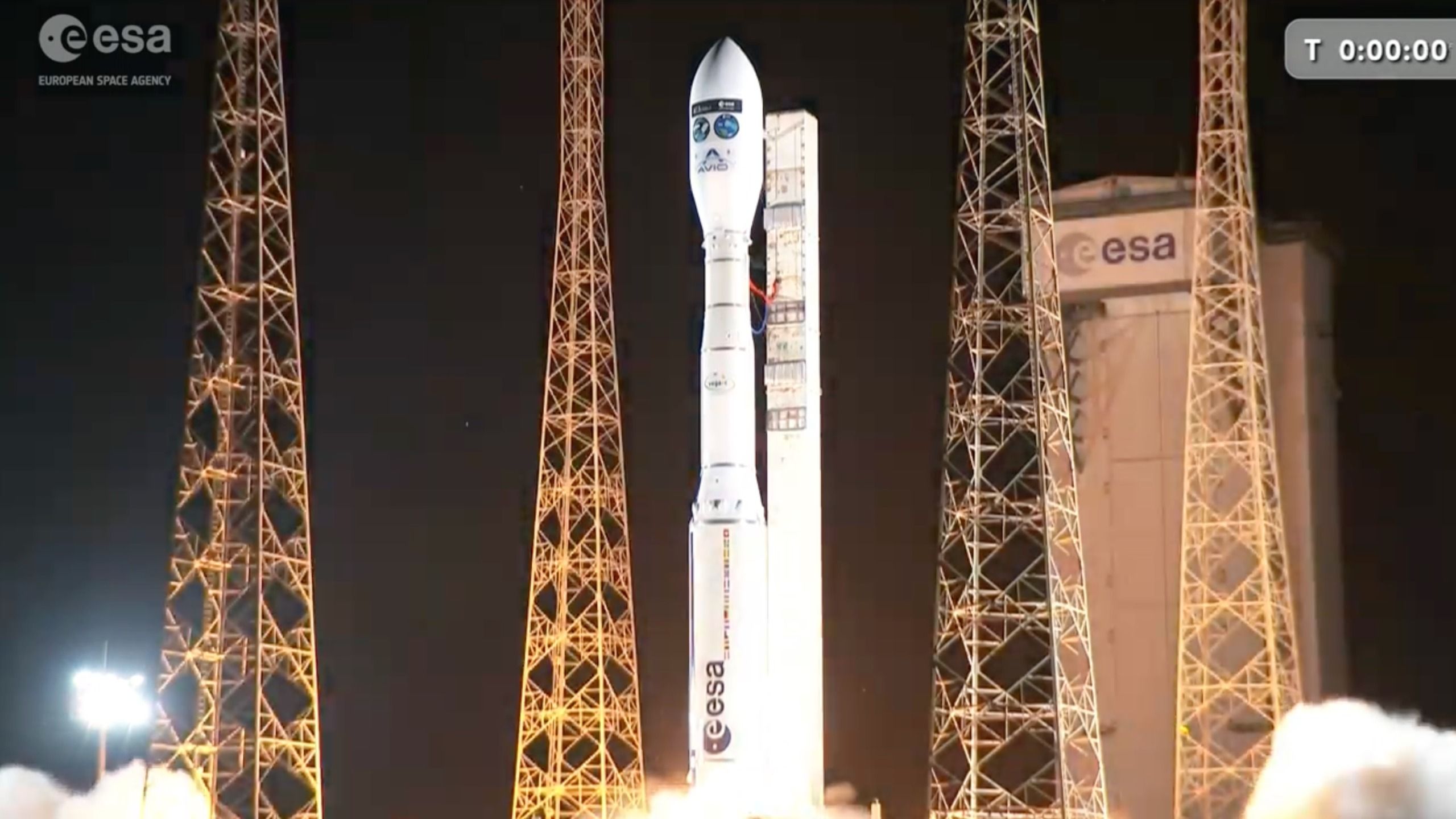
Two European Earth-observing satellites were successfully launched from Kourou, French Guiana on September 14, 2026. A Vega C rocket lifted off carrying the FLEX and Sentinel-3C satellites at 9:21 p.m. EDT (10:21 p.m. local time in Kourou and 01:21 GMT on September 15). Both satellites were deployed as planned and were flying freely shortly after, approximately 116 minutes post-launch, at an altitude of about 509 miles (820 kilometers).
Read More
The FLEX satellite, weighing 875 pounds (397 kilograms), is designed to detect and monitor vegetation fluorescence, an innovative capability that aims to map plant photosynthetic activity. The European Space Agency (ESA) stressed that FLEX's data will enhance the understanding of the global carbon cycle and aid in agricultural management, particularly critical for addressing the food production demands of a growing world population.
Meanwhile, Sentinel-3C is part of the European Union’s Copernicus Earth-observation program, with a mass of 2,520 pounds (1,143 kilograms). This satellite joins others in the Sentinel-3 line, which continues to provide vital data while its predecessors, Sentinel-3A and Sentinel-3B, remain operational in low Earth orbit after launching in 2016 and 2018, respectively. ESA noted that Sentinel-3C carries advanced instruments to systematically measure Earth’s oceans, land, ice, and atmosphere, offering essential near-real-time information for ocean and weather forecasting.
The Vega C rocket, measuring 115 feet (35 meters) tall, made its debut in July 2022 and had conducted seven flights prior to this launch, with six being successful. Initially operated by Arianespace, the rocket is now managed by the Italian company Avio. This launch marked Avio's second successful liftoff of the Vega C.