NASA’s Artemis Program aims to establish a sustained lunar exploration and development initiative, which includes returning astronauts to the Moon for the first time since the Apollo missions. As part of this effort, NASA plans to build infrastructure for regular, long-duration surface missions. The South Pole-Aitken Basin and potential lunar caves are key areas of focus for future habitats and facilities.
Read More
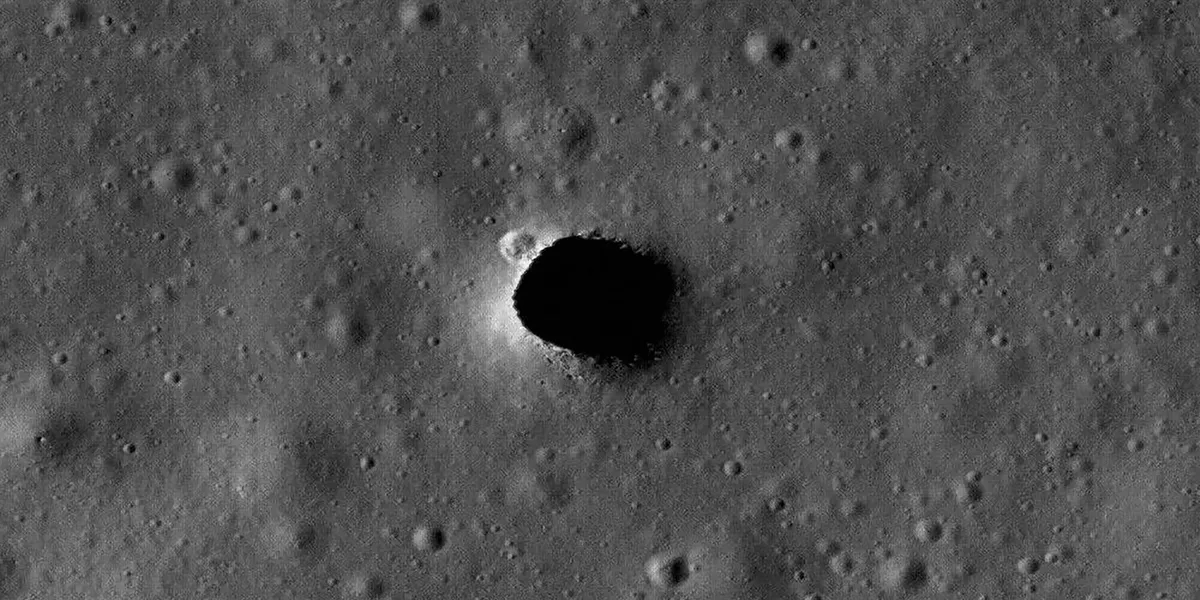
A significant component of this initiative is the Geophysical Instruments for Marius Lunar pit Investigation (GIMLI), led by the Planetary Science Institute. The mission will explore a skylight, an opening in an ancient lava tube, to assess the potential for a larger cave system beneath. Such a site could provide a safer environment for future astronaut operations.
Than Putzig, associate director and senior scientist at PSI, will lead the mission, collaborating with the Norwegian Space Agency. Honeybee Robotics will develop much of the robotic equipment, while NASA will provide a lander and rover through its Commercial Lunar Payload Services program, with funding from the Payloads and Research Investigations on the Surface of the Moon program.
Amanda Hendrix, director and CEO of PSI, noted that GIMLI exemplifies the ambitious planetary science goals of the institute. She expressed excitement over the partnership with NASA and Honeybee Robotics to deepen understanding of the Moon’s geological history.
Lunar orbiters have indicated the possible existence of underground caves, with features such as sinuous rilles and skylights suggesting stable lava tubes from the Moon’s geologically active past, roughly 3.8 to 3 billion years ago. GIMLI will specifically target the Marius Hills Pit, a prominent volcanic site that may lead to these underground structures.
Using advanced instruments including ground-penetrating radar, seismic sensors, a gravimeter, and cameras, GIMLI will investigate the pit from the lunar surface. The mission aims not only to locate potential subsurface cavities but also to analyze their size.
Putzig expressed enthusiasm about reintroducing active-source seismic methods in planetary science since they were last utilized by Apollo astronauts. He believes combining seismic data with ground-penetrating radar could yield valuable insights about the subsurface structure, potentially revealing a lava tube extending from the Marius Hills Pit.
Even if GIMLI does not uncover a significant cave system, the gathered data will provide insights into the geological history of the region and the formation of the pit. By studying the pit walls, scientists will access layers of regolith and lava flows that have not been observed from orbit or by rovers. Additionally, any subsurface environments could preserve volcanic history.
Gareth Morgan, a PSI senior scientist and deputy principal investigator of GIMLI, remarked that establishing the presence of a substantial lava tube would enhance understanding of lunar volcanism, drawing parallels with similar Earth features.