NASA's Lunar Reconnaissance Orbiter (LRO) recently identified a new crater on the Moon's near side, located approximately 330 km from the edge of Mare Crisium. The crater, named McGetchin Crater, measures 728 feet in diameter, equivalent to two football fields.
Read More
This new crater is believed to have formed from a bolide impact in the spring of 2024 but was only detected in LRO imagery late last year, as reported in two studies published in the journal Science Advances.
Erik Asphaug, a Professor of Planetary Sciences at the Lunar and Planetary Laboratory at the University of Arizona in Tucson, noted that this crater holds significant geological value, as it can reveal the immediate effects of impacts that excavate deep beneath the Moon's surface. McGetchin Crater is the most substantial new crater observed by the LRO Camera (LROC) since its lunar orbit began in 2009, surpassing the previous largest discovery, which was around 70 meters across.
Timothy Glotch, Professor and Chair of Geosciences at Stony Brook University, stated that craters of this size are formed on average every 132 years. However, due to the LRO's monitoring timeline starting only in 2009, the date of the last similar crater remains unknown.
Analysis of the crater's ejecta revealed that it extends for hundreds of crater radii, providing valuable information for NASA’s planning of sustainable structures on the lunar surface. Glotch emphasized that understanding this ejecta is crucial for designing equipment that may be adversely affected by fast-moving debris.
Additionally, the LRO’s Diviner thermal instrument detected a cold spot around the new crater, measuring about 4 miles wide and showing nighttime temperatures approximately 16 degrees Fahrenheit cooler than its surroundings. This is indicative of the disturbance caused in the lunar regolith, which consists of a layer of micrometeorites, fragmented rocks, and dust.
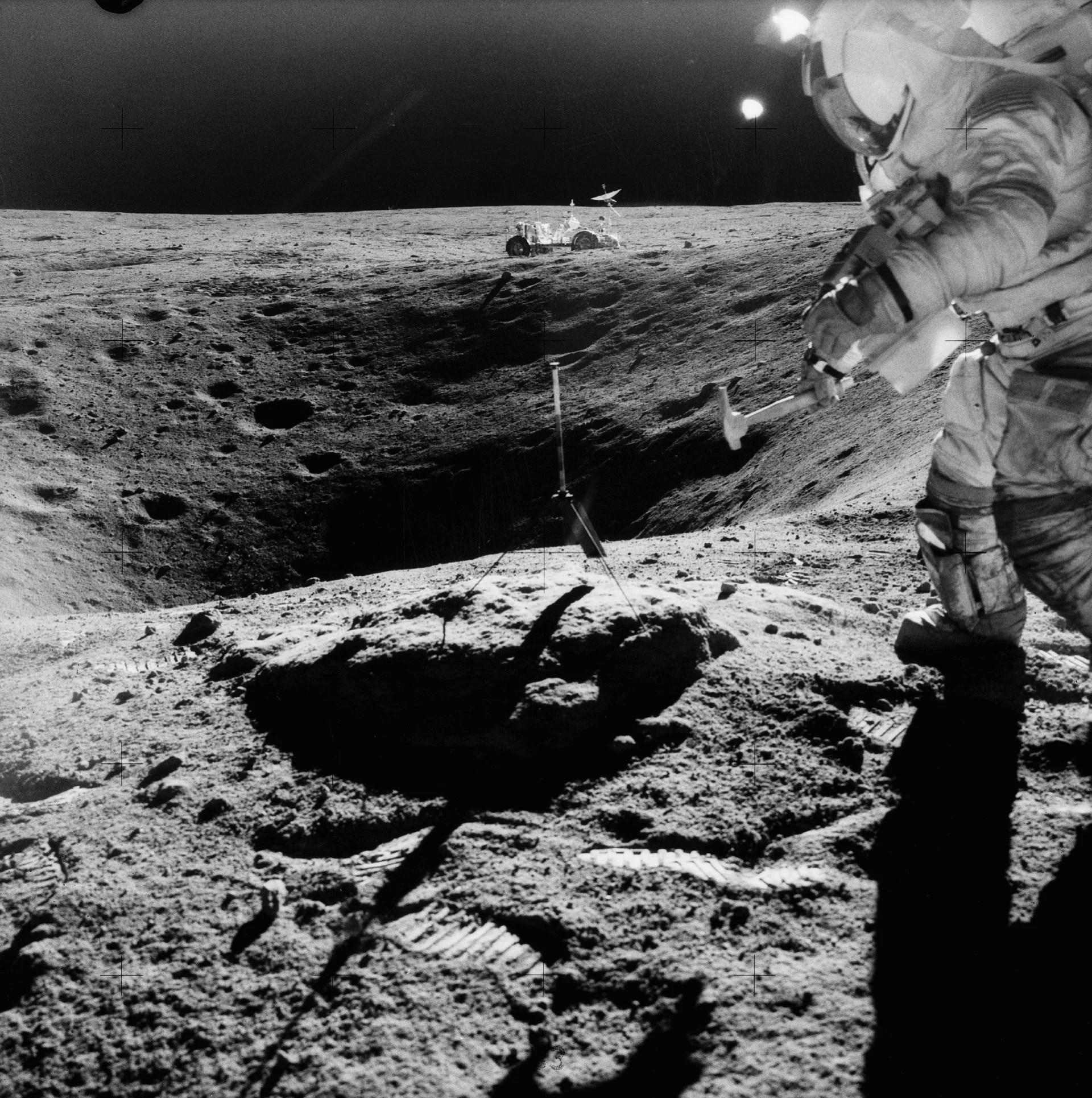
NASA's Apollo 16 mission also encountered a cold spot linked to an earlier impact, supporting the idea that such areas can provide insights into regolith characteristics and dating of impact craters. Cold spots fade over a timeline of up to two million years, making them significant for studying young craters and their contributions to lunar meteorite sources on Earth.
Looking ahead, Glotch advocates for a new advanced orbiter to succeed the LRO when it exhausts its fuel, as it could offer enhanced spatial resolution for observing the lunar surface. Asphaug envisions this crater as a valuable target for future missions that could provide fundamental data about lunar geology while communicating easily back to Earth.
Furthermore, Asphaug mentioned that understanding stress waves from impacts could help scientists analyze lunar regolith movement and energy transfer. Despite the absence of a seismic network since Apollo seismometers were deactivated in the late 1970s, he noted that capturing seismic data from a crater of this magnitude would significantly enhance our understanding of the Moon's internal structure.