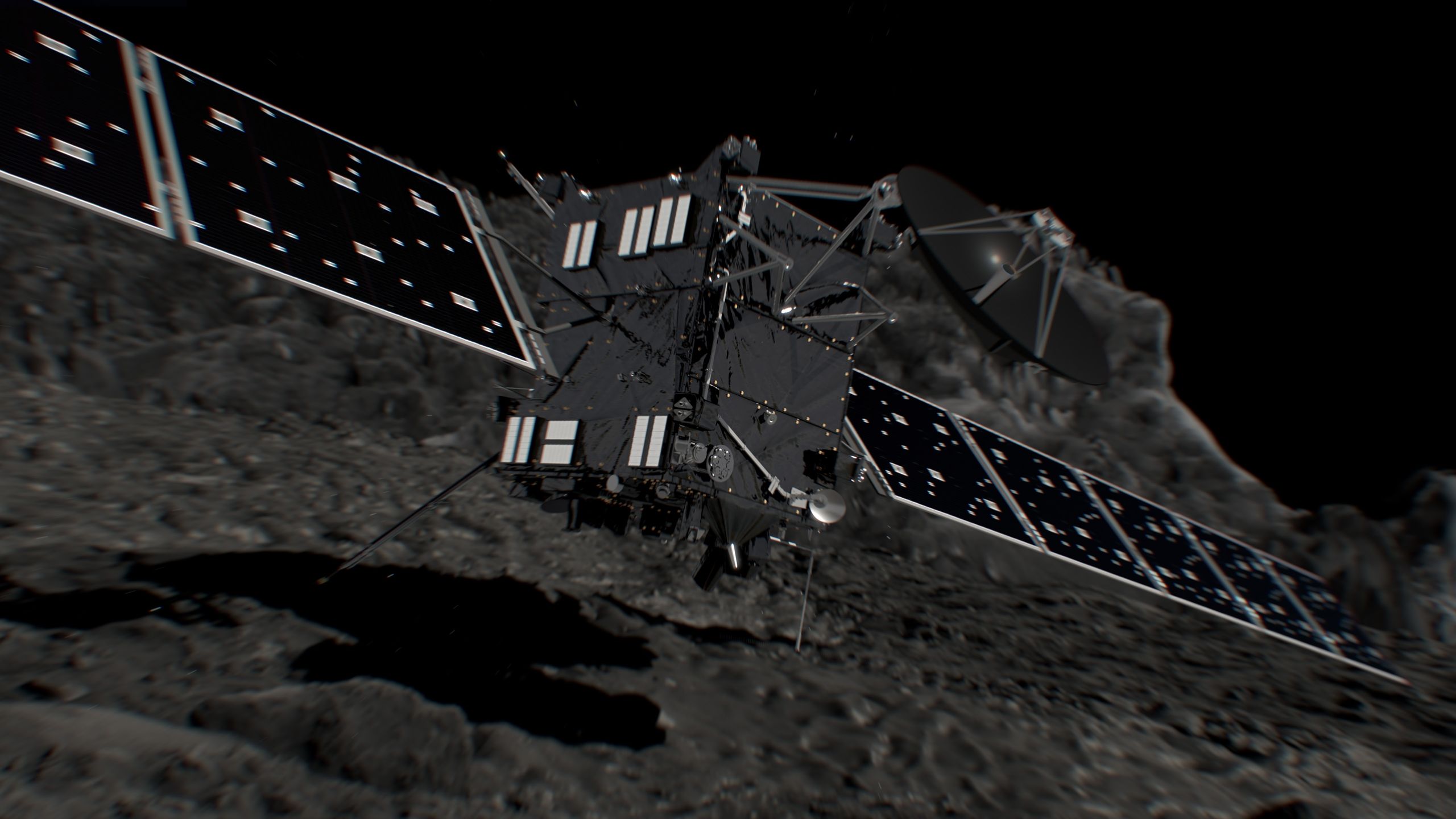
On September 30, 2016, the European Space Agency's Rosetta spacecraft executed a controlled crash landing on Comet 67P/Churyumov-Gerasimenko, concluding a groundbreaking mission. Launched in 2004, Rosetta spent a decade pursuing the rubber-duck-shaped comet, which orbits the sun between Earth and Jupiter. After reaching the comet in August 2014, Rosetta orbited for two years, capturing remarkable images and analyzing its composition while witnessing its evolution as it approached the sun.
Read More
The Rosetta mission was notable for being the first to orbit a comet and to accompany a comet on its journey through the solar system. The probe was instrumental in studying this icy remnant from the solar system's formation 4.6 billion years ago. A significant highlight was the landing of the Philae lander, which briefly operated on the comet’s surface despite losing power shortly after landing due to its solar panels' orientation.
By the time of its crash landing, Rosetta had followed Comet 67P as it traveled toward the outer solar system, where it could no longer generate sufficient power from its solar panels. The descent, which lasted 14 hours, ended with Rosetta impacting the comet at approximately 2 miles per hour (3.2 kilometers per hour). Mission manager Patrick Martin confirmed the mission’s success during the landing, stating, "I can announce the full success of this historic descent. Farewell Rosetta, you've done the job. That was pure science at its best."
The impact of Rosetta's findings on comet science and our understanding of the solar system continues to influence research today.