In response to Apple’s recent launch of the iPhone Duo, Samsung is reportedly moving up the release date of its second-generation tri-fold phone, the Galaxy Z TriFold 2, to as early as July next year. Previously, predictions pointed to a public debut in the latter half of 2027. This acceleration appears to be a direct effort to compete with Apple's new foldable phone offering, despite the underwhelming market performance of Samsung's first-generation tri-fold model.
Read More
Apple unveiled its iPhone Duo, which had been anticipated for three years, with a starting price of 15,999 yuan for the mainland China version. Following this, Samsung swiftly acknowledged the challenge, marking the beginning of a competitive landscape between the two tech giants in the foldable smartphone sector.
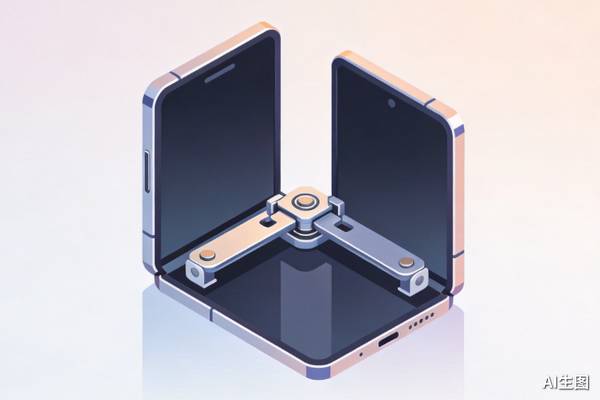
Lingyi Technology, often referred to as the "richest woman in Jiangmen," stands to benefit from this intensifying rivalry. As the core hinge supplier for both Apple and Samsung, Lingyi Technology is well-positioned to profit regardless of which brand consumers choose. The company provides crucial components such as hinge precision structural parts and ultra-thin battery shell modules, all valued higher than those used in traditional smartphones.
In the first half of 2026, Lingyi Technology reported record revenue of 251.5 billion yuan, largely driven by its successful thermal management business and significant growth in automotive and low-altitude economy sectors. This increase can be attributed to substantial investments in research and development, with R&D expenditures rising by 28% to 14.4 billion yuan.
While the current boom in foldable phones is advantageous for Lingyi Technology, the company's reliance on the Apple supply chain raises concerns about operational risks. The majority of Lingyi's revenue is derived from Apple, highlighting the vulnerability associated with such dependence.
In light of previous challenges faced by companies like O-film, which struggled after losing their Apple partnership, suppliers are becoming increasingly aware of the risks tied to high order concentration. In response, many firms within the Apple supply chain are exploring diversification strategies.
Luxshare Precision, for example, has successfully expanded its revenue sources, decreasing its dependency on Apple from 73.3% in 2022 to 56.7% in 2025. Other firms, like Lens Technology and Goertek, are similarly pursuing broader markets to reduce reliance on Apple.
Despite this trend towards "de-Appleization" among suppliers, the ongoing competition in the foldable phone market underscores the continued significance of Apple. The initial stocking volume of the iPhone Duo has reportedly reached 10 million units, and if market feedback is positive, further orders are expected. Simultaneously, Samsung's planned early launch of the Galaxy Z TriFold 2 indicates its intent to maintain competitiveness in this emerging market.
In examining the current landscape, it is clear that, while suppliers are striving to diversify their client bases, the existing demand driven by Apple and Samsung in the foldable phone sector remains a key revenue source. Lingyi Technology's advantage lies in its established presence with both companies, essentially positioning it to profit from the growth of the foldable phone market amidst fierce competition.