NASA's exploration of Mars began in the mid-1960s, following a failed attempt in 1964. The Mariner 4 mission later achieved the first flyby, capturing close-up images of Mars. The Viking 1 mission successfully landed on the planet in 1976, marking the start of decades of unmanned exploration.
Read More
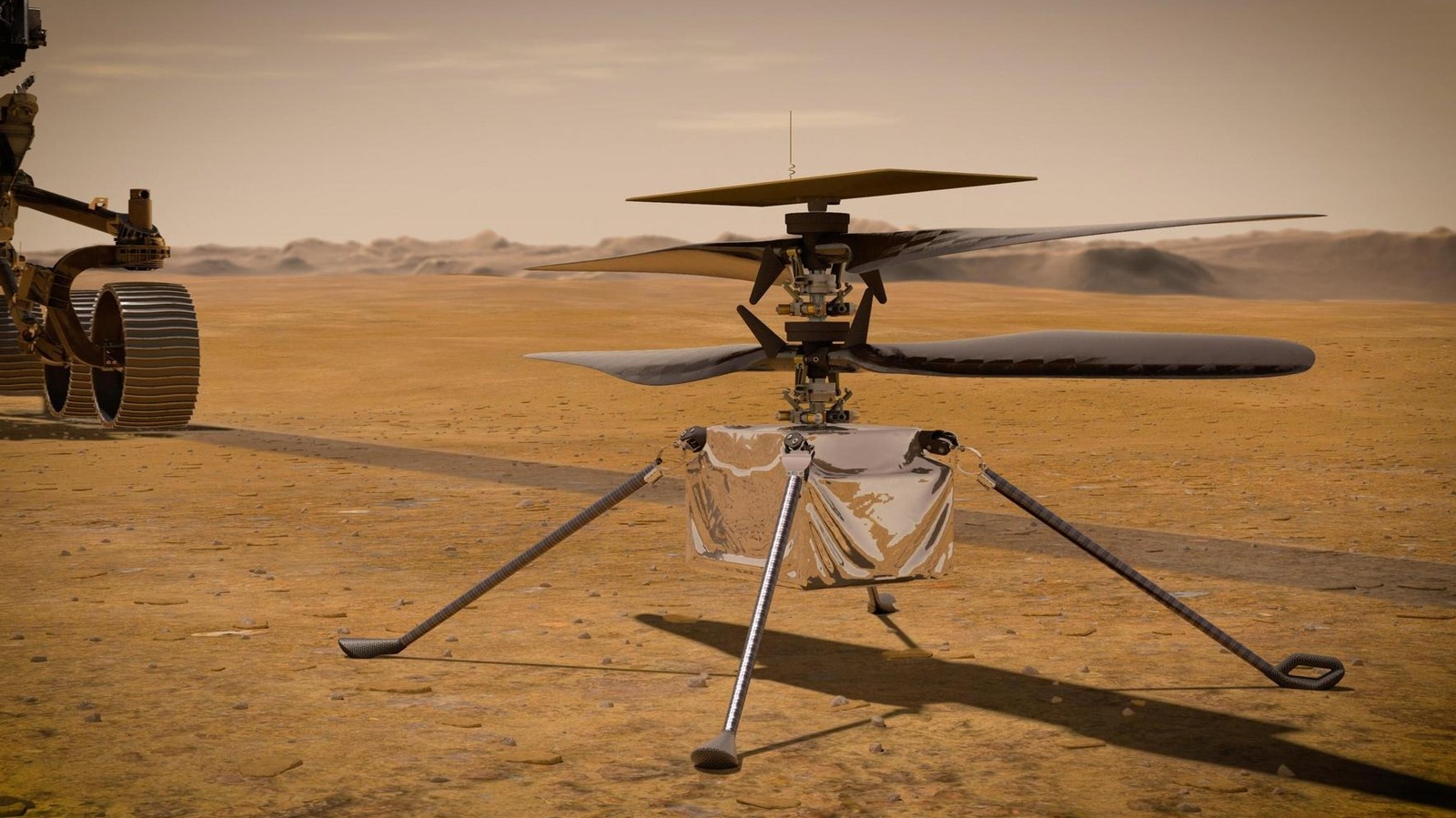
In 2020, amid the COVID-19 pandemic, NASA launched the Perseverance rover along with the Ingenuity Helicopter, initially designed for just five test flights. Ingenuity emerged from the belly of Perseverance over several days, completing its first powered flight on April 19, 2021—a milestone in space exploration.
Though it resembles a drone, Ingenuity is classified as a helicopter. Weighing four pounds on Earth and 1.5 pounds on Mars due to lower gravity, its blades span nearly four feet and it is powered by solar energy. Ingenuity exceeded expectations, operating for nearly three years before being grounded in early 2024 due to damaged rotor blades. Although it can no longer communicate with Earth, it remains on Mars, continuing its data collection efforts and photography work.
Throughout its mission, Ingenuity conducted 72 flights over approximately 1,000 Martian days, totaling around 128 minutes in the air. It covered nearly 11 miles, far exceeding its planned targets. Its main contributions included scouting paths for Perseverance, enhancing our understanding of Martian aerodynamics. Communication with Ingenuity was facilitated through Perseverance, which has since moved out of range. NASA issued a final software update, enabling the helicopter to run diagnostics and send one last message acknowledging the mission contributors. While grounded, Ingenuity's work continues to inform Perseverance’s search for signs of ancient life on Mars, which is approximately 140 million miles from Earth.