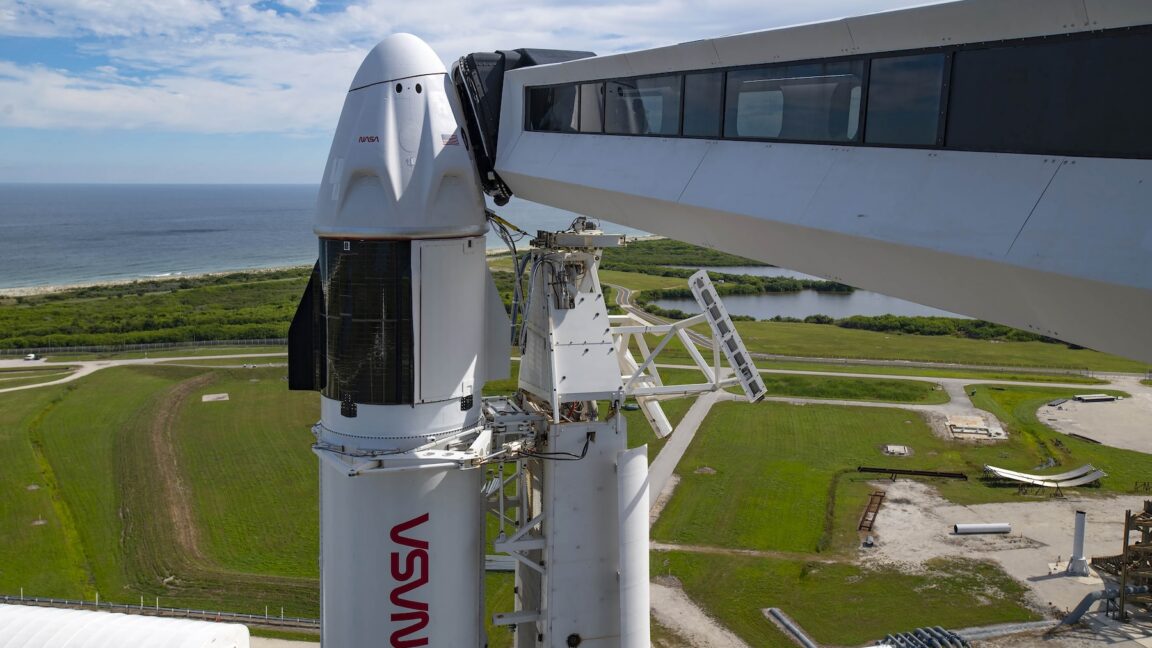
NASA has been working for two decades to create a commercial economy in low-Earth orbit, primarily for the International Space Station (ISS). The agency began its efforts with a program to develop private spacecraft for cargo delivery, aiming to encourage private sector innovation in safe and reliable space transportation systems. In recent years, this initiative has expanded to include a broader commercial ecosystem encompassing transportation, space stations, manufacturing, and tourism, making NASA one of many customers in this market.
Read More
In April 2024, NASA articulated its strategy, stating its commitment to fostering a robust commercial space economy that enhances American industry and promotes technological advancement through in-space research and work. However, only two years later, the viability of this commercial ecosystem is being questioned. As NASA shifts its focus towards lunar exploration, SpaceX has indicated it is stepping back from its role in transporting astronauts to low-Earth orbit. While SpaceX plans to support the ISS through 2030, it intends to retire the Crew Dragon spacecraft afterwards, restricting its services to companies aiming to develop private space stations.
NASA invested $3.1 billion in the Crew Dragon's development, but SpaceX is not obliged to continue its missions beyond the six it is contracted to complete. It has already flown 13 missions and will complete a 14th soon. SpaceX, now relying heavily on its Starlink service for revenue, has shifted its priorities away from NASA, which has fewer financial strings attached to it. NASA Administrator Jared Isaacman acknowledged SpaceX’s intended transition away from older platforms, including Falcon and Dragon, emphasizing their focus on next-generation technologies like Starship.
Starship could theoretically revolutionize crew transport with its potential to carry numerous astronauts, yet SpaceX has made it clear that developing Starship for human launches is not a current priority. Safety concerns and regulatory complexities surrounding human transport add to the challenges, and NASA does not possess the means to compel SpaceX to prioritize this development.
On the other hand, Boeing, NASA's other partner in the Commercial Crew Program, has faced its challenges. Although NASA has invested $5.1 billion in Boeing's Starliner spacecraft, it has not yet achieved a single operational mission. Despite these setbacks, NASA plans to allocate an additional $359 million to assist Boeing in addressing issues with Starliner’s propulsion system. Some critics argue that this approach grants Boeing undue monopolistic power over Western human spaceflight, potentially jeopardizing the development of a low-Earth orbit economy.
Discussion exists regarding the possibility of launching a new competition for crew transportation, which could have invited other companies like Blue Origin to promote cost-effectiveness. However, this venture would require significant funding and could divert resources from NASA's broader objectives. Currently, NASA's astronaut transportation needs, estimated at two crew flights every six to nine months, hinge on Boeing's capabilities.
Cost estimates indicate SpaceX's Dragon flights have escalated from around $55 million to $78.8 million per seat, while Starliner seats are priced at $90 million. This raises concerns regarding the affordability of crew access to low-Earth orbit after the potential retirement of the Dragon.
Meanwhile, Blue Origin is progressing on developing a crewed vehicle for its New Glenn rocket, but there are doubts about its readiness for early 2030s missions. Other options are limited, with Russia's Soyuz no longer viable and India’s Gaganyaan delayed to at least 2027, limiting its usability for international clients.
In conclusion, despite the challenges ahead, the only feasible prospect for lowering costs in crew transport to low-Earth orbit might lie with Starship. However, SpaceX has shown little inclination to prioritize human launches on this vehicle. As SpaceX shifts its focus toward maximizing profits through its own payloads, the future of a commercially viable low-Earth orbit economy remains uncertain. Analysts view SpaceX's retreat from crewed missions as detrimental to the industry, yet it raises the question of whether the company is obligated to maintain a service merely to support competitors.