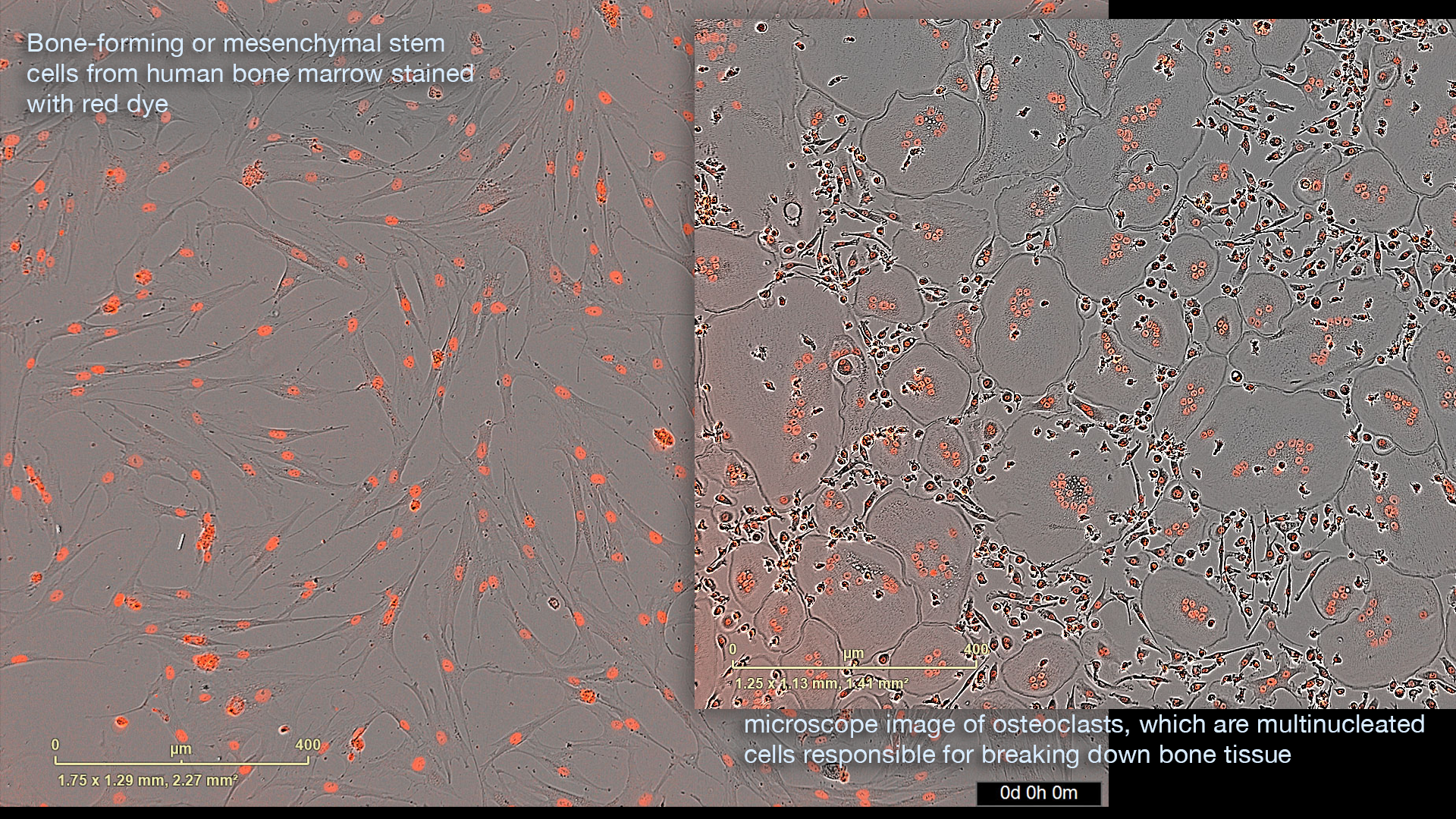
NASA has launched the Microgravity Associated Bone Loss-B (MABL-B) investigation to explore bone density reduction experienced by astronauts during long-duration space missions. Released on April 1, 2026, the research highlights that astronauts may lose 1% to 2% of their bone density each month, even with consistent exercise. While the effects of microgravity on bone health are documented, the precise mechanisms remain unclear.
Read More
Previous studies conducted aboard the International Space Station (ISS) indicated that microgravity alters the behavior of stem cells and the substances they produce. The MABL-B investigation focuses on mesenchymal stem cells (MSCs), which play a critical role in building new bone tissue. Scientists suspect that a protein known as IL-6 may contribute to bone degradation in space. Data from the earlier MABL-A mission suggest that microgravity enhances IL-6 signaling, leading to increased bone loss.
To further investigate this hypothesis, the MABL-B experiment will grow MSCs alongside other types of bone cells in specially designed containers for space research. Over a period of 19 days on the ISS, crew members will periodically collect samples for analysis on Earth.
The outcomes of this research could lead to targeted treatments to prevent bone loss in astronauts on missions to the Moon, Mars, and beyond, a crucial consideration as medical evacuation from such distant locations would not be possible. Additionally, insights gained may benefit millions on Earth who suffer from age-related bone loss, potentially informing new treatments for conditions such as osteoporosis.
Technical support for the project is provided by Amy Moran from Global Science and Technology, Inc., with contributions credited to NASA and the Mayo Clinic. The last update regarding this page was made on April 10, 2026, at 2:53 PM EDT.