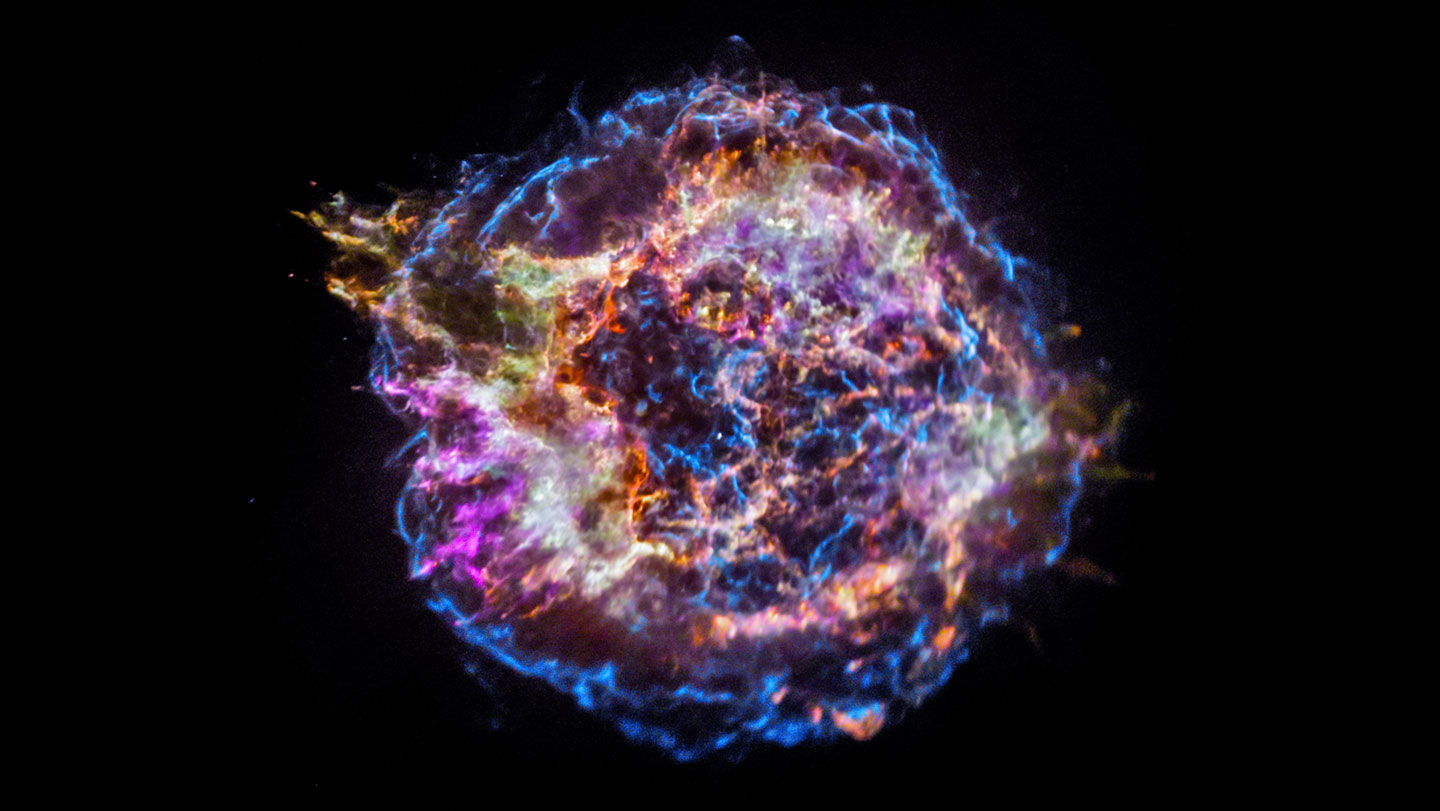
Recent research has challenged the existence of hypernovas, which are considered extremely energetic supernovae. Instead, new mathematical models suggest that stars previously thought to have originated from hypernova events may actually be linked to standard supernovae and other common stellar phenomena. This finding was reported in the September issue of the Monthly Notices of the Royal Astronomical Society.
Read More
Astrophysicist Ralph Schönrich from University College London stated that the evidence supporting hypernovas is now significantly questioned. However, not all researchers are convinced by this shift in perspective. Astronomer Anna Frebel from the Massachusetts Institute of Technology maintains that both supernovae and hypernovas could remain valid explanations for the origins of these stars, cautioning the scientific community to be careful in declaring unique origins.
Astronomers analyze the elemental composition of stars to trace their origins, as chemical elements released during supernova explosions mix with gas clouds, eventually forming new stars. Different types of explosions yield distinct chemical signatures, thereby helping astronomers decipher the birth circumstances of stars.
This method relies on the assumption that the materials expelled by a supernova disperse evenly in space. However, the latest research takes into account that these explosions can distribute materials unevenly. For instance, some elements, like oxygen, may travel preferentially in certain directions, leading to a varied elemental composition in newly formed stars, especially those from the earliest generations that contain fewer heavy elements.
Astrophysicist Adam Burrows from Princeton University, who was not involved in the study, noted that the concept of irregular material mixing has been recognized among supernova researchers but may not have been adequately communicated to those studying galaxy evolution. He emphasized that the researchers are validating long-held beliefs about supernova behavior.
Using their new model, the researchers compared element ratios produced from asymmetric supernova explosions with those observed in some unusual stars found in the Milky Way's halo, which consists of older stars with fewer heavy elements. Previously, hypernovas were thought necessary for accounting for the elemental ratios in these stars. However, the new model effectively matched these ratios, suggesting an alternative explanation.
Frebel expressed that while the findings support the hypothesis of standard supernova origins, they do not completely exclude the possibility of hypernovas. Regardless of their origins, researchers agree that further investigations into supernova behavior and elemental mixing are essential.